Small Patio Decorating on a Budget: A Practical Makeover Plan
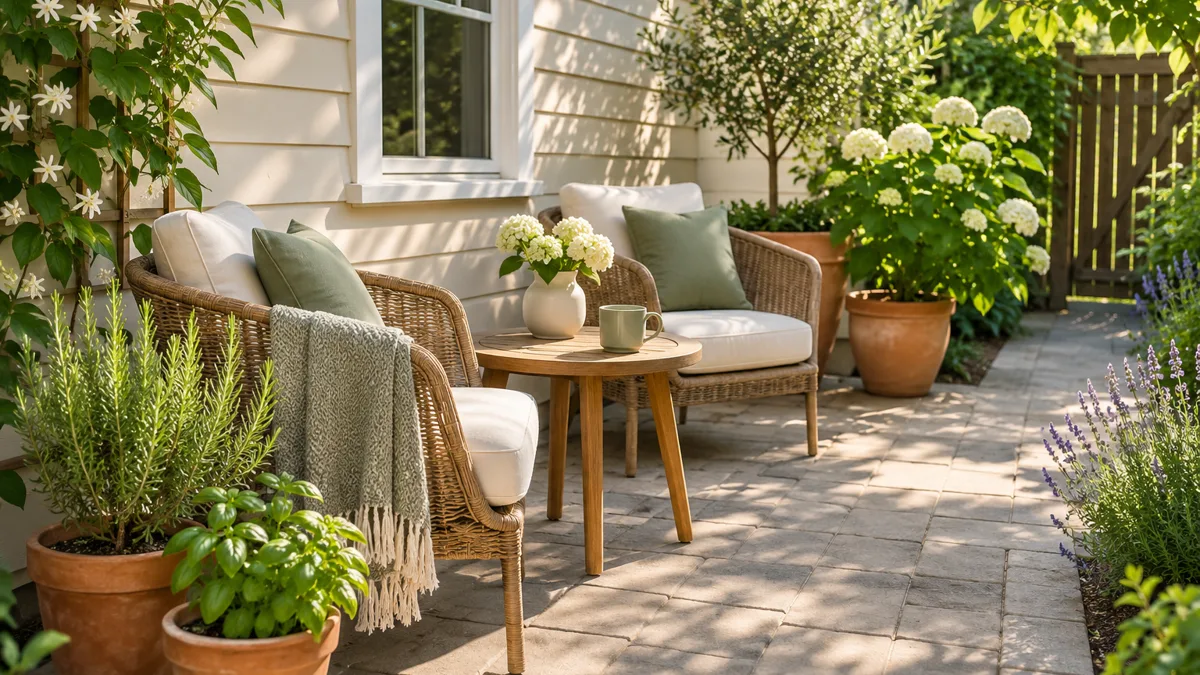
Small patio decorating on a budget starts with deciding what will make the patio more useful. A new cushion will not solve a chair that blocks the door, and a large planter will not make an uncomfortable seat inviting. Begin with an inventory, choose one main activity and spend on the missing function before adding decorative layers.
The approach below turns that idea into a practical makeover sequence. It includes three different style recipes, an illustrative budget worksheet and a buy-now-or-wait comparison. Use the examples with your existing furniture and local conditions. They are planning scenarios, not current shopping quotations or tested project totals. For arranging the pieces, pair this guide with our small patio layout ideas.
In this guide
- 1. Audit what you own before shopping
- 2. Choose the one activity the makeover must improve
- 3. Set a spending plan with a reserve
- 4. Choose between three modest style recipes
- 5. Build a natural patio around existing furniture
- 6. Try a simple dark-frame refresh
- 7. Correct the arrangement before adding a rug
- 8. Spend on a small planting group with a clear role
- 9. Keep table decor small enough to move
- 10. Plan textile care before buying more cushions
- 11. Use a buy-now-or-wait test
- 12. Complete the makeover in manageable stages
- Budget patio questions
1. Audit what you own before shopping
Bring together the outdoor items you already have and list their condition. Separate sound furniture from pieces that need repair, cleaning or replacement. Check frames, fasteners and the manufacturer’s care instructions before deciding a chair can simply be painted into a new look. Appearance and structural suitability are different questions.
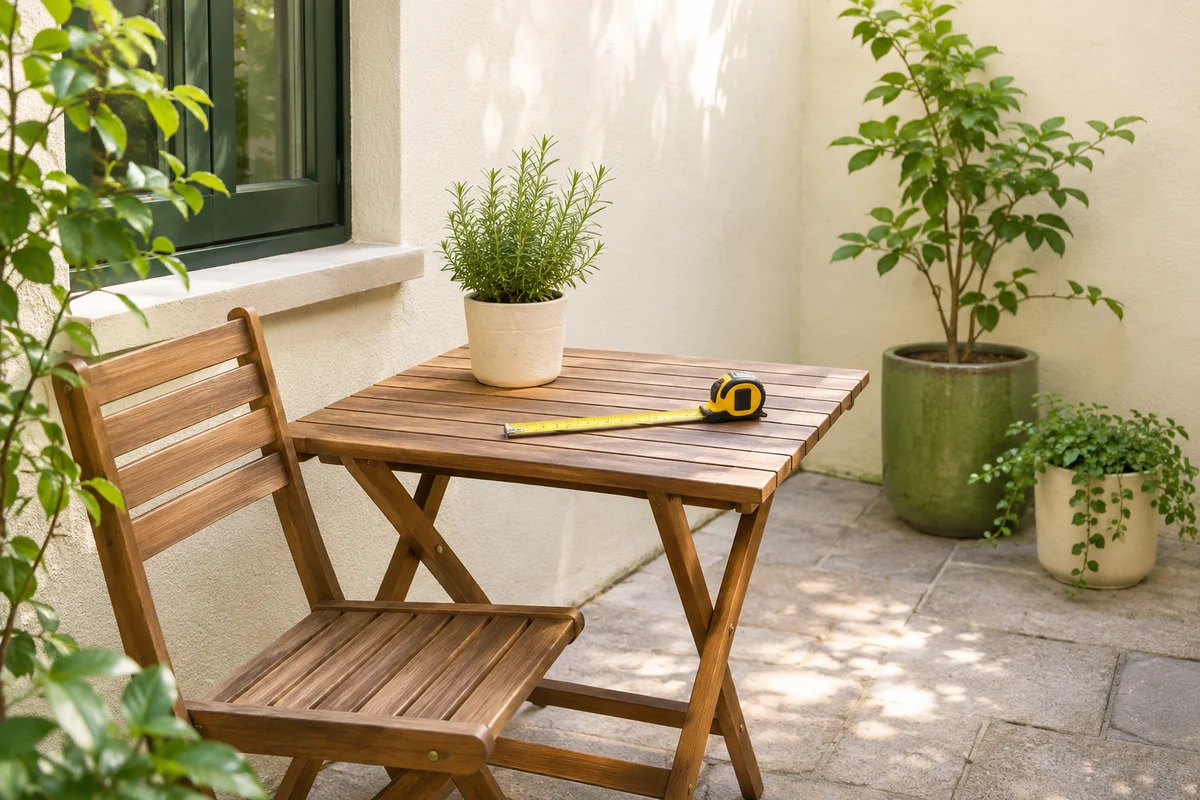
Measure the items you want to keep. Record the chair’s widest point, the table footprint and how far a seat moves when someone stands. Compare those dimensions with the usable patio, including the door swing and routes. This can reveal that the real problem is placement rather than an incomplete furniture set.
Make three lists: keep, investigate and remove from the plan. Investigate may include a cushion that needs a suitable replacement cover or a table whose finish needs product-specific care. Avoid buying supplies for every possible repair at once. Resolve the essential seating and access questions first, then choose the smallest set of jobs that supports the makeover.
2. Choose the one activity the makeover must improve
Write a specific outcome such as comfortable coffee for two or a quiet reading seat beside plants. This is more useful than make the patio cozy because it tells you what furniture and surfaces are necessary. Test the activity with the pieces you own, even if their colors do not coordinate yet.
For reading, seat comfort and a reachable cup surface come first. For coffee for two, both chairs should work at the same time. For occasional dining, check table height, knees and movement rather than choosing a decorative side table that photographs well but cannot support the meal.
Keep a short list of the actual problems. Perhaps the table is too far from the chair, there is no cushion storage or six small pots block the route. Each purchase should answer one of those problems. If it cannot, put it on a later list. The patio starts to feel intentional when the essential activity works, even before the finishing accessories arrive.
3. Set a spending plan with a reserve
Choose a total you are comfortable spending and give each category a limit. Include practical costs such as replacement hardware, suitable cleaning materials, delivery and the growing mix for new pots. An inexpensive container is not the complete cost of a planted container, and a discounted chair is not a saving if it is unsuitable for your space.
| Example allocation | Planning amount | What it could cover |
|---|---|---|
| Comfort and repairs | $60 | One essential seat improvement or necessary supplies |
| Planting | $45 | A modest plant group, containers or mix |
| One decorative layer | $25 | A useful textile or table detail |
| Reserve | $20 | Unexpected small items and price differences |
| Illustrative total | $150 | A planning exercise, not a market-price estimate |
Change the proportions to match your inventory. If the chair is already comfortable, move that allowance to the actual missing function or keep the money. Do not spend the reserve simply to make the worksheet balance. Price local options before committing, then reduce the project if the complete basket exceeds your chosen total.
4. Choose between three modest style recipes
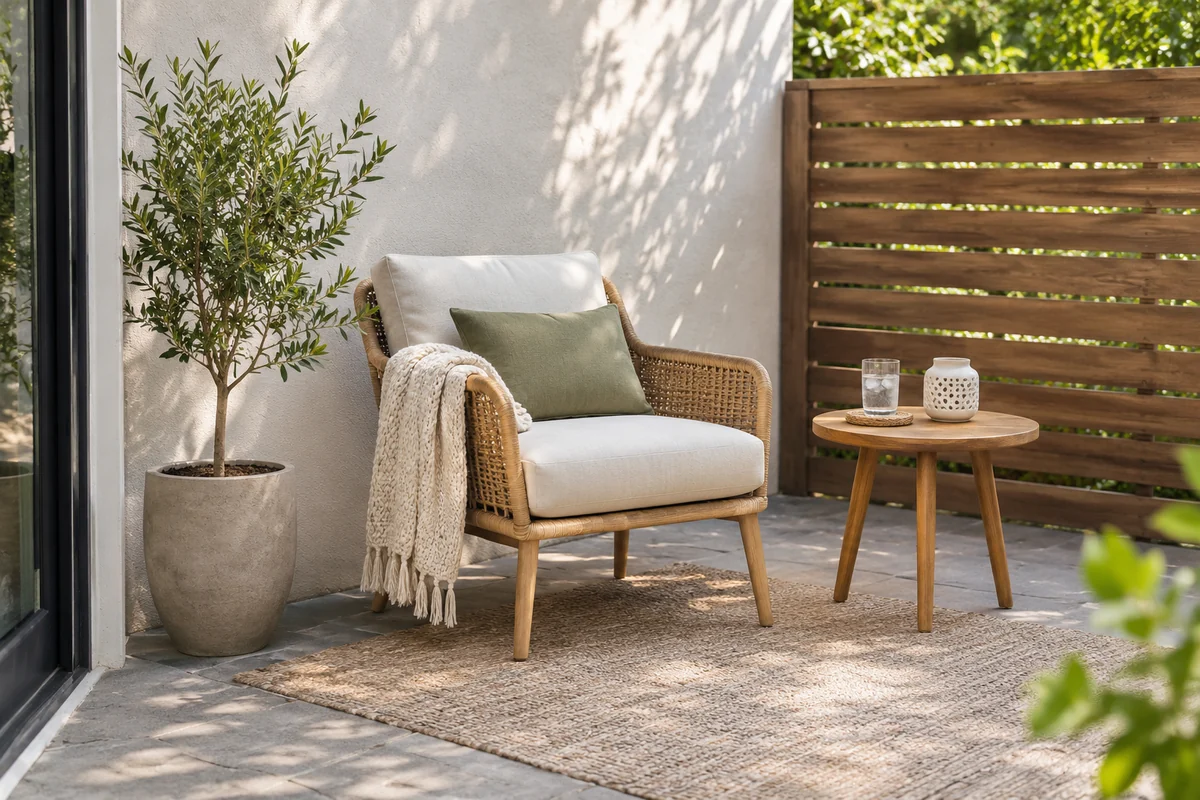
A style recipe is a short list of repeated materials and colors, not a requirement to replace every object. Start with the strongest permanent element: paving, wall color or a furniture frame. Select a combination that works with it. Existing gray concrete, for example, can support a warmer terracotta accent without covering the entire floor.
| Recipe | Keep or repeat | Add selectively |
|---|---|---|
| Warm natural | Wood, terracotta, green foliage | One cream textile and a simple tray |
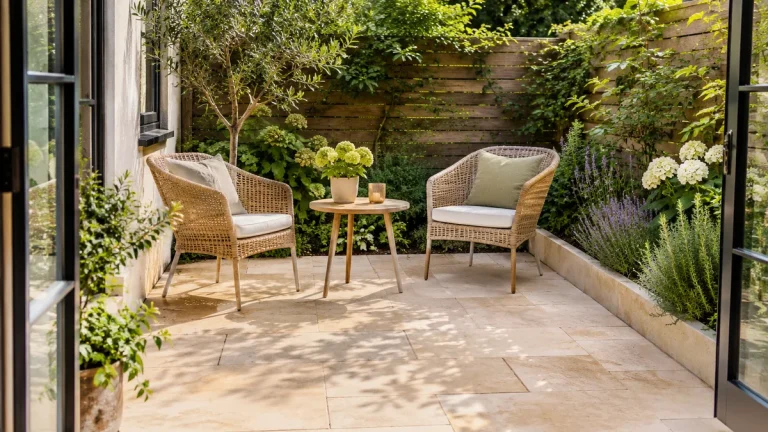
| Calm contrast | Dark metal, pale wall, a plain table | One muted green cushion and restrained pots |
| Soft coastal | Light wood or a pale frame | Dusty blue fabric, cream and one sandy neutral |
Compare each recipe with what is already present. Choose the one that needs the fewest changes and still feels appealing outdoors. Our small patio color ideas explain how to test the palette in daylight. A repeated accent in two places often creates more connection than a collection of unrelated sale items.
5. Build a natural patio around existing furniture
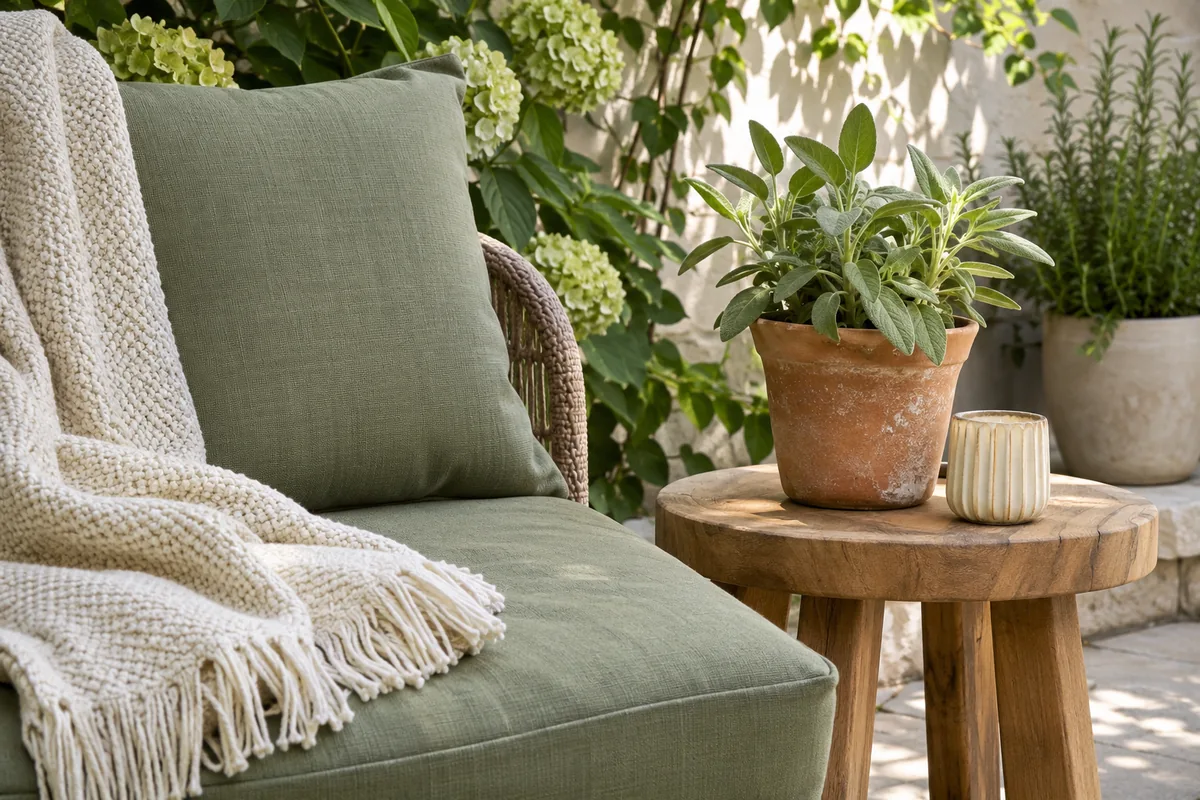
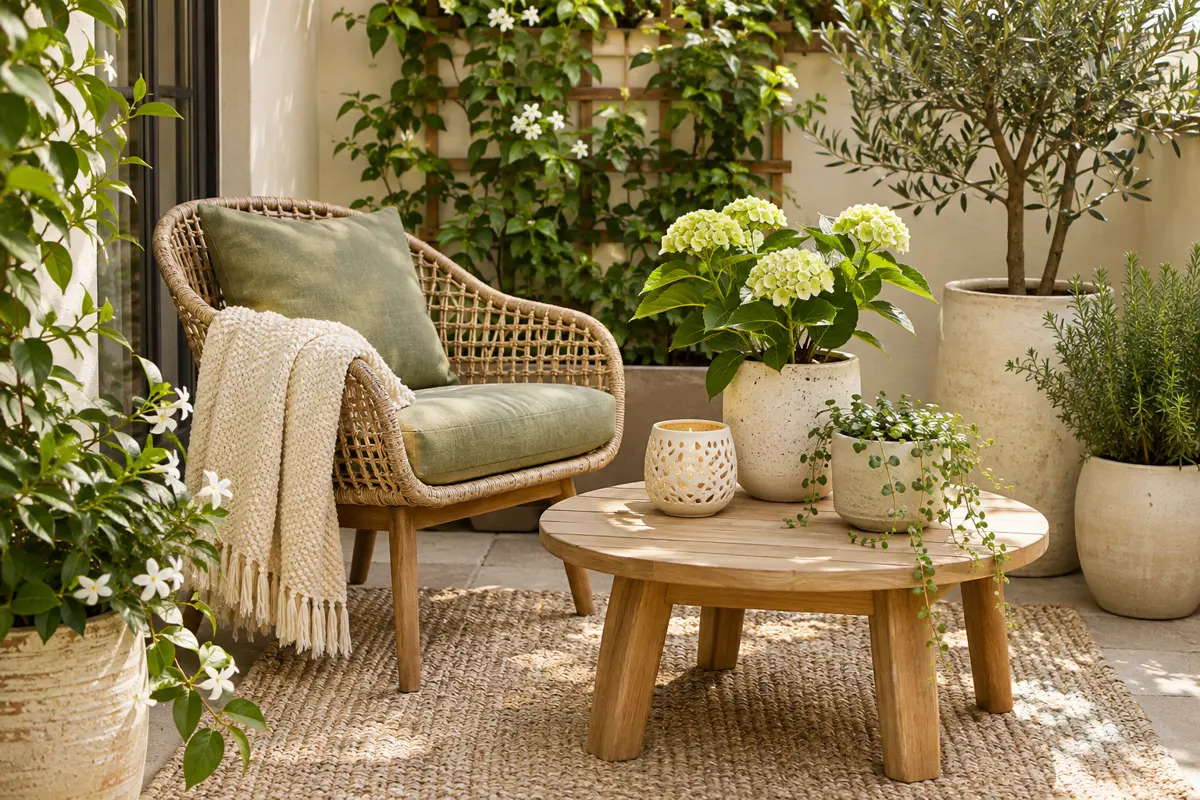
For the warm natural recipe, keep usable wood and terracotta rather than trying to match their finishes exactly. Place one compact plant group near the seating, add a plain cream cushion if the seat needs it and leave the table mostly clear. The grain, foliage and pot surfaces already provide texture.
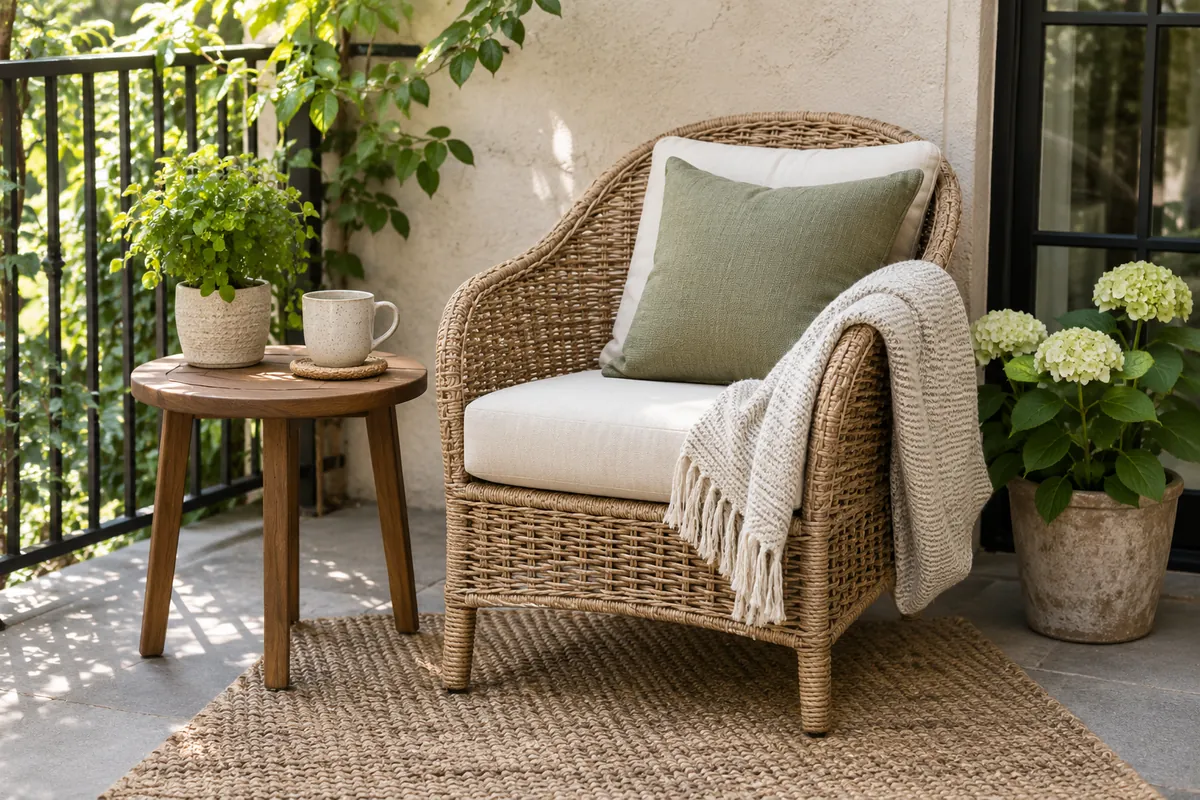
This scheme can work with mixed furniture. A wooden side table beside a woven chair does not need a matching second table to look considered. Repeat one material or color nearby and compare the view from the doorway. Remove an unrelated accessory before buying another object to connect everything.
Avoid confusing natural-looking with suitable for outdoor use. Check care requirements for the actual furniture, basket or textile. A storage basket intended for indoors can still be useful just inside the patio door, where it supports the routine without facing unsuitable weather. Spend on objects that belong in their intended position rather than trying to keep a styled photograph permanently outdoors.
6. Try a simple dark-frame refresh
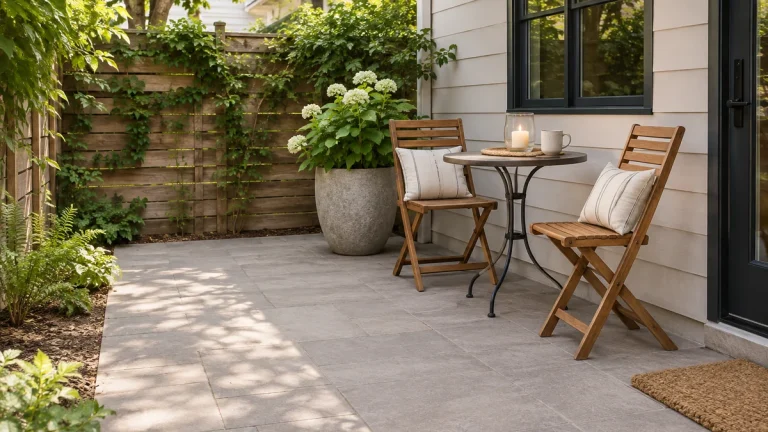
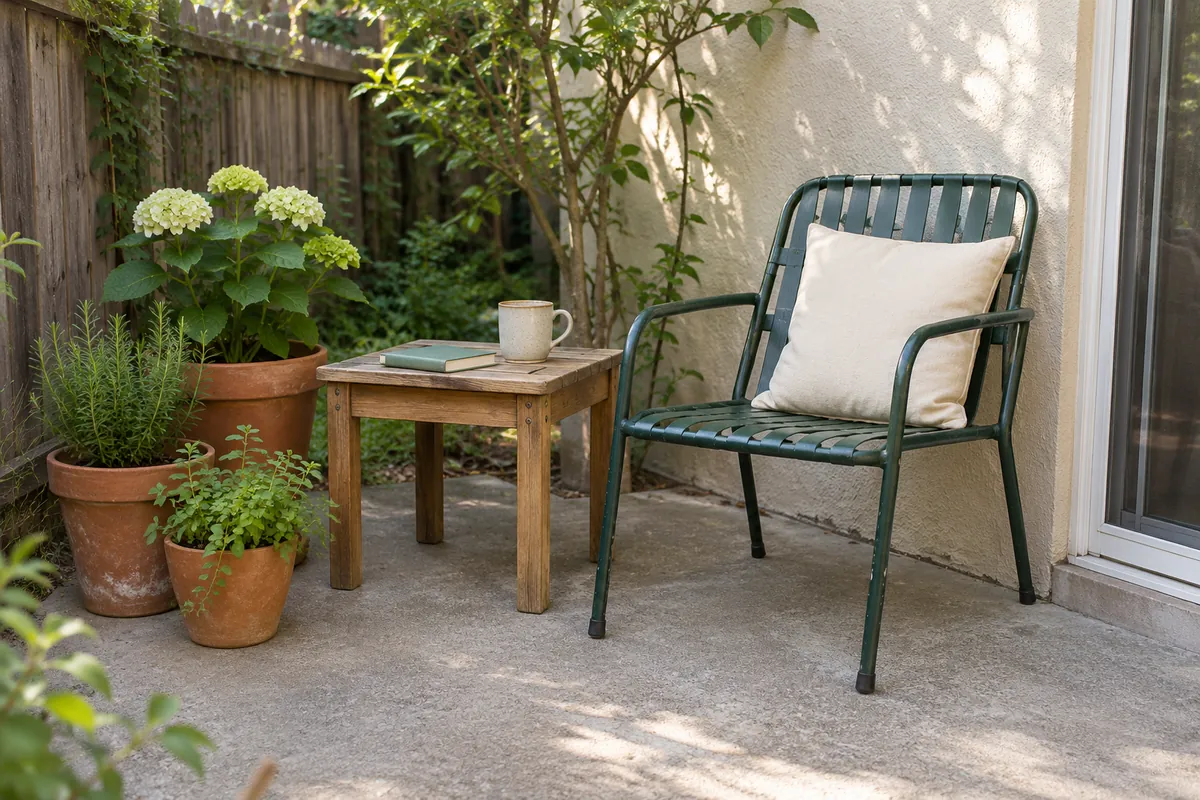
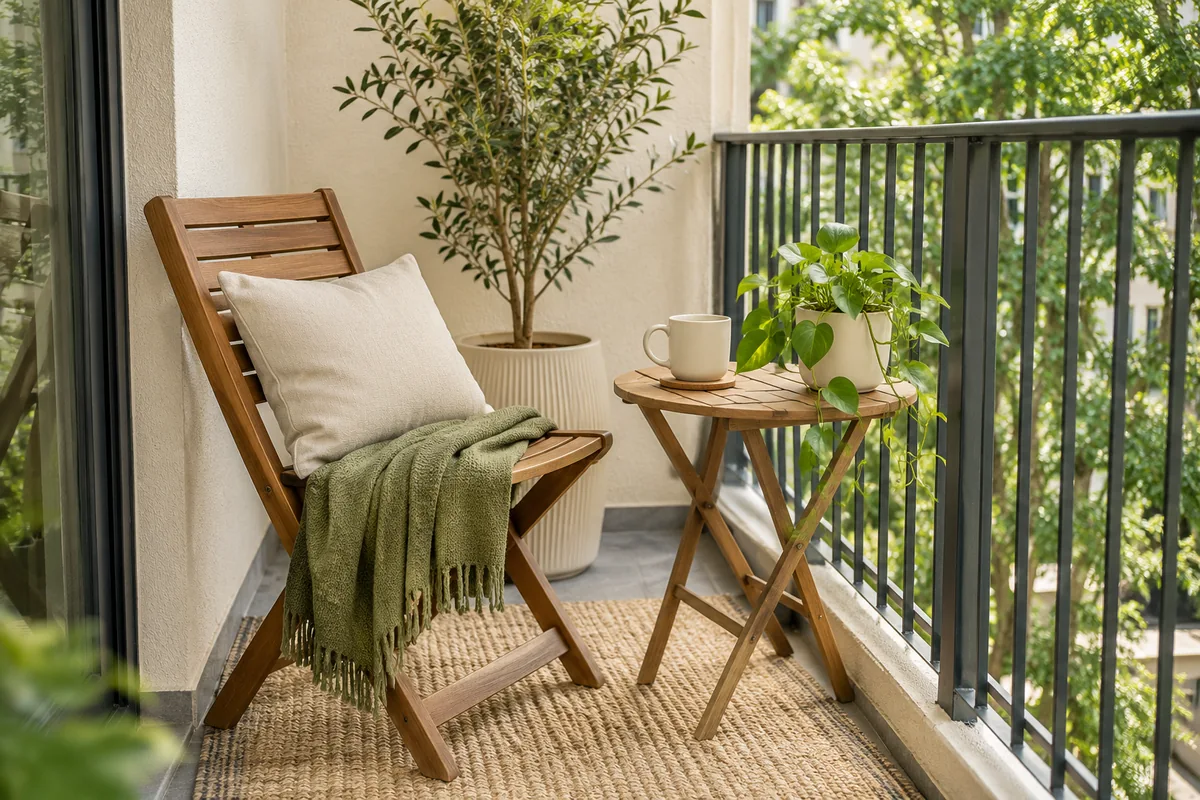
A dark metal chair, a modest wooden table and one plain cushion can form a complete small patio corner. Let the dark frame provide definition against a pale wall or paving. Use a compact group of terracotta pots to warm the arrangement instead of adding several decorative objects to every surface.
The example illustration shows the scale and mood of this approach, not a repair method. If existing metal furniture needs refinishing, follow the product and furniture guidance for preparation, compatibility and use. Do not cover rust or damaged connections with paint and assume the underlying problem is solved.
Keep the decorative budget tied to comfort. Try the chair with the cushion in place and the table at the actual reach position. If one replacement seat would solve a persistent problem, it may deserve priority over repainting several unsuitable pieces. A makeover can be modest while still making a decisive improvement to the way the patio is used.
7. Correct the arrangement before adding a rug
Place the chairs and table on the bare patio first. Check occupied seats, chair movement and the route through the door. Keep required access to drains and service points clear. A rug should be considered only after the layout works; it cannot create missing room around furniture.
If you want one, check the product’s intended surface, outdoor conditions and care instructions. Consider door clearance, drainage and whether an edge will interfere with walking. Include storage and drying in the decision. A decorative layer that makes cleaning harder may be poor value even when its purchase price is low.
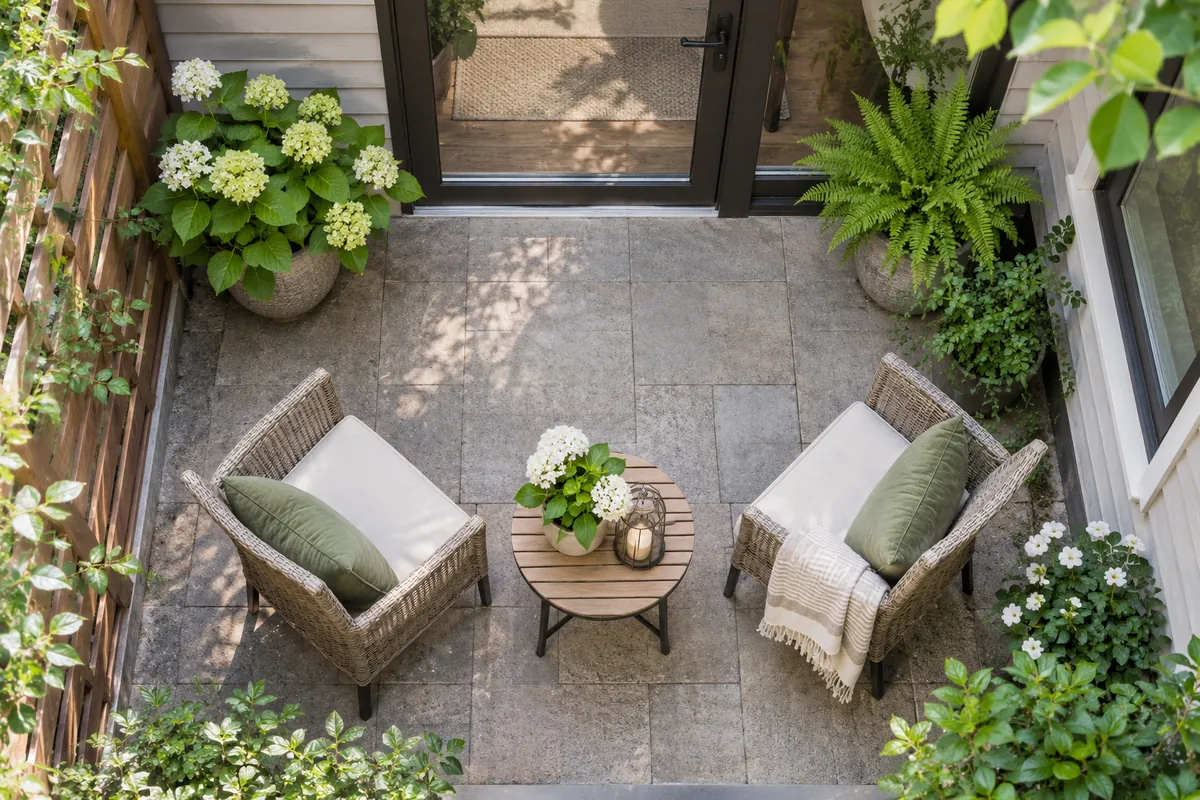
You can define a seating area without covering the floor. Angle two chairs toward a small table, group plants to one side and repeat a cushion color. The relationships between those pieces provide a clear zone. Our small patio furniture guide helps compare the occupied footprint so a replacement is chosen to fit the activity, not to fit inside a rug outline.
8. Spend on a small planting group with a clear role
Decide whether the plants are for cooking, seasonal color or a leafy backdrop. That choice prevents an appealing nursery display from becoming an expensive collection with incompatible needs. Check the actual patio light and choose plants suitable for your growing season and local climate before selecting decorative containers.
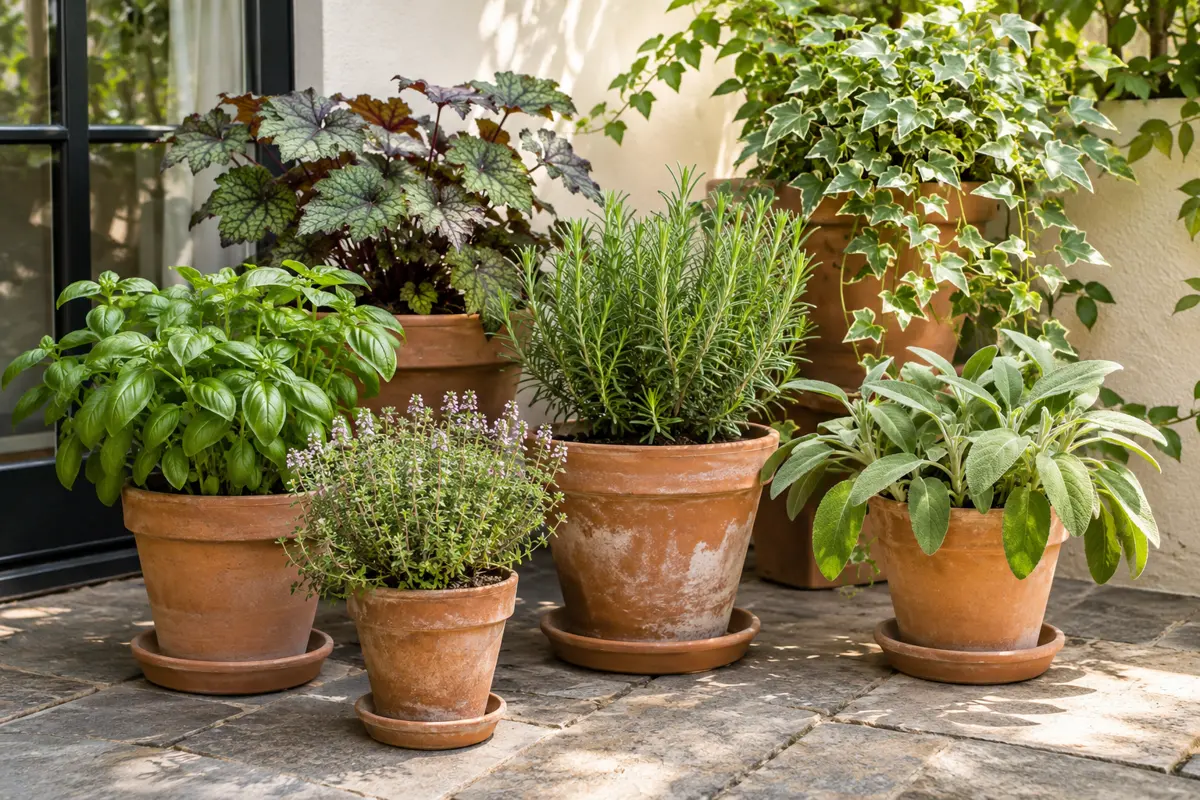
For a sunny herb corner, separate pots of basil, chives and thyme offer different forms and useful harvests when conditions suit them. For color, investigate locally appropriate compact flowering annuals instead of assuming a named plant will thrive in every region. For a shaded patio, a suitable foliage collection may be a more realistic goal than sun-loving herbs.
Budget for the full setup: roots need suitable container volume, drainage and potting mix. Reuse a sound, appropriate container when possible, but do not force a growing plant into a tiny decorative pot to preserve the look. See our beginner container gardening guide for the planting sequence and equipment decisions.
9. Keep table decor small enough to move
Put the objects you actually use on the table before decorating it. Two mugs, a book or a plate reveal how much room is available. Add one small detail in the remaining space rather than arranging a permanent centerpiece and trying to fit everyday life around it.
A removable tray can be useful when it supports carrying or clearing. Compare its size with the actual surface and check its intended use. A small herb pot can be attractive, but it still needs appropriate light and a workable watering arrangement. The most photogenic position is not always the best growing position.
Use our small patio table decor ideas for specific arrangements. You do not need a tray, candle, vase and plant together to make a table feel finished. An open surface beside comfortable chairs can be more welcoming than a collection that must be moved every time someone wants to sit down with a drink.
10. Plan textile care before buying more cushions
Measure the seat and try the cushion thickness where possible. A thick back pillow can reduce useful seat depth, and several small pillows can crowd an otherwise comfortable chair. Prioritize fit and support before choosing the accent color. A coordinated but uncomfortable collection is unlikely to encourage more time outdoors.
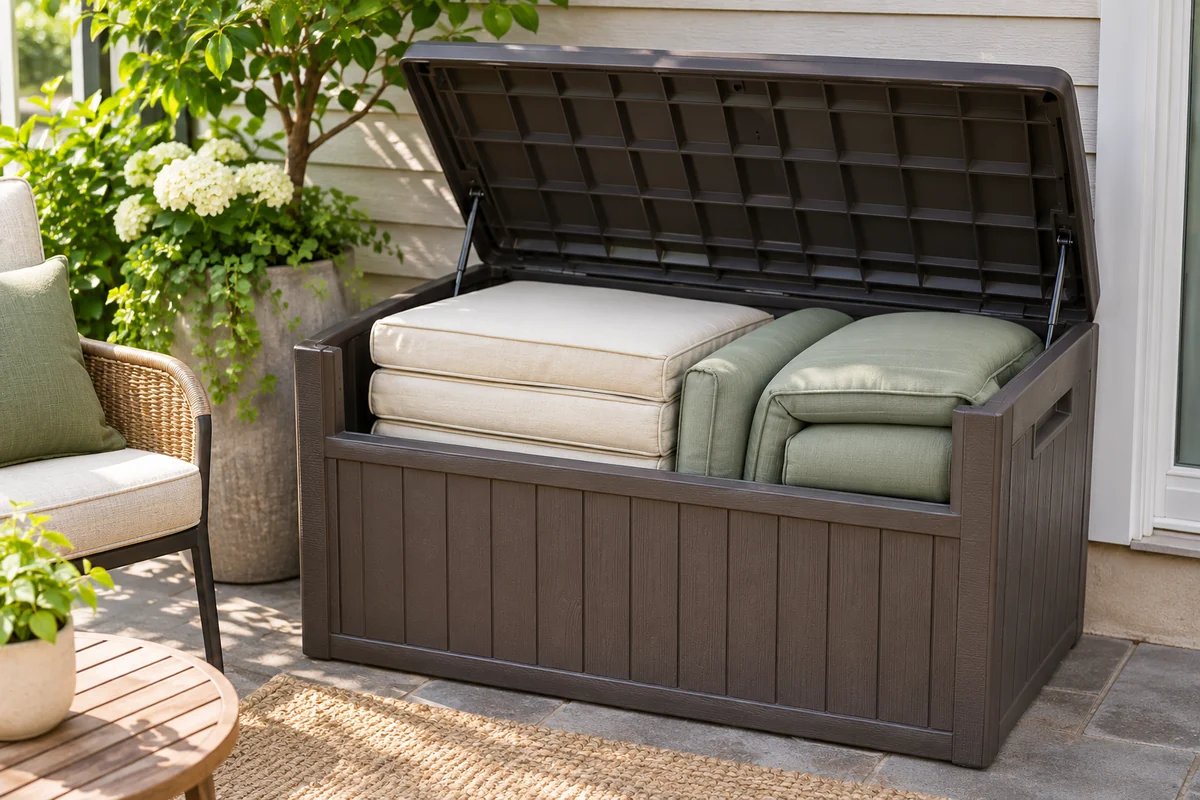
Read care and weather instructions for the actual fabric and filling. Decide where removable textiles will go after use and during unsuitable conditions. An indoor basket or cupboard may be more convenient than a large outdoor storage box that occupies valuable patio floor space.
If you compare boxes, measure the usable interior and the lid in its open position. Check whether the product is suitable for what you plan to store; an outdoor-looking box is not automatically right for every textile. Our outdoor cushion guide connects fit, color and care. Buy the number you can store and maintain comfortably, then stop.
11. Use a buy-now-or-wait test
Give each proposed purchase a job and a home before paying for it. Ask whether you already own something that performs the same function. Compare the complete cost and the maintenance commitment, including any items the purchase makes necessary. A plant stand, for example, may create a need for different pots or permitted anchoring.
| Candidate item | Buy now when | Wait when |
|---|---|---|
| Chair cushion | It improves the actual seat and storage is ready | It only repeats a color you already have |
| Plant stand | It improves access and fits the product instructions | Pots work better at floor level |
| Storage box | Its specific contents justify the footprint | It mainly hides occasional clutter |
| Extra seating | It serves regular users comfortably | It blocks the everyday arrangement |
A waiting list is useful because it separates a considered purchase from the pressure of a sale. Use the patio for a week and notice which need persists. The goal is not to avoid all spending; it is to spend on the part of the space that will actually change your experience.
12. Complete the makeover in manageable stages
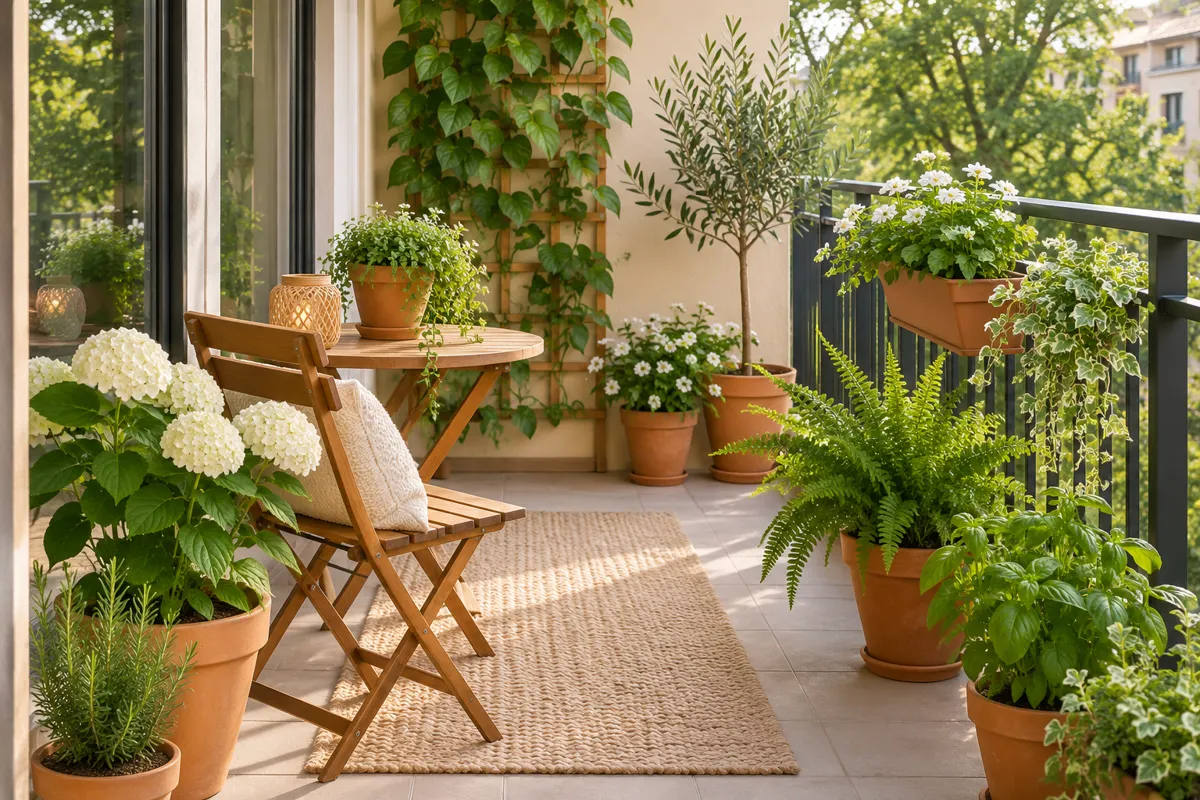
Use the first session for cleaning, measuring and selecting the furniture arrangement. In the next, improve the essential comfort or repair issue and set up the initial plant group. Add the chosen finishing detail only after the main activity works. This order makes it easier to judge what the patio still needs.
Keep a short record of the spending and the result. Did the cushion improve comfort? Does the pot group leave more room than the previous scattered collection? Is the table easier to use? These answers are a better guide to the next purchase than how completely you filled the original shopping list.
Finish by making the reset routine simple: textiles returned to their proper home, temporary table items cleared and watering equipment put away. Our small balcony storage ideas offer options that also translate to compact patios. The makeover is successful when the space is more comfortable and easier to use within your chosen budget, even if the final arrangement contains fewer objects than the starting version.
Budget patio questions
What should I buy first if I can change only one thing?
Choose the item that solves the main everyday problem. It may be a comfortable seat, a reachable table or a suitable container rather than a decorative accessory. Try rearranging existing pieces first so you know the purchase is necessary.
Does budget decorating mean buying the cheapest option?
No. Compare fit, intended use, durability information and care demands with the complete cost. An item that needs several additional purchases or cannot be stored appropriately may offer poor value despite a low initial price.
Can a patio look finished without lights or a rug?
Yes. A useful seating arrangement, a restrained palette and one coherent plant group can make a complete small space. Add another layer when it supports your routine and the product is suitable for the actual conditions.
Save this guide for later
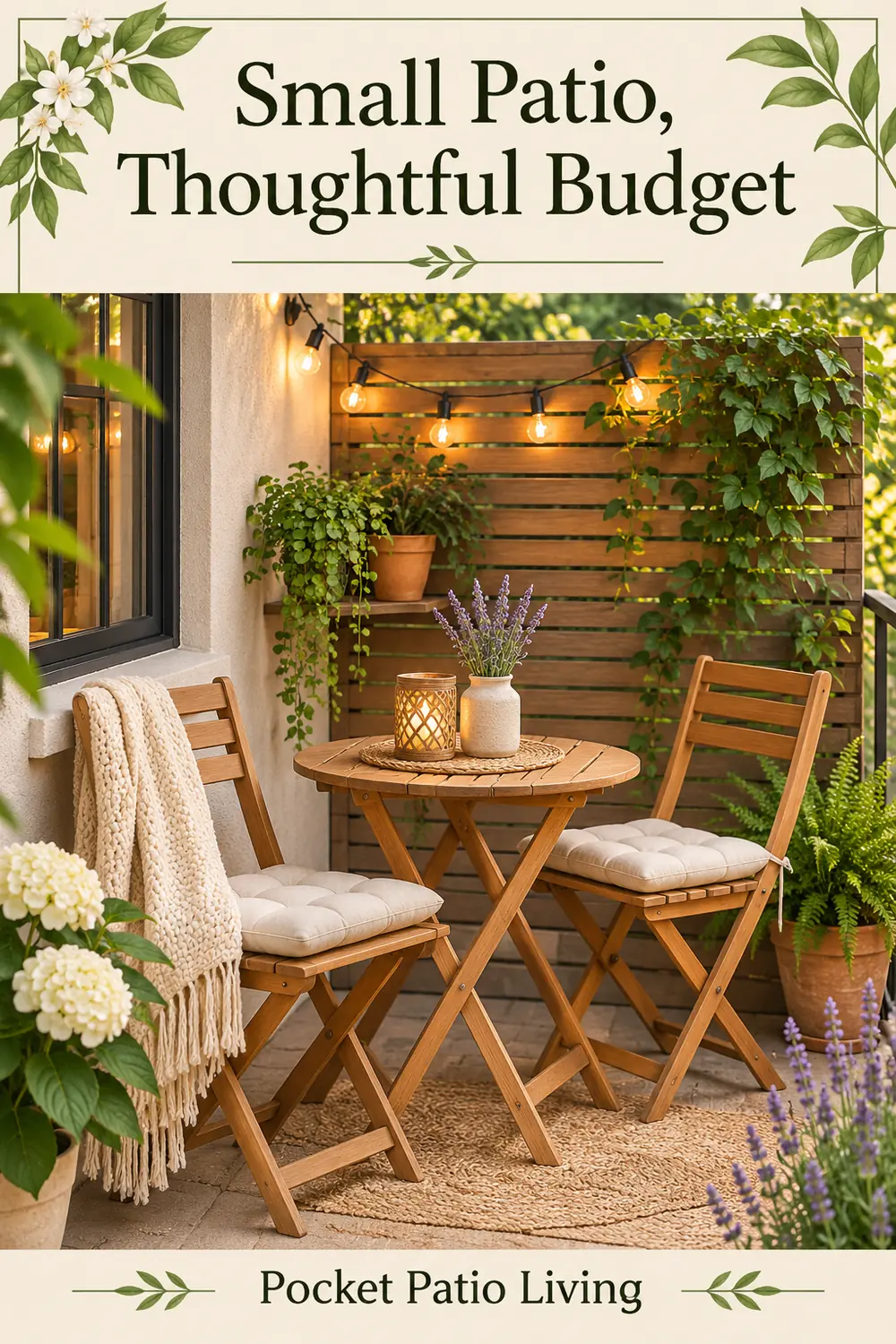
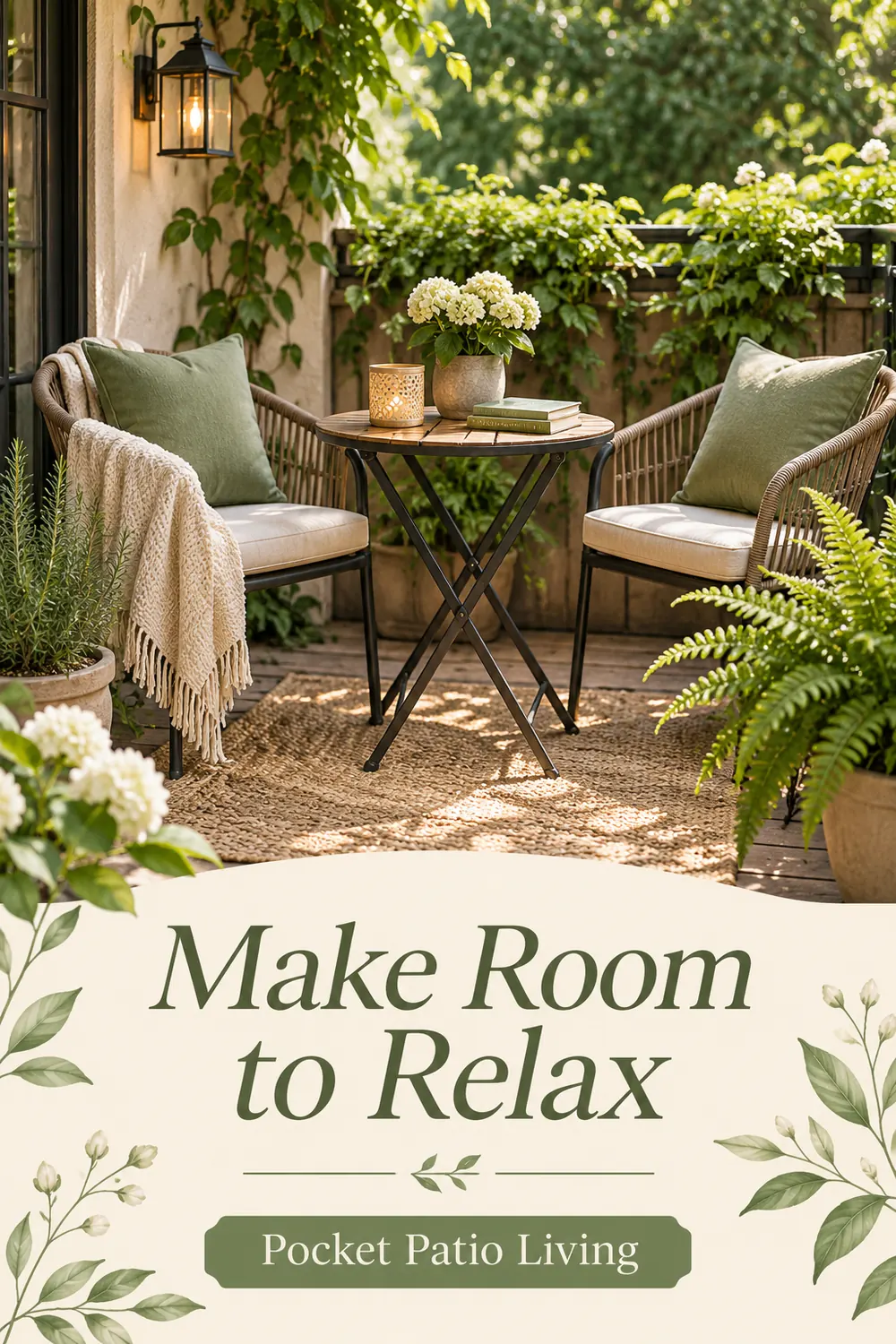
Save these Pinterest graphics for your next planning session. Adapt the ideas to your own space, climate and care routine. Article images are design illustrations.