Small Patio Furniture Ideas: 12 Practical Ways to Choose Better Seating
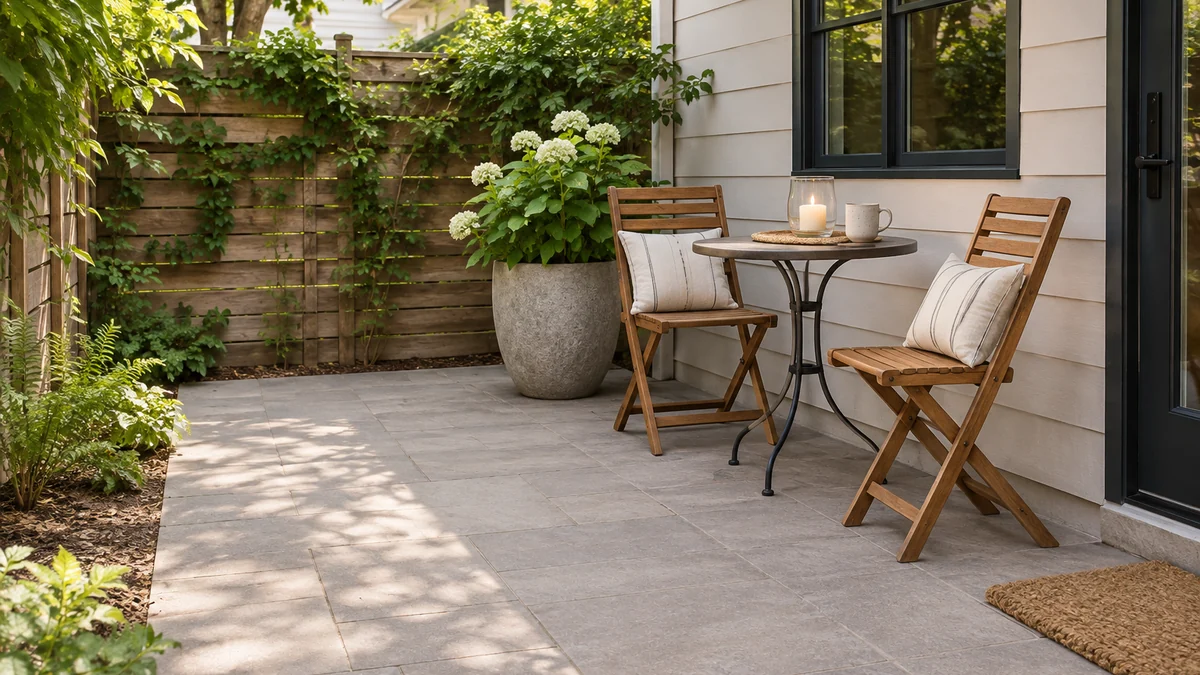
The most useful small patio furniture ideas begin with the furniture you will use, not the largest set that fits inside the paving. A chair needs room for a person to sit down. A table needs room for knees and for carrying food past it. A folding piece needs somewhere to live when folded. Those everyday details determine whether a compact patio feels comfortable or permanently crowded.
This guide helps you compare furniture before buying and make better use of pieces you already own. For complete arrangement examples, pair it with our small patio layout guide. Choose one main activity, write down the available dimensions and work through the decisions below. You can finish with one good chair and a useful table; a matching collection is optional.
In this guide
- 1. Name the job before choosing the furniture
- 2. Measure the occupied footprint with a worked example
- 3. Compare chairs by comfort, movement and table fit
- 4. Give folding furniture a real storage address
- 5. Choose a table for what it actually needs to hold
- 6. Make the second seat earn its permanent space
- 7. Treat a side table as useful space, not a display shelf
- 8. Separate furniture storage from cushion storage
- 9. Match materials to the care you will provide
- 10. Let the furniture leave room for planting
- 11. Connect useful pieces with a restrained palette
- 12. Trial the complete activity before the final purchase
- A short furniture comparison checklist
- Continue planning your small outdoor space
1. Name the job before choosing the furniture
Write down what you want to do outside most often. Reading alone, sharing morning coffee and eating dinner call for different priorities. A dining chair can support a short coffee break, but it may not offer the comfort you want for a long reading session. Choose the main activity before comparing silhouettes and finishes.
Add a realistic number of regular users. Two people who sit outside daily deserve a different permanent setup from one person who occasionally hosts a friend. Avoid buying a large set for an event that happens twice a year if the extra furniture makes ordinary use awkward.
Look at your current pieces against that brief. Which one already performs the main job well? Keep it in the plan and identify the actual missing function. Perhaps you need a surface for a cup rather than another seat. This simple inventory can prevent an attractive furniture bundle from creating more problems than it solves.
2. Measure the occupied footprint with a worked example
Suppose a chair is listed as 26 inches wide and 30 inches deep. Two such chairs arranged side by side already occupy 52 inches of width before allowing space between them, access or nearby containers. The listed depth also does not include every movement a person makes while sitting down or standing. These hypothetical dimensions illustrate the comparison, not a recommended furniture size or a prescribed route width.
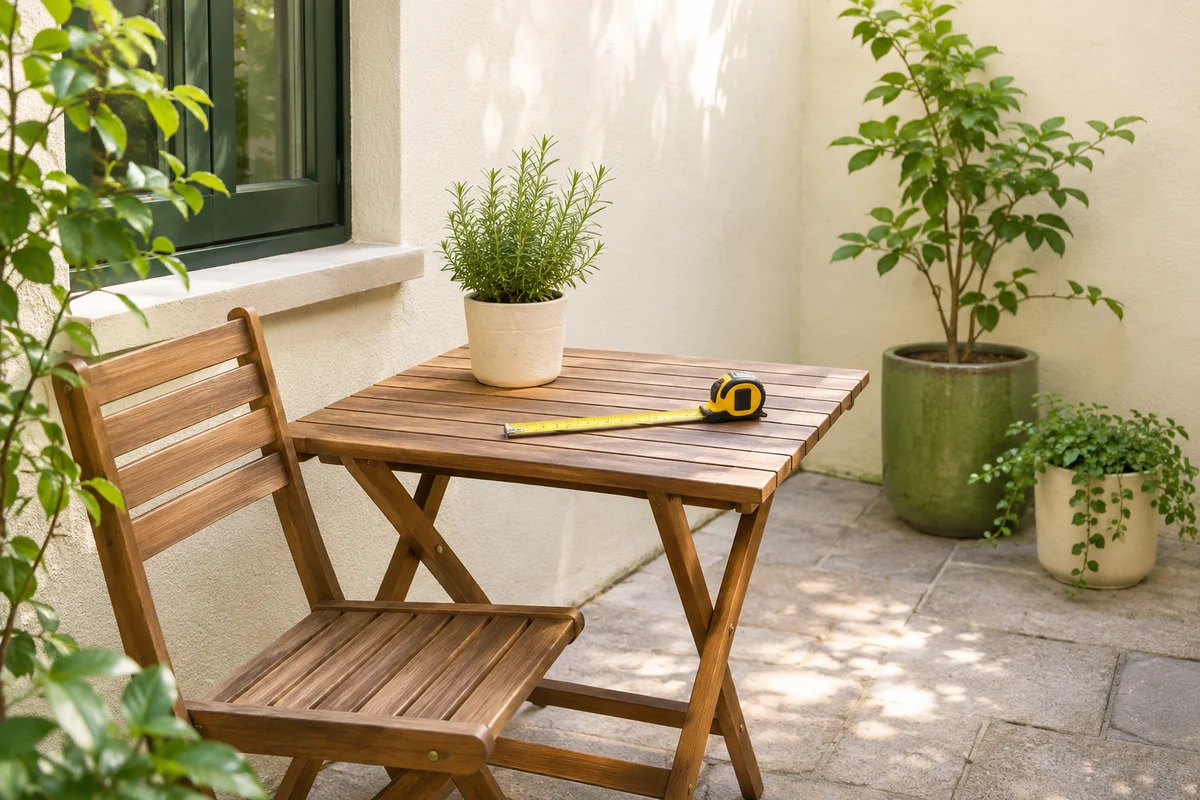
Make full-size removable templates using the widest frame points. Place an existing chair in the proposed position and test it with a person seated. Mark where feet, knees and chair movement extend beyond the template. Add the table and try carrying the objects you normally bring through the door.
Use the resulting limits as shopping criteria. Record the largest suitable frame, the occupied space you tested and any position where a projecting leg causes a conflict. Check the property’s actual access requirements as part of the plan. Our small patio layout guide helps compare arrangements before you commit to a set. A piece should fit the activity and route together, not merely fit within the outline of the paving.
3. Compare chairs by comfort, movement and table fit
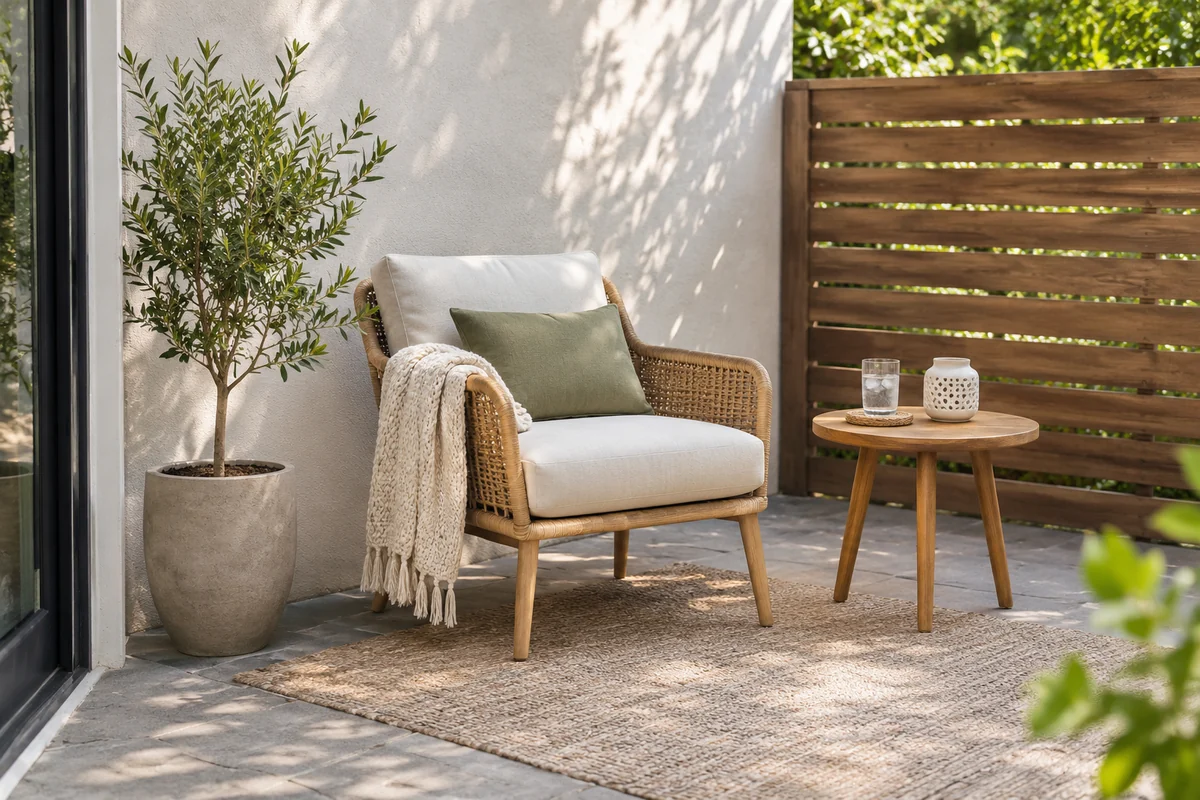
An armless chair may suit a small dining arrangement, while a compact armchair can support a longer reading session. Choose from the way the regular users sit and stand. A narrower frame is useful only if the seat remains comfortable for its intended activity. Try the chair with the cushion you expect to use when possible.
| Choice | Potential advantage | Check in person |
|---|---|---|
| Armless dining chair | Easier approach around some tables | Back support, usable seat depth and frame width |
| Compact armchair | A place to rest arms while reading | Whether arms interfere with the table |
| Folding chair | Occasional extra seating | Stability, operation and a suitable storage home |
| Larger lounge chair | A preferred relaxed posture | Occupied footprint and ability to stand comfortably |
Check feet on the intended surface and how the frame behaves during ordinary use, following the product instructions. Compare the chair and table together: a comfortable seat can still leave the tabletop too high, low or far away. Our outdoor cushion guide explains why thickness and fit should be settled before the cushion becomes part of the color palette.
4. Give folding furniture a real storage address
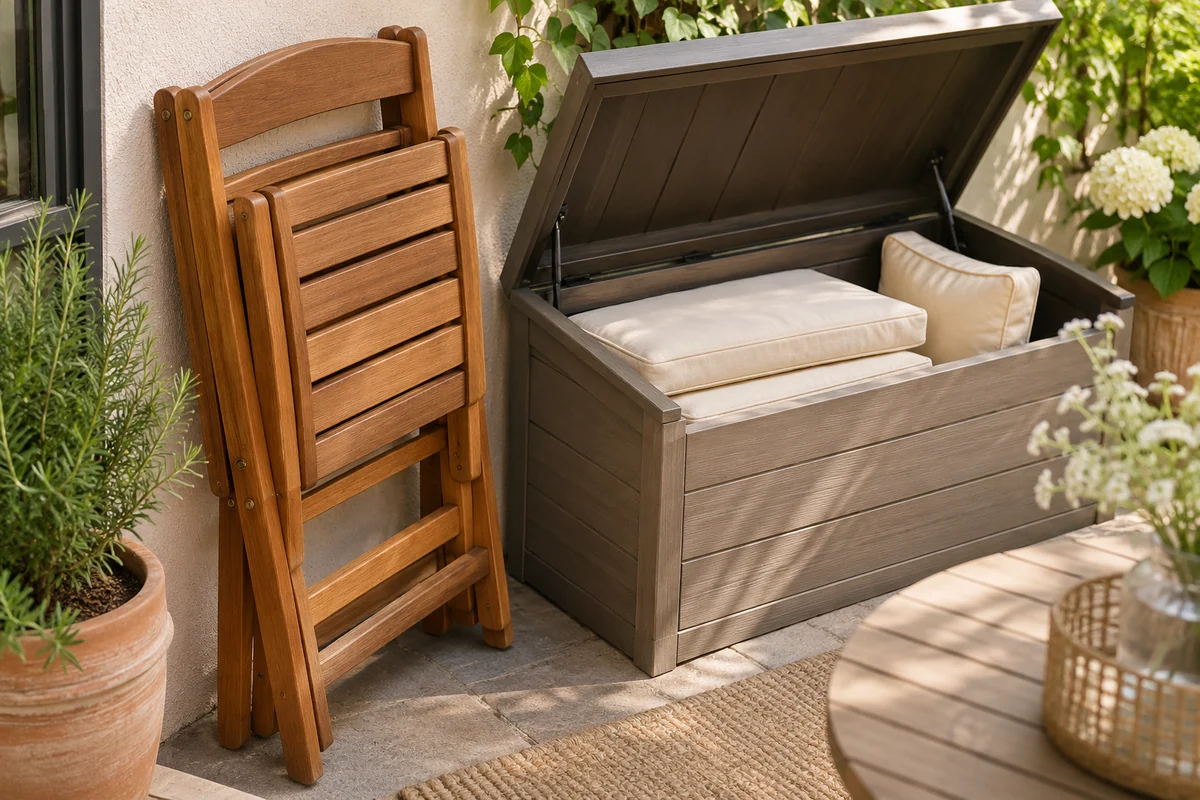
Folding chairs are useful when you need occasional extra seating or a clear area for cleaning. Their value depends on a realistic storage routine. Measure the folded dimensions and choose the storage position before buying. Check the route between that location and the patio as well as the space available at each end.
Read the folding mechanism and use instructions. Choose a piece you can operate comfortably and position on the intended surface. Do not assume a chair can safely lean against a railing or remain unsecured in an exposed corner simply because it folds flat.
Try the routine with one spare chair before building the whole patio around movable pieces. Bringing out one seat for a guest may be easy; carrying several items through a narrow doorway every evening may become frustrating. Keep the main activity comfortable in the normal arrangement and use folding furniture to support genuine exceptions, not to compensate for a permanent set that is too large.
5. Choose a table for what it actually needs to hold
A table for two mugs does not need the same surface as a dining table. Put the objects you normally use on your current surface, or mark their approximate area on a sheet of paper. Include practical room for setting something down, rather than arranging every object tightly to prove a smaller table can technically hold it.
Check legroom and the table’s base. A tabletop can appear compact while its legs spread into the walking route. Conversely, a small table may leave the surface too far away from the chair to use comfortably. Measure and test the relationship rather than judging each piece independently.
Compare round and square shapes in your actual position. A round edge may suit one route, while a square table may align neatly with a wall. There is no universal winning shape. Our budget patio decorating guide can help you decide whether replacing the table is worth the cost or whether rearranging what you own solves the problem.
6. Make the second seat earn its permanent space
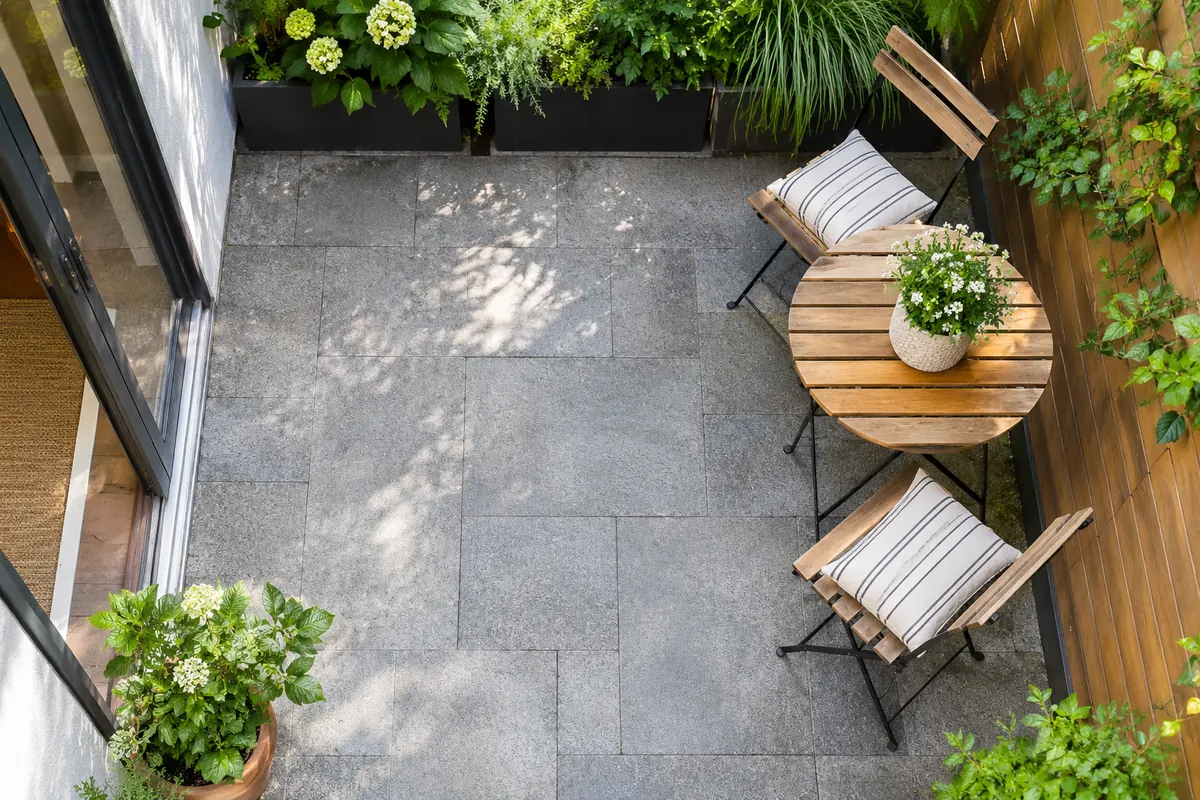
When one person uses the patio most days, a second large chair may occupy useful space for little benefit. Ask how often both seats are actually used. If company is occasional, a suitable spare chair stored elsewhere may support the routine better than two permanent armchairs and a table crowded between them.
If two people use the patio regularly, test both seats together. Check whether each person can reach the table and stand without moving a pot. Do not arrange one comfortable seat and one awkward leftover position simply to keep a particular table in the center.
Consider conversation direction and the view. Slightly angled chairs may feel more connected than two seats facing straight ahead, depending on the space. Keep the arrangement easy to enter from the doorway. A small patio can feel welcoming with two different chairs when they perform their jobs well and share a simple visual connection, such as a related material or cushion color.
7. Treat a side table as useful space, not a display shelf
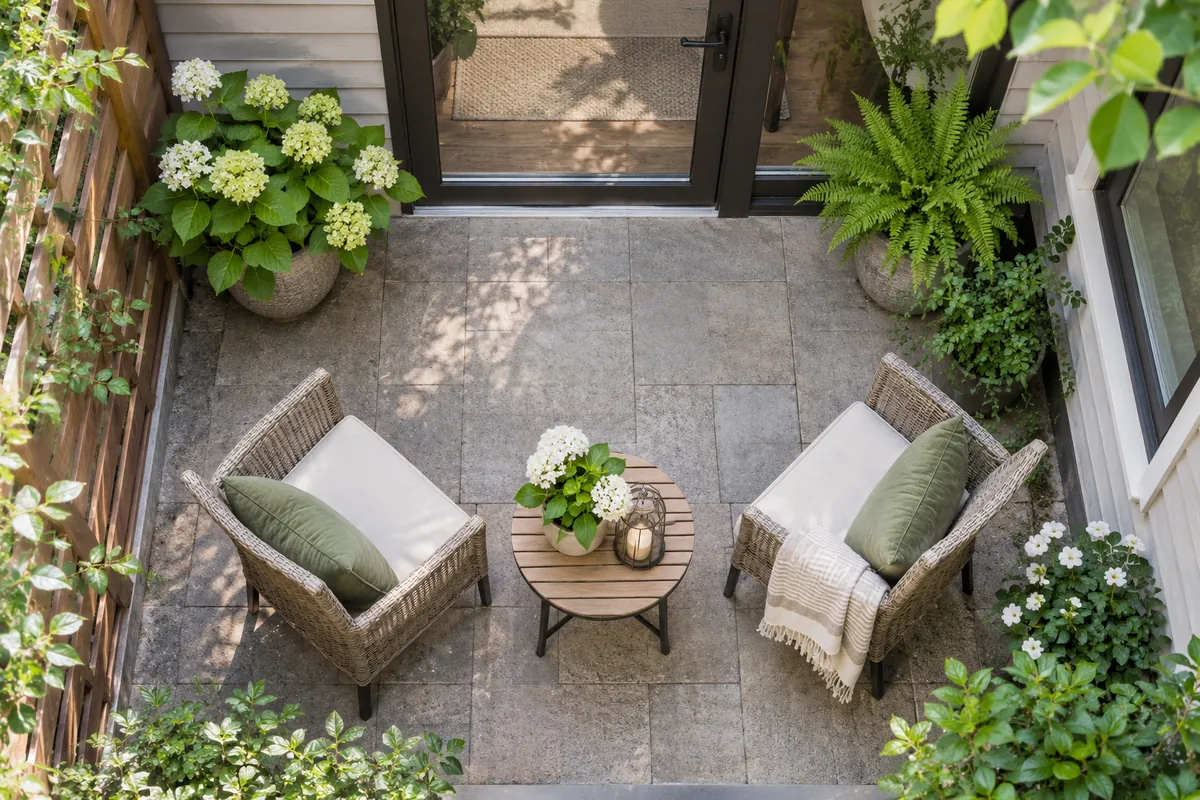
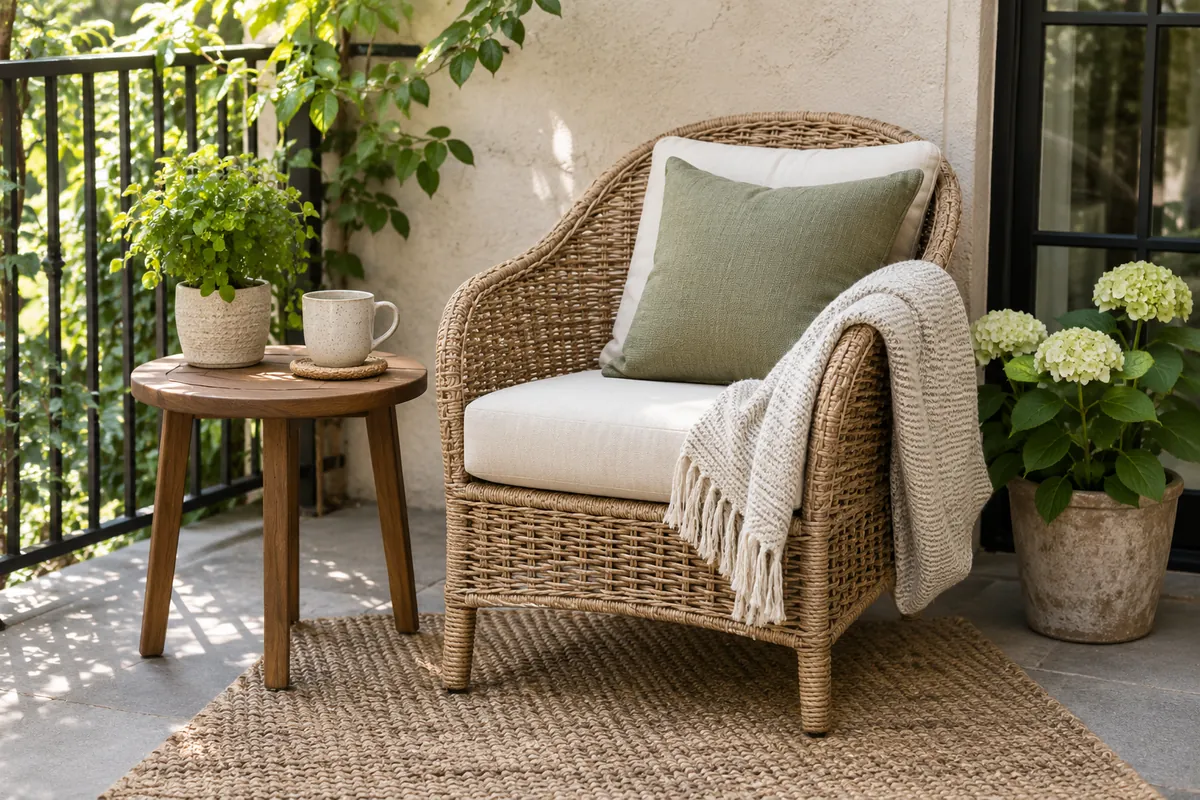
A compact side table can make a chair much more comfortable to use. Place it where you can set down a cup without stretching over an arm or leaning across a plant. Check the height beside the actual seat rather than choosing a table from its appearance alone.
Keep enough of the surface available for everyday objects. A permanent arrangement of decorative pots, lanterns and trays can remove the function you bought it for. Choose one focal detail if you enjoy it, then leave the remaining area open.
Check the intended use and care instructions. A decorative stool or plant stand is not automatically suitable as a table, seat or support for a particular load. Use products according to their instructions and select a surface suited to the conditions it will face. If the side table keeps migrating into the doorway, try a smaller footprint or a different seat position before adding another piece to solve the inconvenience.
8. Separate furniture storage from cushion storage
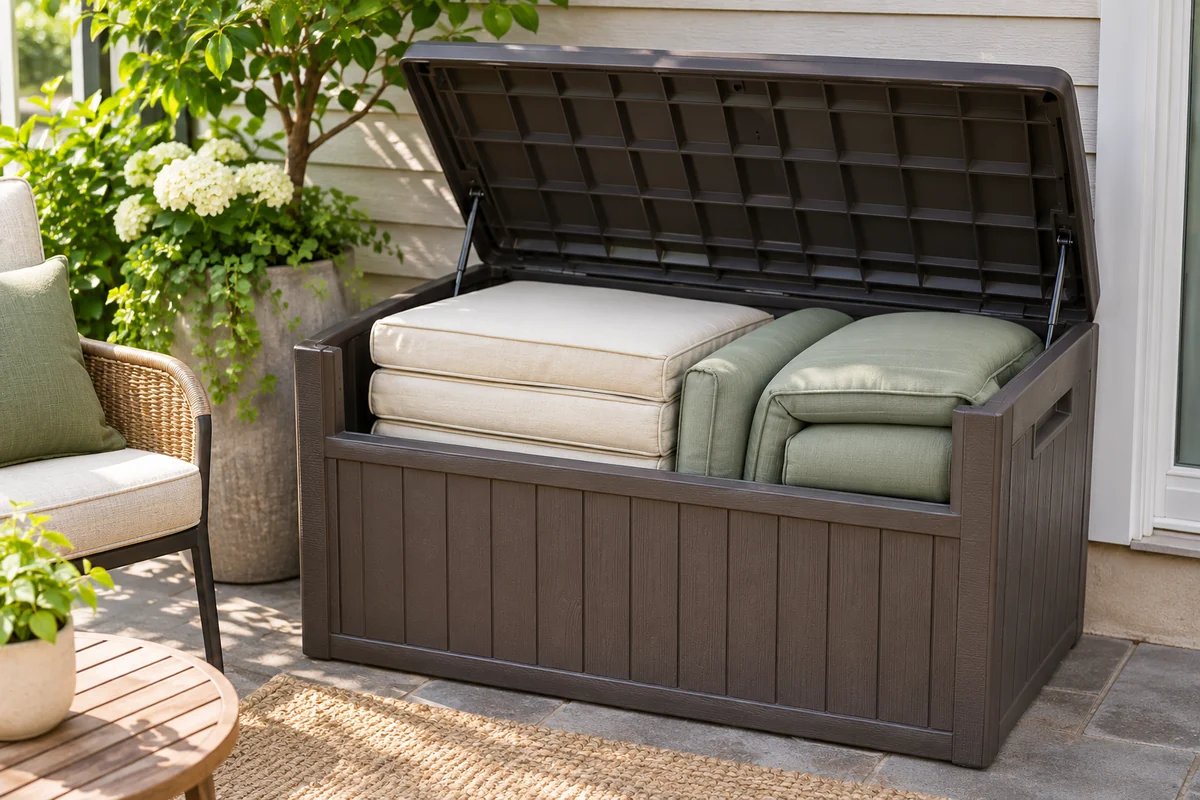
Furniture and removable textiles do not always need the same storage solution. A folding chair may fit in one location, while cushions need a different place under their care instructions. Decide what you actually need to store before choosing a large outdoor box that will occupy a substantial part of the patio.
Measure the box with its lid open and check how you will reach the contents. A lid blocked by a chair or wall makes the routine awkward. Product weather-resistance claims and ventilation details matter, so read the instructions instead of assuming every outdoor-looking box is suitable for every textile.
Compare the box with indoor storage you already have. Carrying two cushions inside may be simpler than dedicating floor space to an extra container. Our small patio color guide connects the decorative choices with a practical maintenance routine. Choose the system you are willing to use after an ordinary evening, not the one that looks most complete in a catalog.
9. Match materials to the care you will provide
Before buying, read the furniture manufacturer’s information on outdoor use, cleaning and seasonal storage. Similar-looking pieces can have different finishes, construction and maintenance requirements. A natural appearance does not tell you how a product should be treated or whether it suits an exposed location.
Think about your own routine. Will you bring furniture inside seasonally? Can you move the piece comfortably? Is suitable storage available? These questions help you compare options without relying on vague labels such as maintenance-free. Keep care instructions with the purchase information so they are available when you need them.
Use existing furniture as a practical reference. If a particular surface is easy for you to keep tidy, note why. If you repeatedly avoid maintaining a finish, be honest about that before choosing another piece with the same demands. Appearance matters, but a chair that fits your maintenance habits is more likely to stay useful than one selected only for its first-day photograph.
10. Let the furniture leave room for planting
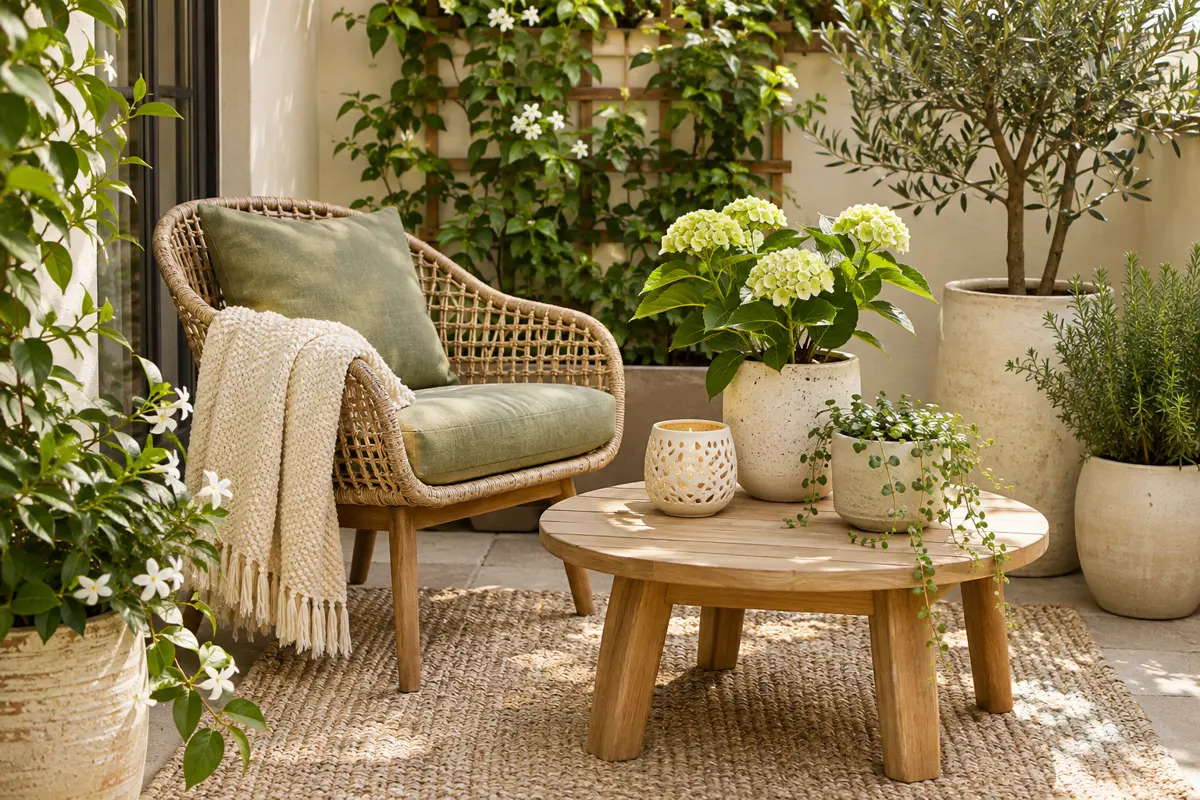
Measure the furniture arrangement first, then identify a suitable planting position within the remaining usable space. Do not leave plants as an afterthought squeezed behind chairs, but do not allow a large container collection to force the seating into an uncomfortable arrangement either. Treat both activities as part of the same plan.
Keep containers independently reachable for inspection and watering. Include mature foliage when judging the space beside a chair. A pot that fits between two legs today may spread into the seating area later. Choose a manageable group rather than placing small containers along every edge.
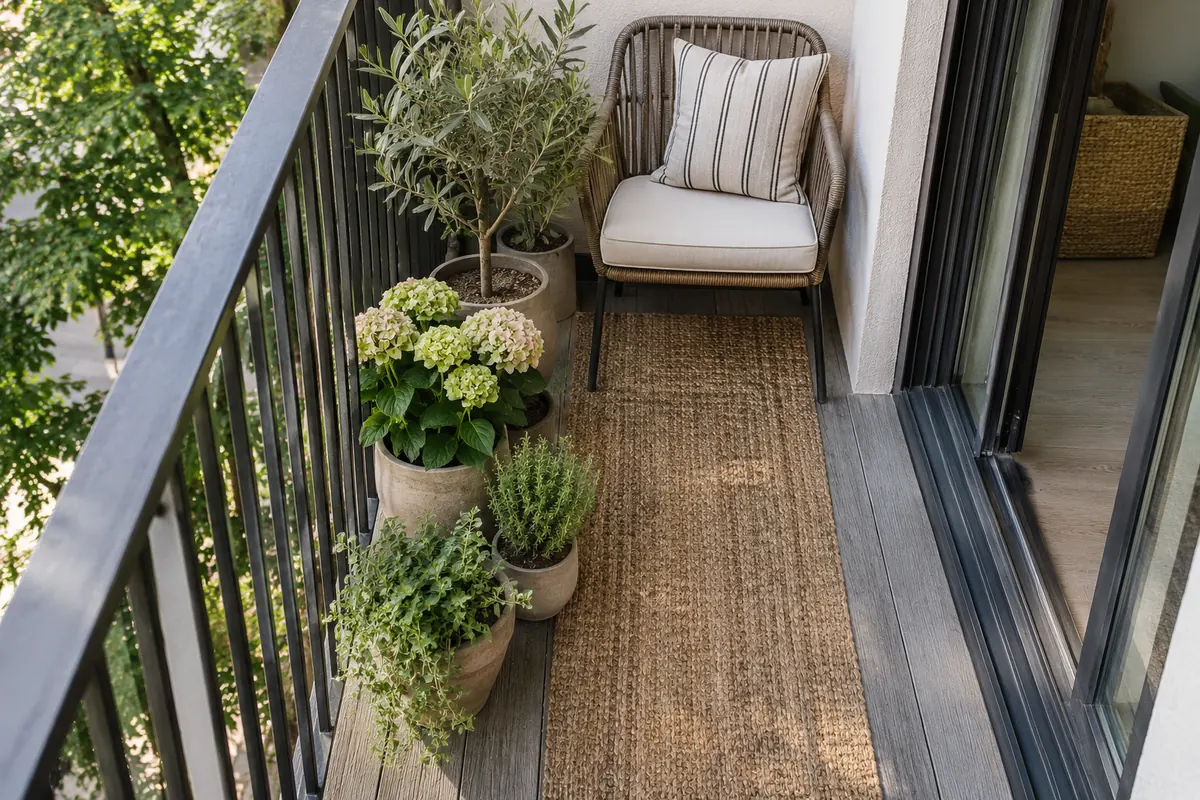
For a balcony, building rules and weight limitations also matter. Our narrow balcony layout ideas provide a useful companion when adapting patio furniture principles to an elevated outdoor space. The aim is a comfortable relationship between the seat, plants and route, with each piece earning its footprint through actual use rather than simply filling a gap.
11. Connect useful pieces with a restrained palette
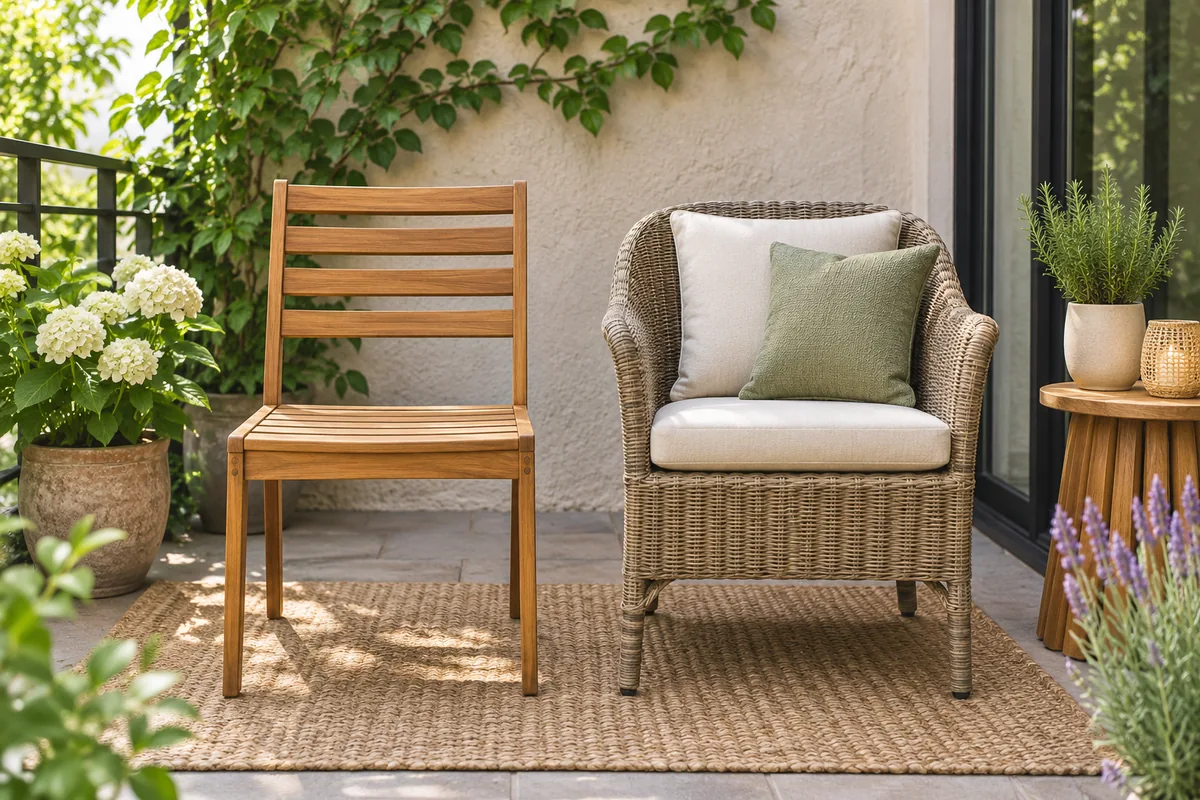
You can make existing furniture feel related without replacing everything as a set. Look for a shared wood tone, metal finish or fabric color, then repeat it selectively. A well-fitting cushion or a simple table can connect two different chairs while preserving the pieces that already suit your household.
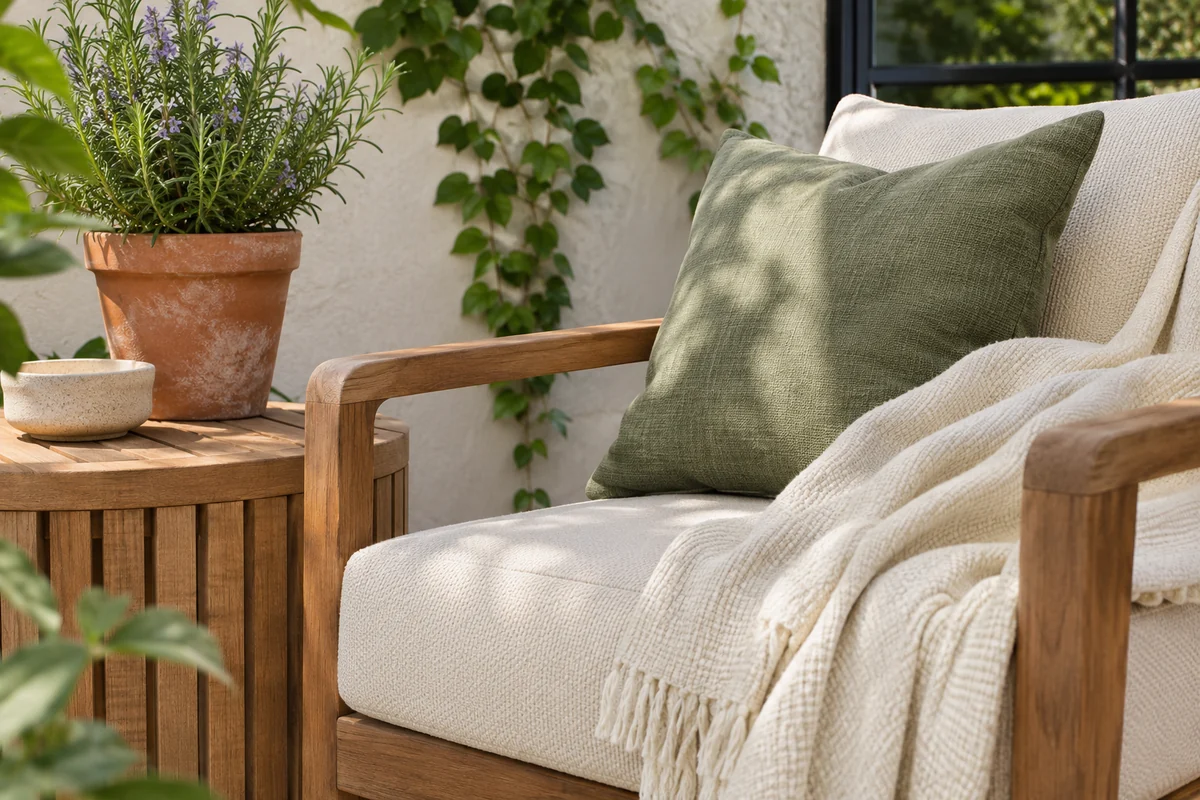
Keep comfort ahead of color. A cushion should fit the seat and your preferred sitting position before it becomes part of the palette. Check storage and care as well as the shade. Adding several pillows to a narrow chair can reduce the space available for the person using it.
Try removing a competing accessory before buying a matching replacement. Sometimes the relationship between furniture pieces becomes clearer when the surrounding details are simpler. Take a photograph from the doorway and another from the chair. Compare the versions while remembering that the arrangement must work in person, not only look balanced from one carefully chosen viewpoint.
12. Trial the complete activity before the final purchase
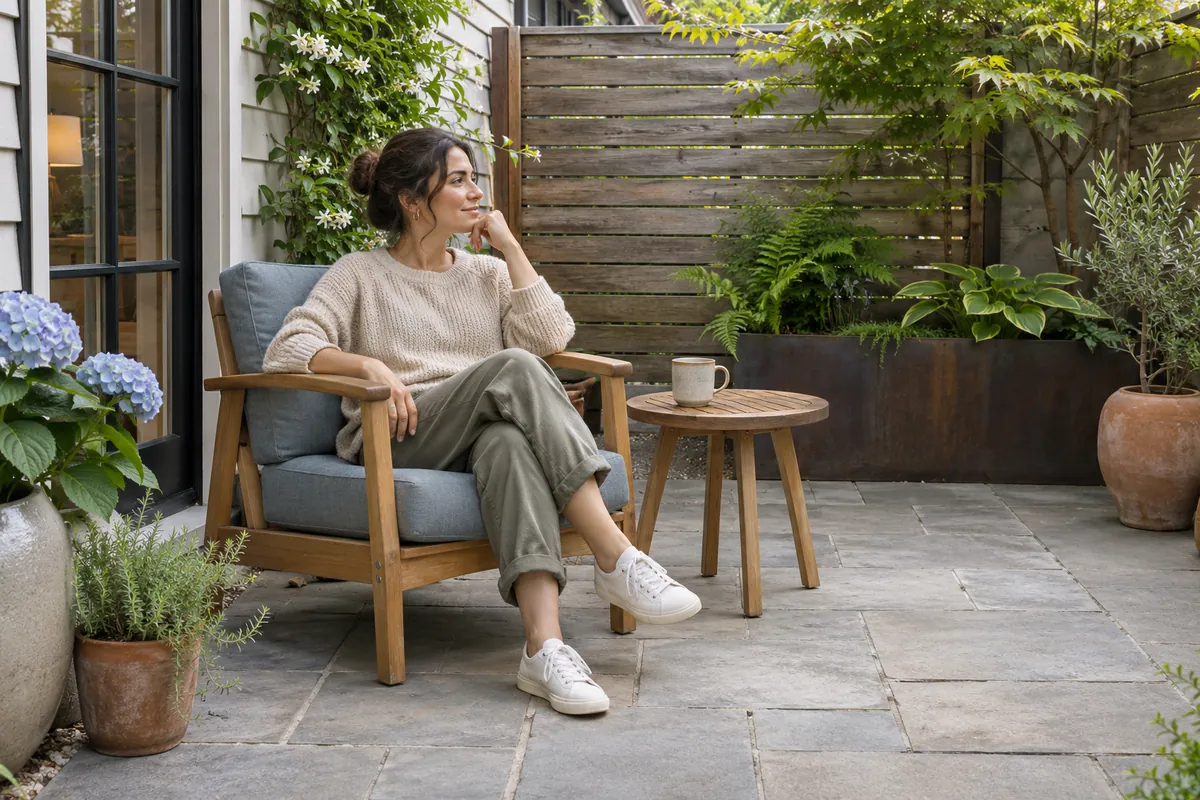
Sit in the proposed arrangement with a book or mug and use it for more than a quick photograph. Notice whether your feet are comfortable, your back has suitable support and you can reach the table without stretching around an armrest or plant. Stand and sit again, then try the route with another regular user seated.
The illustration shows one everyday occupied-seat test rather than a universal ergonomic prescription. Different users will prefer different seat heights, depths and postures. A chair chosen only from its outline can disappoint even when its footprint is small. If possible, test candidates in person and compare the complete dimensions and intended use information.
Write the problem a purchase must solve before shopping: a table within easier reach, a more comfortable seat or an occasional chair with a real storage location. Keep useful existing pieces in the comparison. Our budget patio decorating plan helps prioritize that missing function. After a purchase, use the simple arrangement for a week before adding accessories so you can judge whether the furniture itself improved everyday use.
A short furniture comparison checklist
For each option, record its intended use, overall dimensions, occupied footprint, folded size if relevant, storage location and care instructions. Test seat comfort and the relationship with the table. Check the door fully open and verify access to plants and property features. Keep the option that solves the actual problem with the fewest additional pieces.
Is a matching set better for a small patio?
Only when every piece suits the space and your routine. Separate chairs and a table can work well when the dimensions and comfort are right. A visual connection can come from a repeated finish or color instead of identical construction.
Should I choose the smallest furniture available?
Choose the smallest suitable footprint that remains comfortable for its intended use. A tiny chair you avoid sitting in does not make the patio more useful. Test the person, furniture and route together.
Continue planning your small outdoor space
For a related part of your setup, explore outdoor cushion ideas for small patios. You can also use our balcony plant arrangement ideas guide to connect the next decision with the space and routine you already have.
Save this guide for later
Save one of these Pinterest-style designs for your next planning session. All article images are design illustrations.