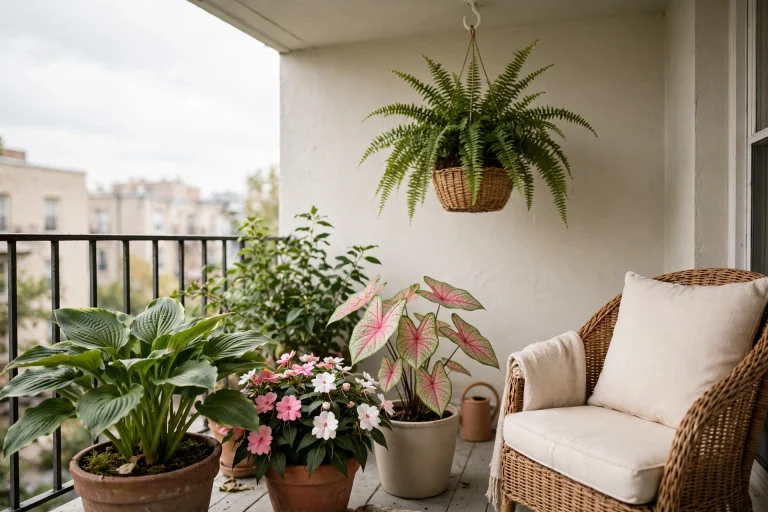
Small Apartment Balcony Garden Ideas: Plan a Space You Can Actually Use
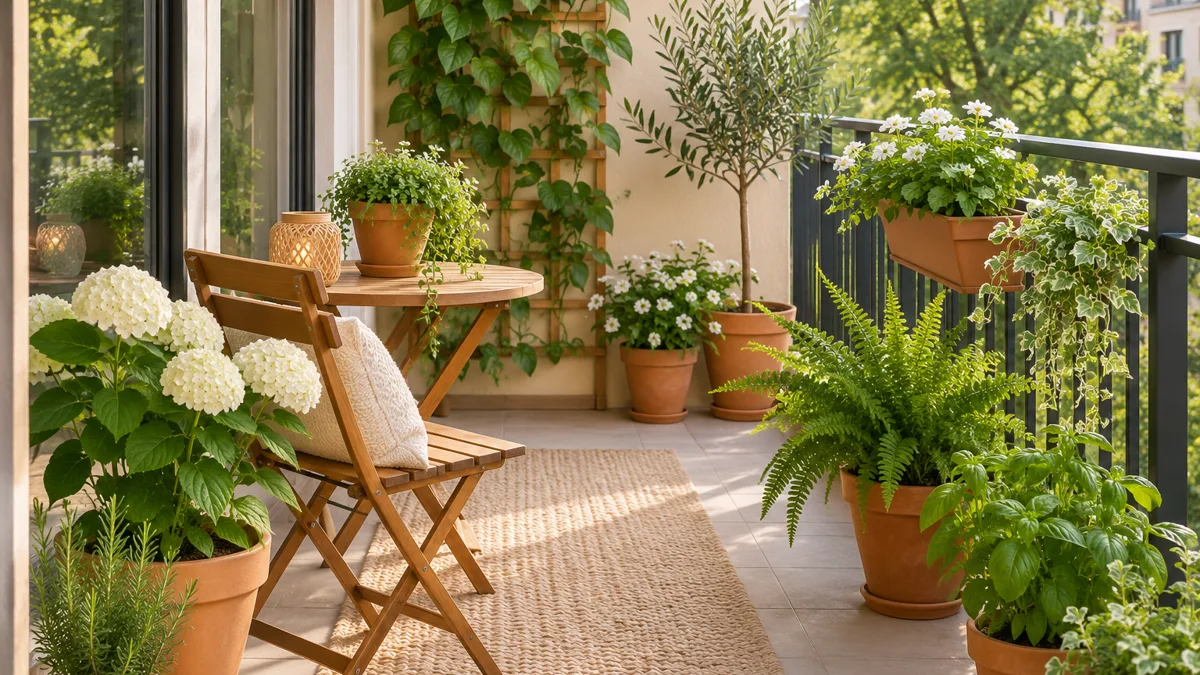
Small apartment balcony garden ideas work best when the balcony remains a place you can use. A healthy basil pot beside a comfortable chair is a better beginning than a collection of planters that blocks the door. Start with the light, the usable floor area and the time you can give the plants. Then choose a layout and a small planting plan together.
This guide combines three realistic layout approaches, plant examples and a first-month routine. The examples are starting points to adapt, not measured building plans or promises that a particular plant will thrive everywhere. For a long, slim space, keep our narrow balcony layout guide open alongside your measurements. All photographs in this article are design illustrations rather than documented customer projects.
In this guide
- 1. Survey the balcony before choosing plants
- 2. Choose one main use for the space
- 3. Try a one-seat balcony garden
- 4. Adapt a two-person coffee arrangement
- 5. Make the planting choices fit the light
- 6. Build a three-pot collection with different jobs
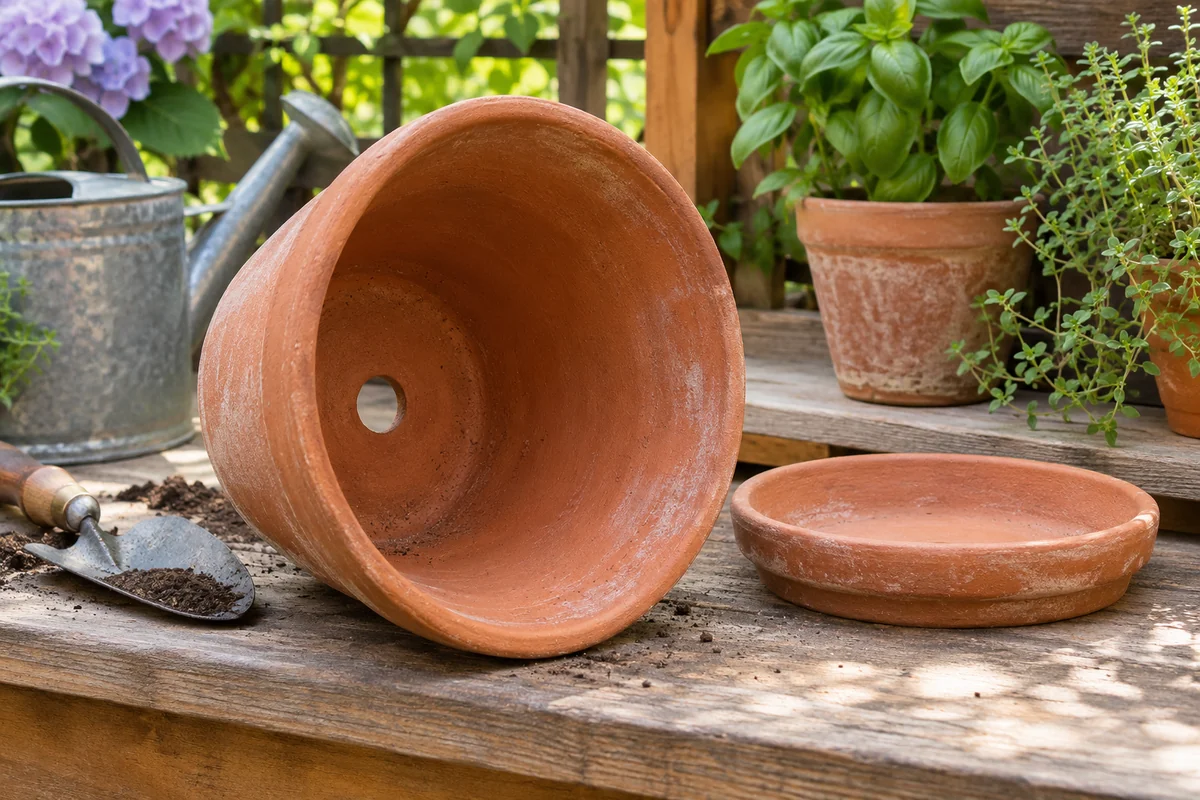
- 7. Choose containers for roots, drainage and handling
- 8. Plant with container mix and room to water
- 9. Use height only when it improves access
- 10. Plan watering around the property
- 11. Make a simple first-month routine
- 12. Finish the garden without filling every gap
- Questions before your first balcony planting
1. Survey the balcony before choosing plants
Measure the clear floor rather than the distance between the outer faces of the railings. Note the doorway, its full swing, any threshold and the position of drains. Photograph the balcony empty if possible. This gives you a useful reference when a chair or a large pot appears smaller in a shop than it will feel at home.
Observe sunlight on more than one ordinary day. Write down when direct sun reaches the proposed growing position and when neighboring buildings interrupt it. A bright balcony can still receive little direct sun. Light also changes through the year, so a spring observation is a starting point rather than a permanent description of the space.
Check exposure to wind and rainfall separately. A roof may keep rain away from the pots while the balcony still gets drying gusts. Ask building management about permitted attachments, water runoff and loading before selecting heavy containers or screens. These limits affect the whole plan, not only the final decorative touches.
2. Choose one main use for the space
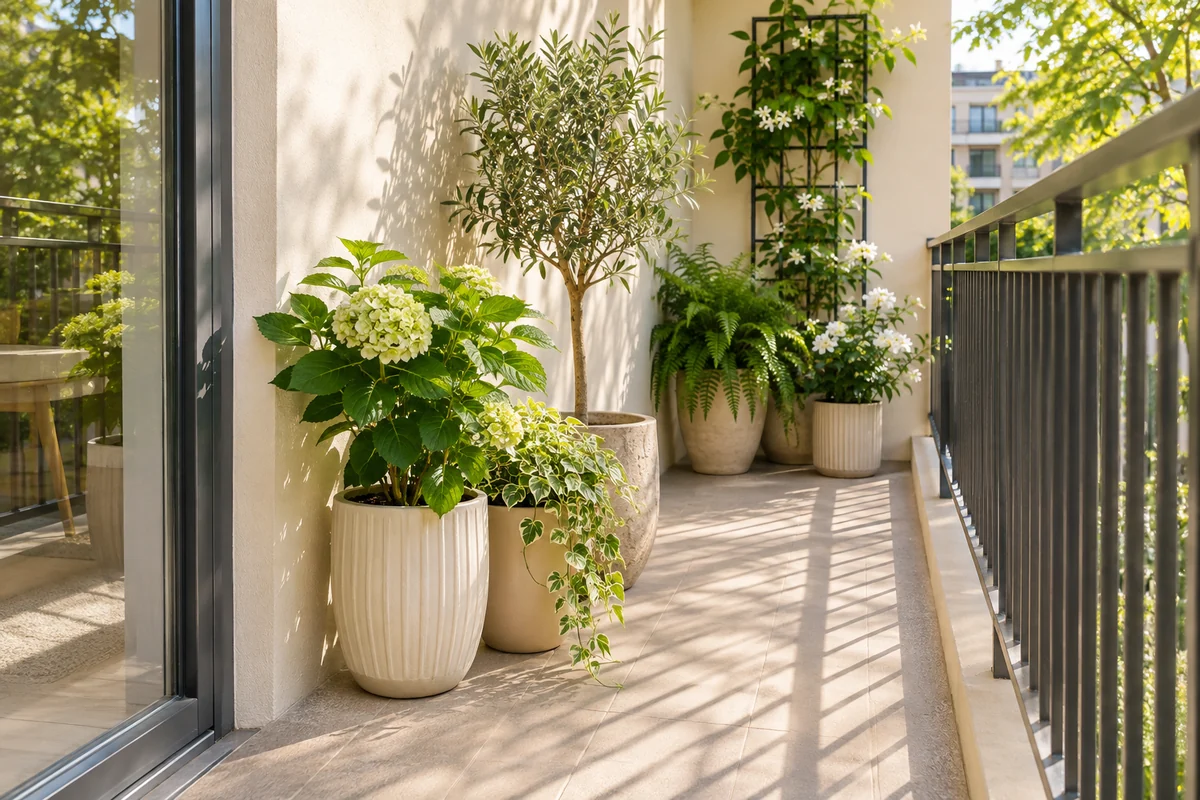
Decide whether the balcony is mainly for reading, coffee for two or a few edible plants. Write that purpose in one sentence. If reading is the priority, begin with the chair and a reachable surface for a cup. If herbs are the priority, identify the best growing position and keep inspection access beside it.
Place existing furniture outside and use it before adding plants. Sit, stand, carry a watering can and open the door fully. A layout that works only when the chair is empty will become frustrating quickly. Keep required access clear and follow the building’s own requirements instead of treating an online spacing suggestion as a rule for every property.
A useful first shopping list might contain one chair, one small table and three separate pots. The second chair, decorative cushion and extra plant stand can wait. Starting with a limited collection helps you distinguish a missing function from an empty area that does not need filling.
3. Try a one-seat balcony garden
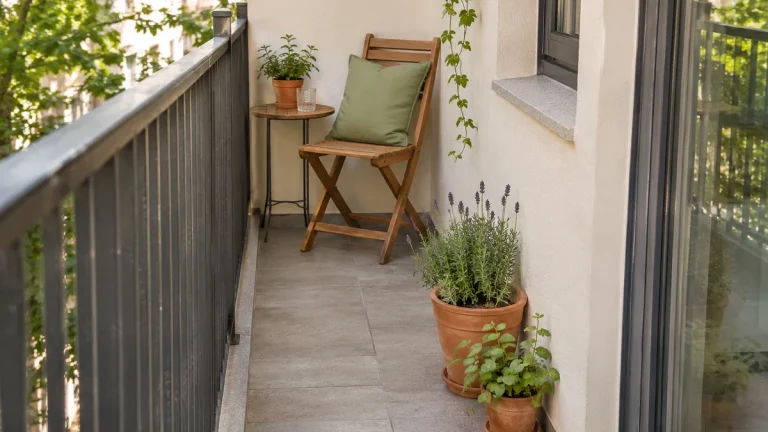
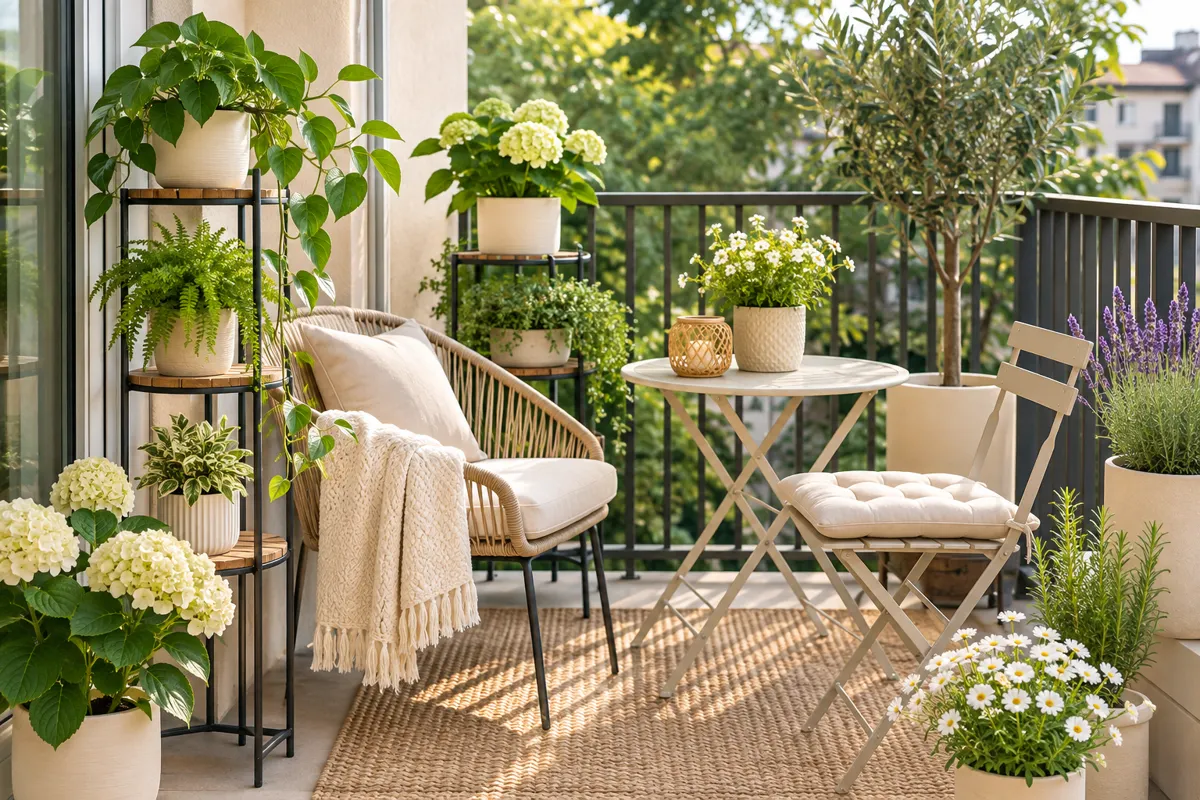
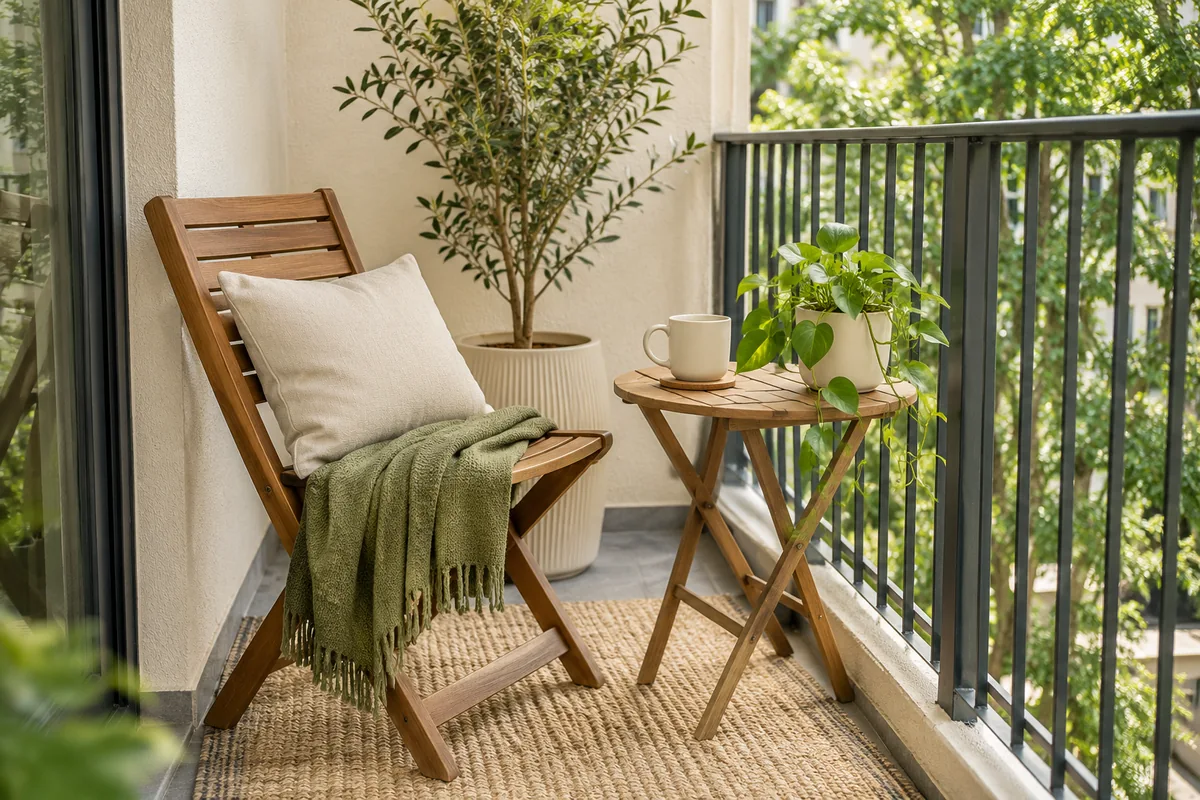
For a solo reading corner, place the chair at an end where it does not interfere with the doorway. Put a small table on the side your hand naturally reaches. Group two or three containers beyond the table rather than scattering pots along both sides of the route. Turn the chair slightly if that improves the view without narrowing access.
Test the arrangement with a book, mug and watering can. You should be able to approach each plant without stepping over the table or leaning across the chair. Allow for the spread of mature leaves as well as the pot’s base. A small nursery plant can disguise how much room the finished planting will require.
Use removable paper templates when considering new furniture. Include the widest parts of chair legs and the area occupied when someone stands. Our small patio furniture ideas explain these comparisons in more detail. Choose furniture from its actual measurements and comfort rather than the word compact in its description.
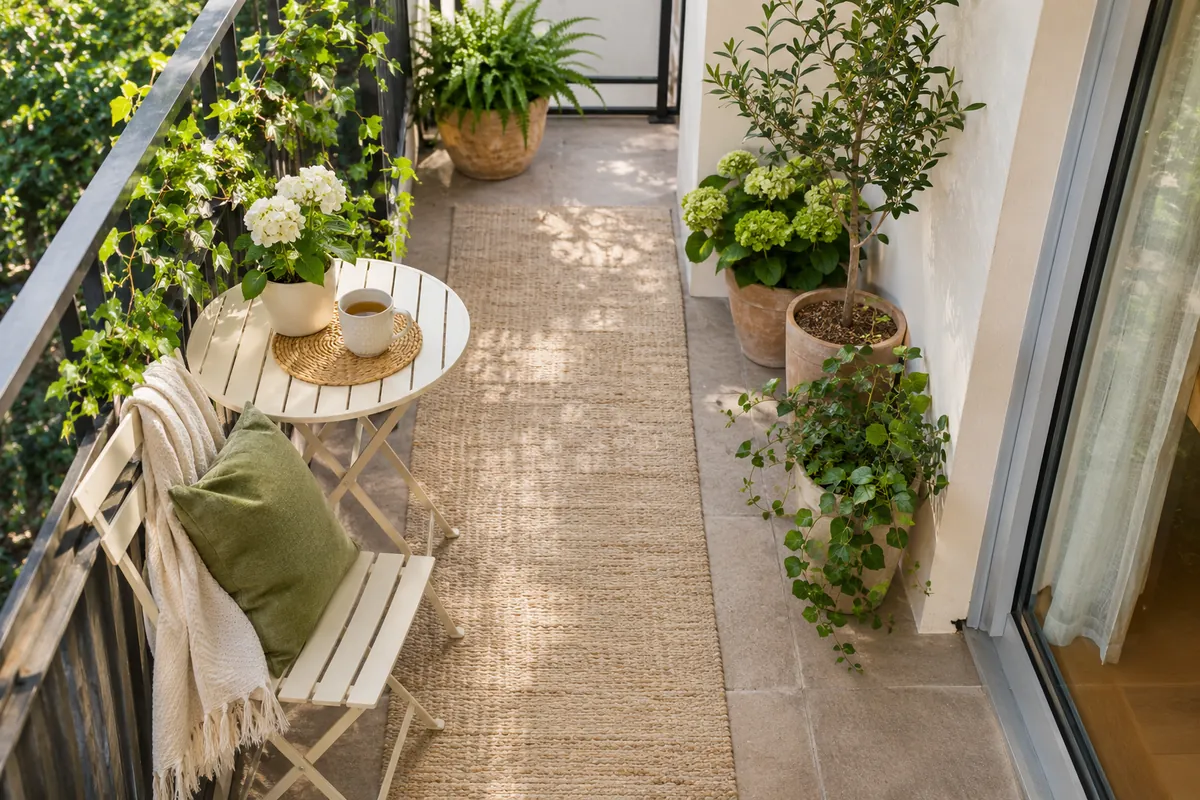
4. Adapt a two-person coffee arrangement
A two-seat arrangement needs more than enough floor for two folded chairs. Check both seats occupied, knees beneath the table and room to get out without moving a container. A small table placed toward one side may work better than a centered table that divides the remaining route into two unusable strips.
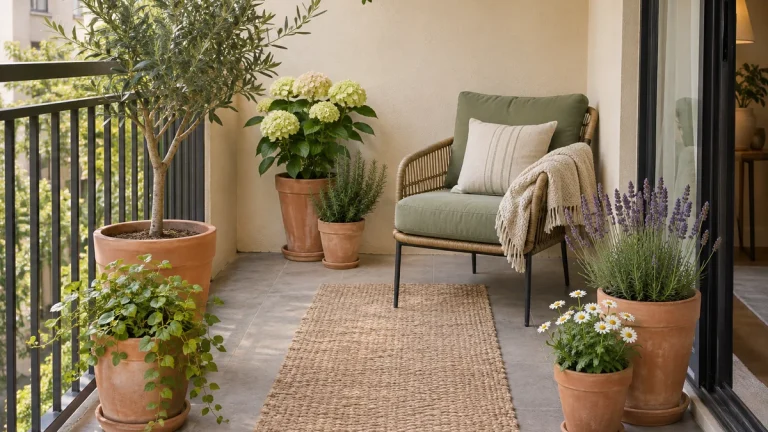
Keep the main plant group to one end or one wall. Two or three related containers can provide a garden backdrop without creating a ring of obstacles around the furniture. If the second seat is used only occasionally, compare a permitted indoor storage location for a folding chair with leaving it outside permanently.
Do not choose a permanently crowded layout for an occasional gathering. A balcony used comfortably every morning is more valuable than one arranged for an event that rarely happens. When the space cannot accommodate two seats and the required access together, use one regular seat and another place for shared coffee instead of forcing the plan.
5. Make the planting choices fit the light
Choose plants after the light survey, then check the nursery label for the actual variety. Full sun commonly means at least six hours of direct sun, but heat, reflected light and local climate still affect performance. A balcony in a hot region may need a different seasonal strategy from one with cool summers and the same compass direction.
| Starting conditions | Plants to investigate | Main planning question |
|---|---|---|
| Sunny, warm growing season | Basil, thyme, compact flowering annuals suited locally | Can each pot receive appropriate light without overheating? |
| Morning sun and a sheltered afternoon | Parsley, chives, mint in its own pot | Is there enough direct light for useful growth? |
| Little direct sun | Shade-adapted foliage plants recommended locally | Is foliage a better goal than a large edible harvest? |
Treat these as a shortlist rather than a universal planting recipe. Parsley and mint still need suitable light and care; shade tolerant does not mean no light. For a first edible collection, our small container herb garden compares separate pots and individual watering needs.
6. Build a three-pot collection with different jobs
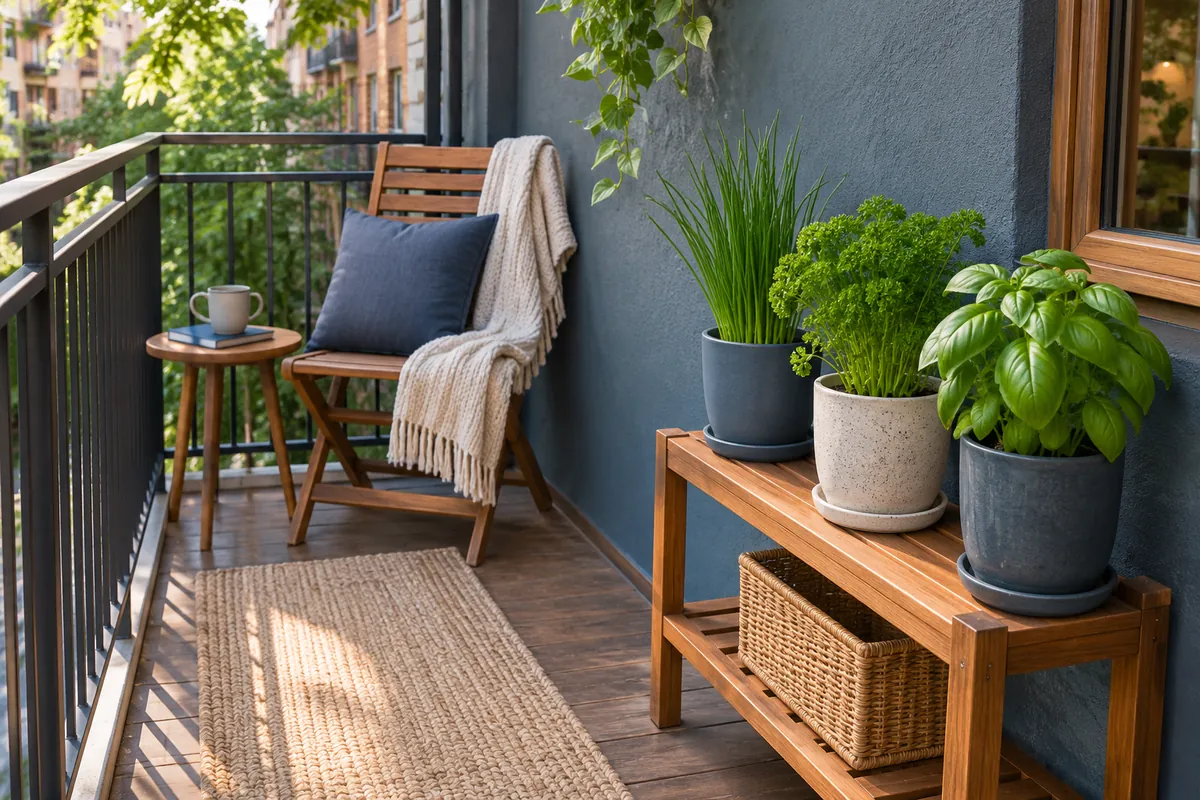
Give each pot a reason to be there. One can provide an herb you cook with, one can provide seasonal color and one can contribute foliage or texture. Alternatively, grow three culinary herbs you regularly use. Do not buy three unrelated plants simply because they are small enough to carry home together.
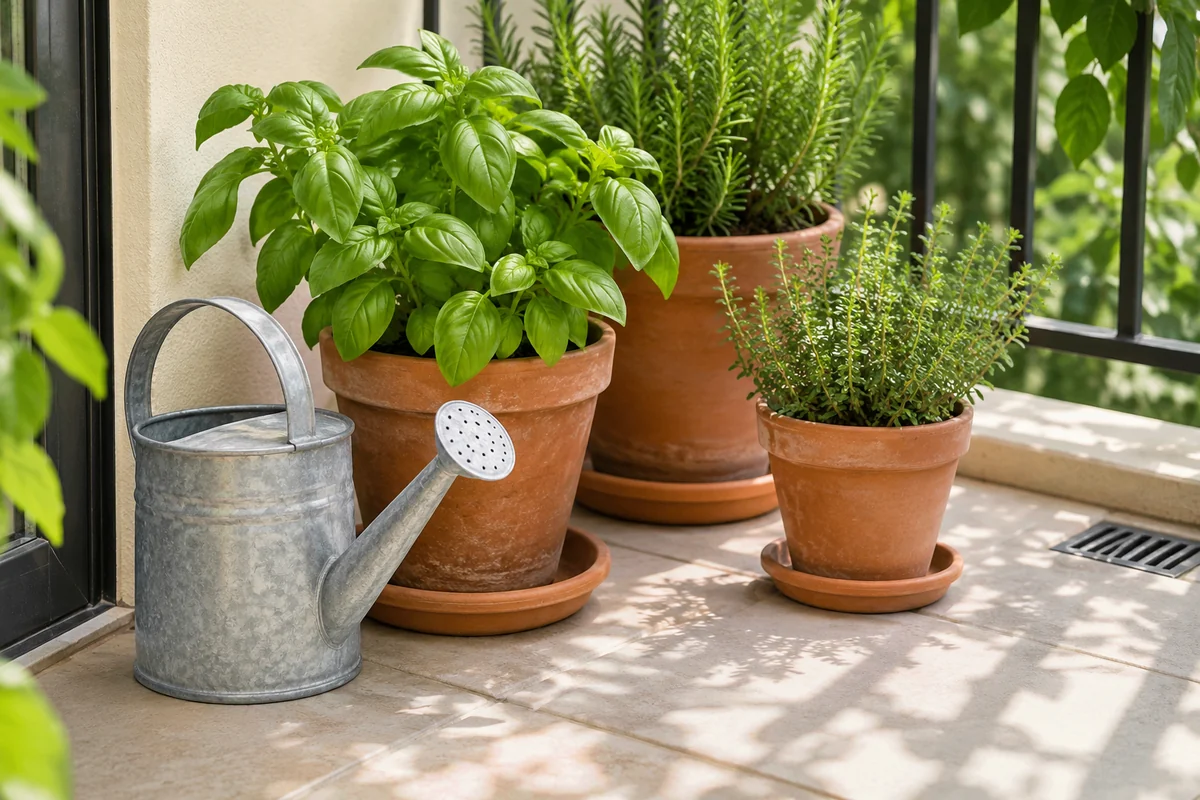
For example, a sunny summer herb collection could include basil, chives and thyme in separate containers. The different forms provide variety while individual pots let you adjust watering. This example does not require equal pot sizes: choose enough root space for each plant’s mature size and expected growing season.
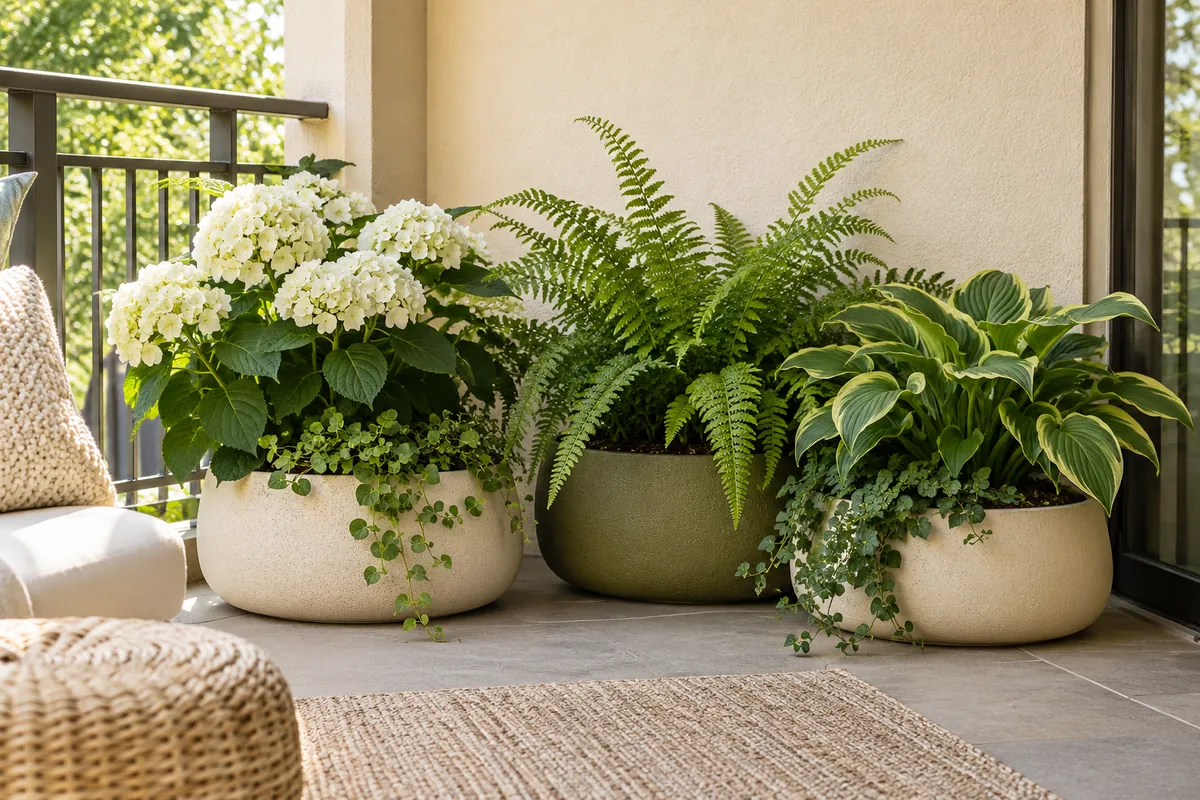
Group the containers visually while leaving their rims reachable. Use a repeated material or color to connect them instead of mixing every pot into one large planter. If you want help with height and grouping, see our balcony plant arrangement ideas. Keep the tallest foliage where it will not shade every smaller plant or brush against someone using the chair.
7. Choose containers for roots, drainage and handling
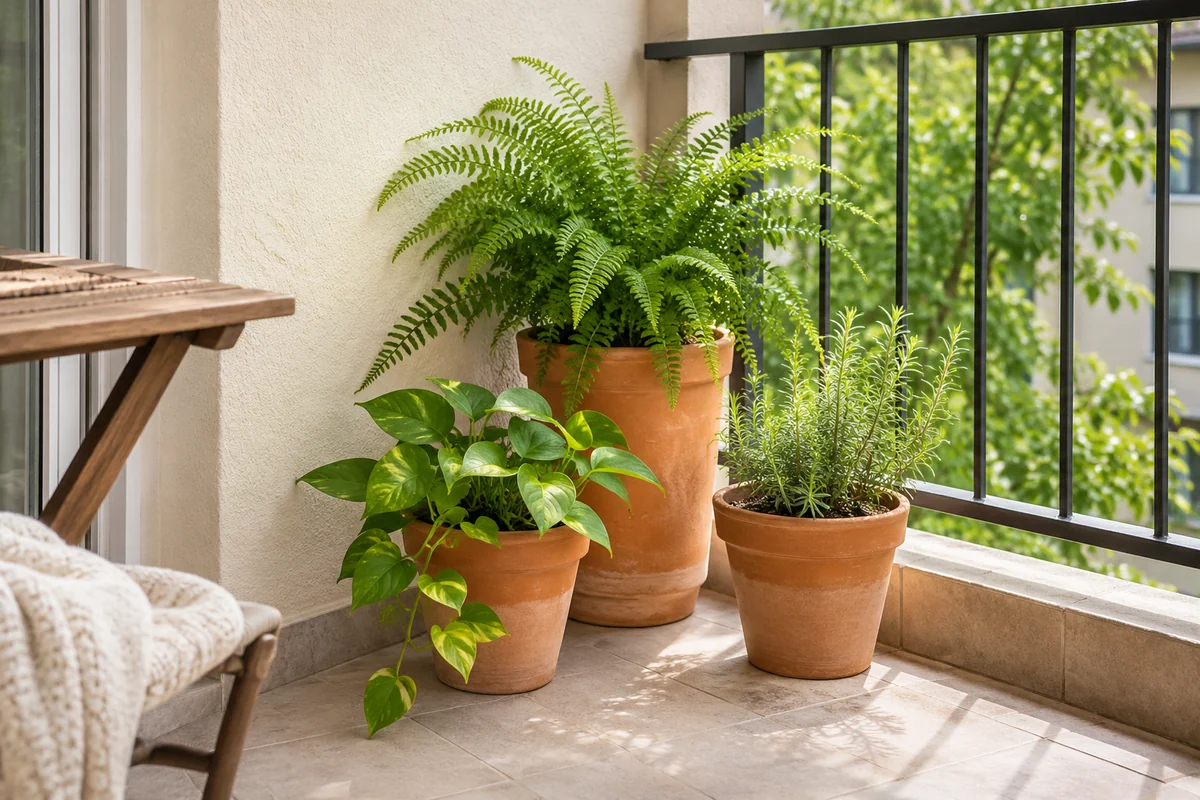
Select pots with working drainage and a manageable filled weight. Consider their usable volume, depth and stability, not only the opening diameter. A wide rim can make a shallow container look generous even when the root space beneath is limited. Match the container to the plant rather than expecting pruning to solve every size mismatch.
Unglazed terracotta, plastic and glazed containers behave differently. Terracotta is porous and can dry relatively quickly; plastic often holds moisture longer. Neither material removes the need to inspect the mix. Choose based on your conditions, care routine and ability to move the filled container safely.
If a decorative outer pot has no drainage, use an appropriate removable nursery pot inside and manage collected water. The outer container must not become a hidden reservoir around the roots. Our container gardening guide explains how potting mix and drainage work together. Keep the setup simple enough to inspect without dismantling the whole balcony display.
8. Plant with container mix and room to water
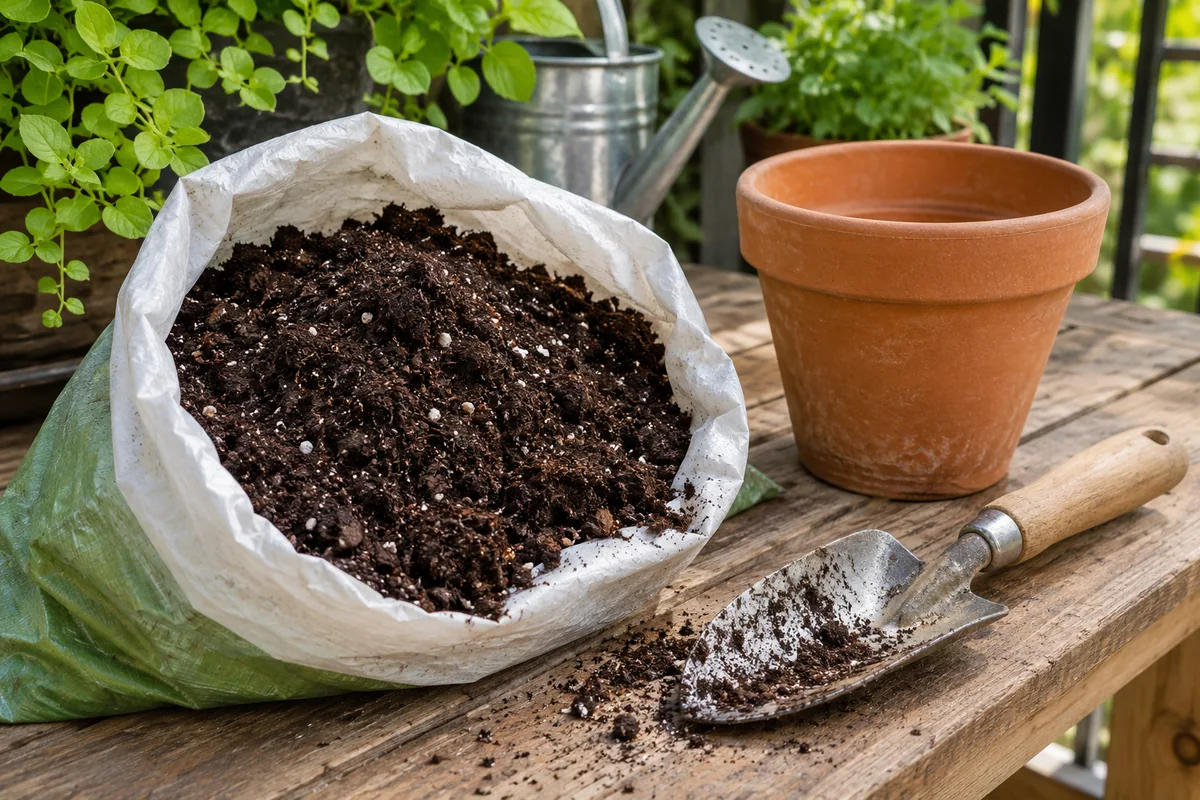
Use a suitable packaged container mix rather than filling pots with dense garden soil. Read whether the mix already contains fertilizer and what plants it is intended for. Pre-moisten dry mix as directed so that initial watering reaches the root zone rather than running through dry channels beside it.
Place a transplant at the depth appropriate to that plant, usually close to its nursery growing level for common herbs and annuals. Leave practical watering space below the rim. Firm gently to support the root ball without compressing the entire pot into a hard mass. Follow the plant’s specific instructions when they differ from a general transplanting method.
Water after planting and observe drainage in a permitted place. Do not add a gravel layer as a substitute for drainage holes. For the horticultural background, consult University of Maryland Extension’s container-growing guidance. The initial setup should make later watering easier, with an accessible rim and a visible place for excess water to collect temporarily.
9. Use height only when it improves access
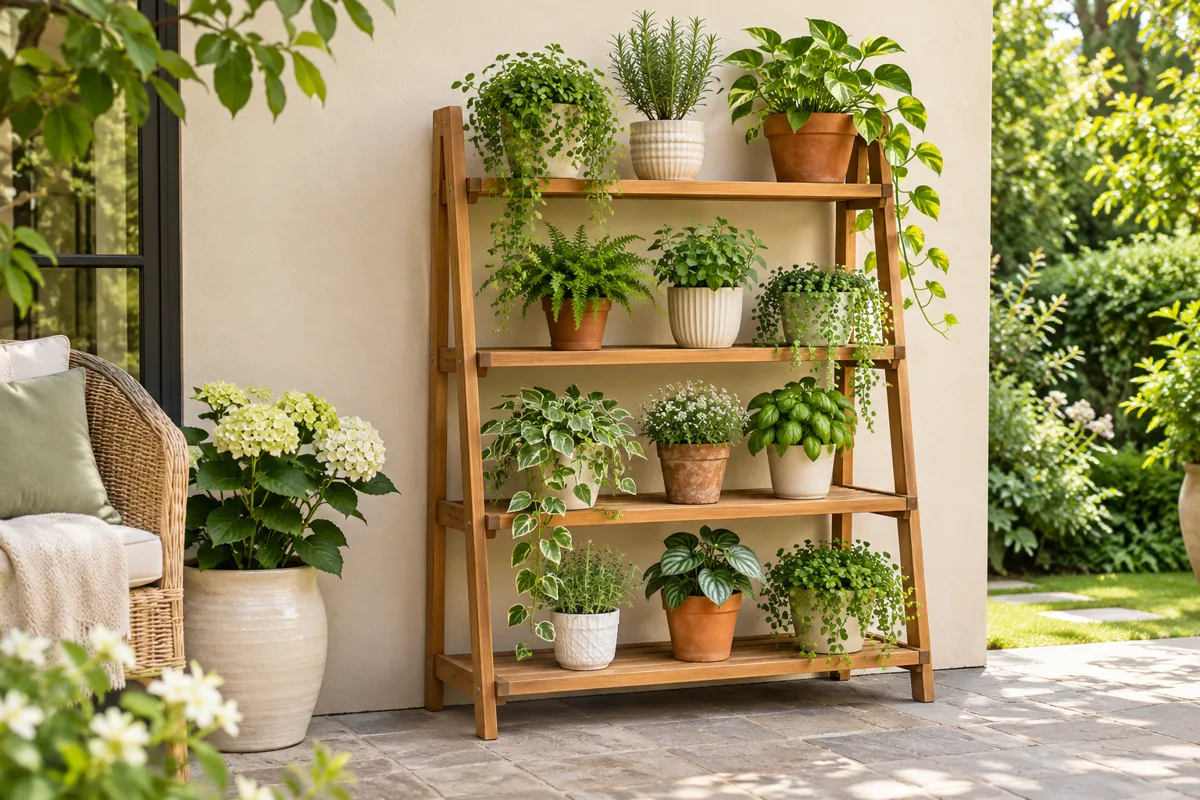
A low freestanding shelf can make a small plant group easier to see. Compare its total footprint with arranging the same pots on the floor. Include feet, projecting shelves and the space needed to lift each pot. A shelf that technically holds six containers may work better with three or four that you can reach comfortably.
Place heavier containers low and follow the stand’s actual load and anchoring instructions. If a product requires attachment that your property does not permit, choose another product. Avoid hanging or balancing objects on a railing without an approved method. Elevated outdoor spaces deserve a plan that considers what could fall beyond the balcony.
Leave gaps for growth and inspection. Lower plants may receive less light beneath upper shelves, so shelf position is also a growing decision. Our vertical balcony garden ideas provide a fuller comparison. You can have a successful balcony garden without a stand at all when a simple floor-level group fits better.
10. Plan watering around the property
Walk through a complete watering session before buying more plants. Bring the can from its filling point, inspect the mix, water only the containers that need it and deal with runoff. Keep doors, drains and neighboring areas in mind. A balcony that is easy to water responsibly is more likely to remain a pleasant garden.
Different pots will dry at different rates. Inspect the growing mix and learn the weight of the container when moist and when approaching the next watering. Do not use a fixed daily amount for basil, thyme and a large foliage plant merely because they share a display. Weather and plant growth change demand through the season.
Record a few observations during the first week. If a pot remains wet much longer than expected, check drainage, light and container size before adding more water. Use our container watering guide for troubleshooting. Empty collected water appropriately and return equipment to its home so maintenance does not leave the route cluttered.
11. Make a simple first-month routine
During the first week, focus on observation rather than adding plants. Check moisture, foliage and the practicality of the furniture arrangement. Look under leaves and around the container base. Notice whether one position is much hotter or windier than the others, and adjust gradually when a plant’s requirements justify a move.
In the second week, review the original purpose. Are you using the chair? Can you reach the herbs? Is there a pot you move every time you open the door? Resolve that repeated inconvenience before buying a decorative replacement. A small change to position can be more useful than a new accessory.
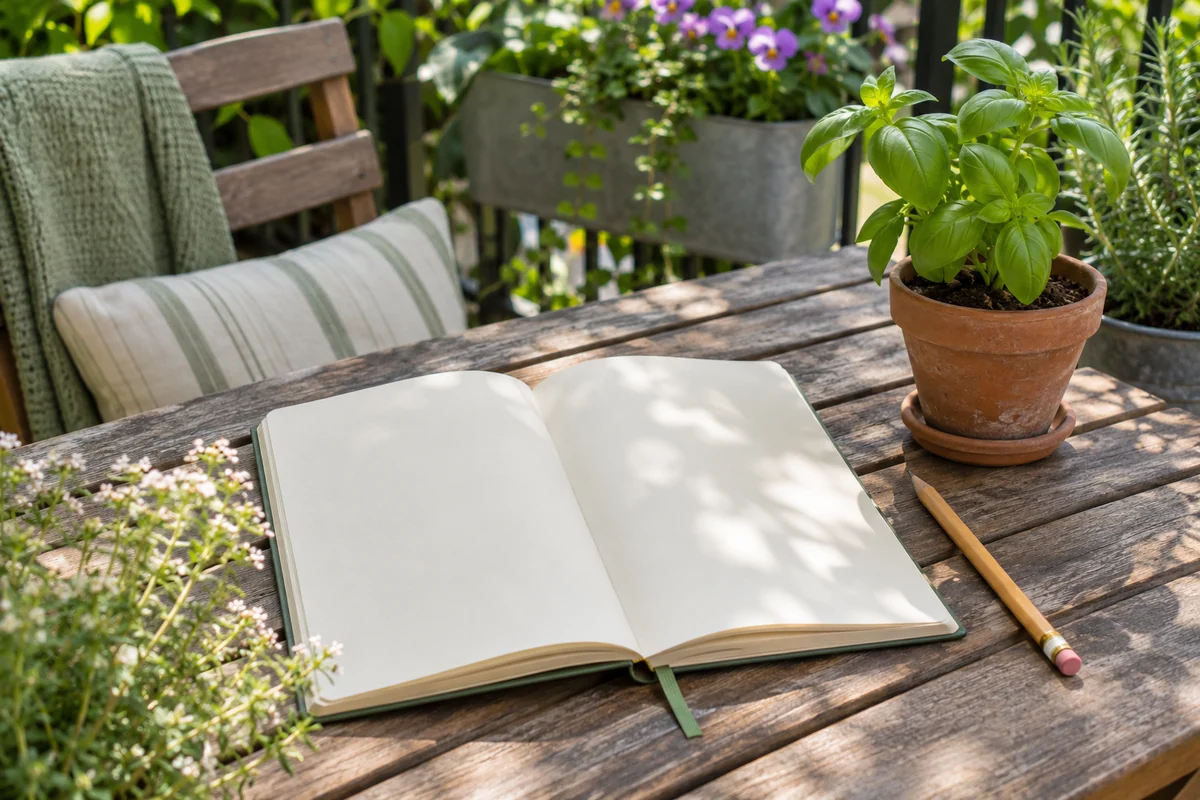
By the end of the month, write down what worked and what needs a different seasonal approach. A basic notebook with light observations, plant names and watering checks is enough. This record helps you make the next purchase deliberately. It also gives you a realistic account of your own balcony instead of relying on a photograph from a different climate.
12. Finish the garden without filling every gap
Choose a restrained finishing layer after the plants and seating work. One washable cushion, a useful tray or a repeated pot color can connect the arrangement. Keep the tabletop available for its main job. A balcony does not need to resemble a fully accessorized outdoor room to feel welcoming.
Wind deserves special attention when adding lightweight objects. Store temporary textiles and small loose items according to their instructions and the conditions. Keep containers clear of drain access and review the layout as plants grow. A gap that was generous at planting can disappear when foliage spreads.
The first version is complete when you can sit comfortably, care for every plant and move through the balcony without a complicated reset. Expand only when you can name what the next object will improve. A successful small apartment balcony garden is a manageable relationship between plants, people and the building, with enough room for all three.
Questions before your first balcony planting
Can I grow vegetables on a small balcony?
Possibly, if the light, container volume, season and property rules suit the crop. Start with one appropriate variety and learn its needs. A large fruiting crop usually needs more commitment than a few culinary herbs, so compare the expected harvest with the footprint and care involved.
How many plants should I start with?
Three separate containers make a useful trial, but the right number can be one. Start with what you can inspect and water comfortably. Add another only when the current collection remains healthy and the balcony still supports its main activity.
Should I use matching pots?
Matching is optional. A repeated material, related color or deliberate group can connect different containers. Root space, drainage and handling matter more than making every pot the same size. Keep those functional differences visible in your plan.
Save this guide for later
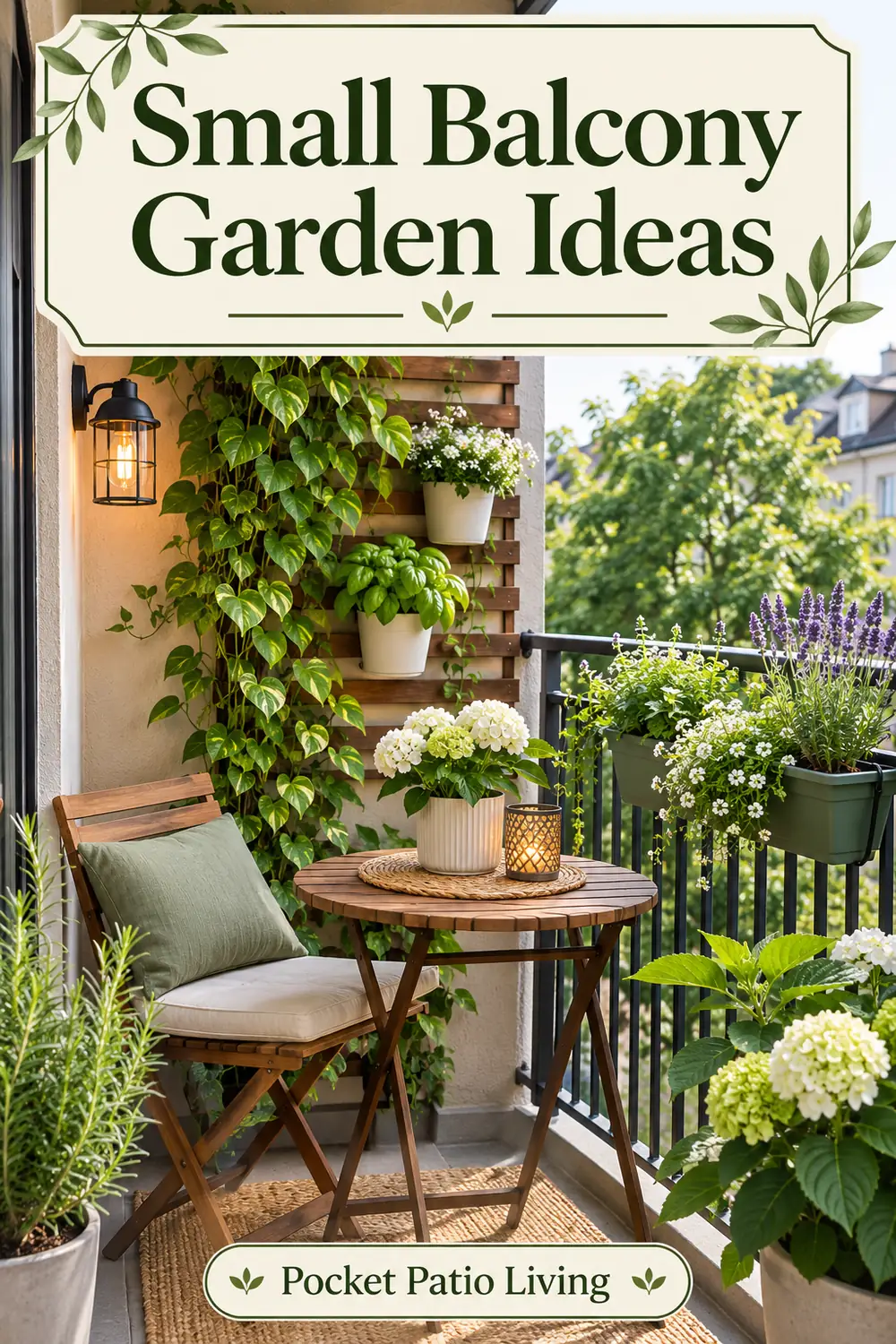
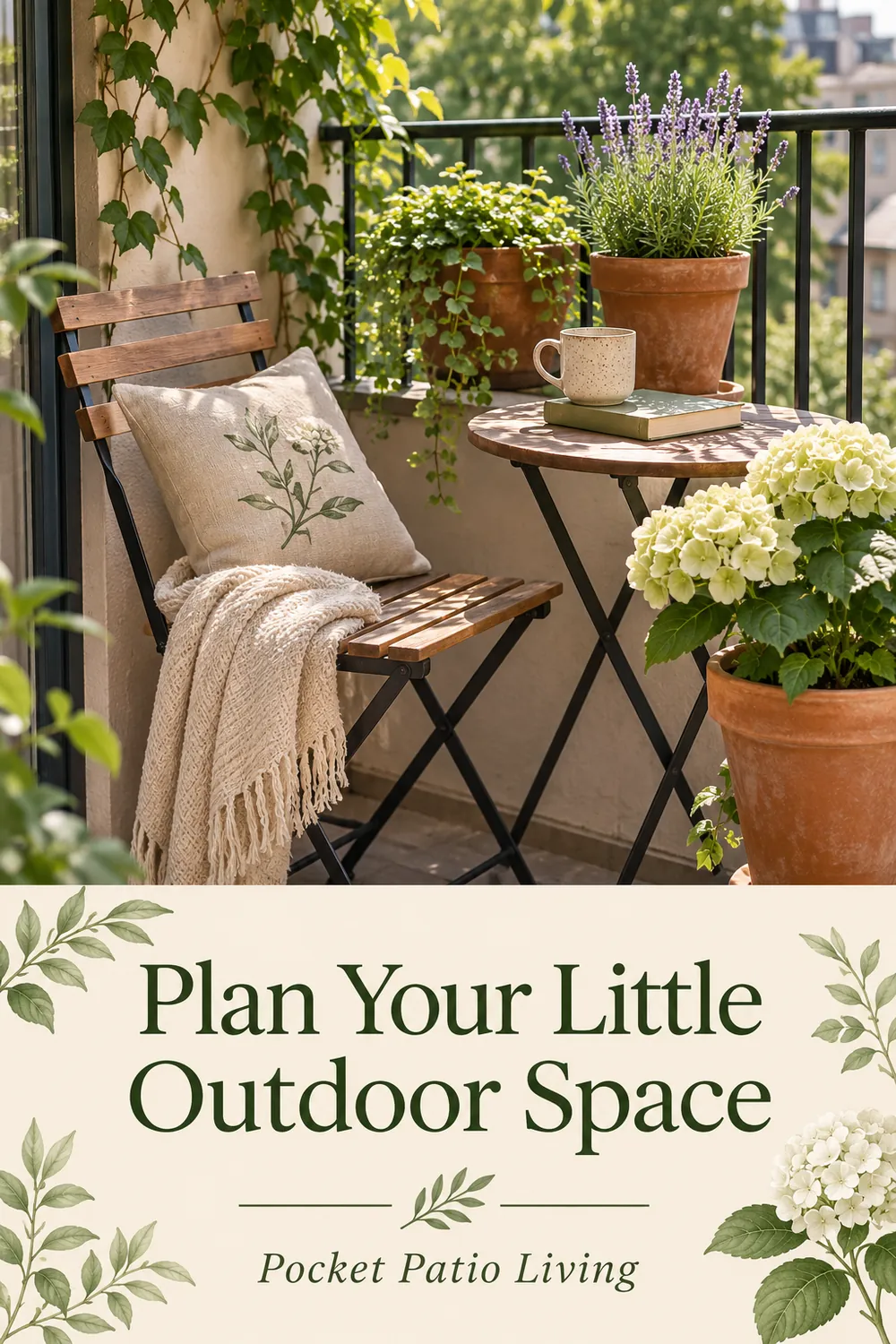
Save these Pinterest graphics for your next planning session. Adapt the ideas to your own space, climate and care routine. Article images are design illustrations.