Small Patio Table Decor Ideas: 12 Ways to Style a Useful Surface
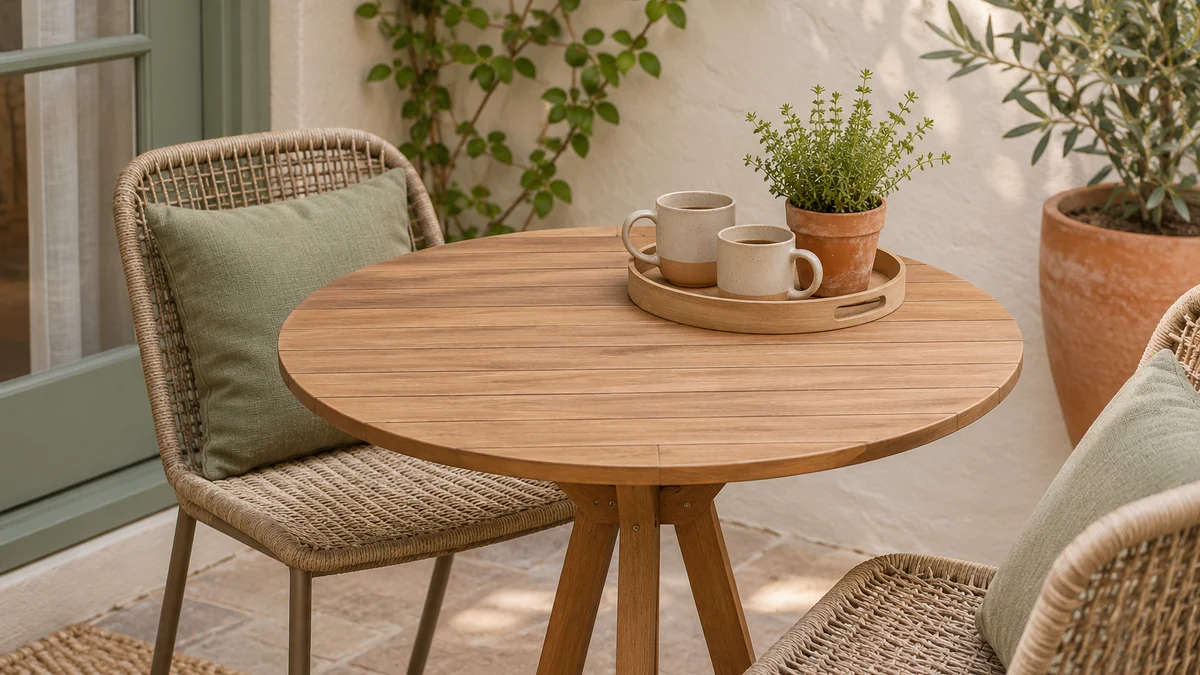
The most useful small patio table decor ideas leave room for the reason you brought a table outside. A cup, a book or a simple meal needs a landing place. On a compact surface, a large centerpiece can remove that function even when the arrangement looks attractive from the doorway. Begin with everyday use and let decoration support it.
This guide offers twelve ways to refine a small tabletop using modest, movable details. Choose a few that suit your table rather than combining every idea. For the relationship between the table, chairs and walking route, start with our small patio layout guide. For colors and materials across the whole space, use our small patio color ideas as a companion.
In this guide
- 1. Mark the everyday working area before choosing decoration
- 2. Use one small pot as the main detail
- 3. Compare the tray's carrying job with its tabletop footprint
- 4. Choose a low arrangement for conversation
- 5. Choose one of three small table styling recipes
- 6. Let one textile soften the scene
- 7. Move decoration toward an edge when space is tight
- 8. Keep a reading table ready for a real book
- 9. Use the surrounding plants as part of the composition
- 10. Plan a simple coffee-to-snack reset
- 11. Check the view in ordinary outdoor light
- 12. Finish with a clear-away habit
- A small tabletop checklist
1. Mark the everyday working area before choosing decoration
Begin with the objects the table needs to hold during ordinary use. Put down two mugs, an open book or the plates you actually use, then sit in the regular chairs. Check whether both people can reach and set something down without careful placement. The usable surface is defined by that activity, not by the largest collection of accessories you can fit into a photograph.
For a hypothetical 24-inch round table, make a paper outline before buying a tray or centerpiece. Place the actual mugs and a paper version of the proposed decorative footprint on it. The outline helps you compare options, but the diameter alone cannot tell you whether a particular arrangement will feel comfortable. Chair position and reach matter too.
Keep the remaining space intentionally limited. Choose one small decorative element only after the normal activity works, and remove it again to compare the clear version. Our small patio layout guide connects the surface with the surrounding seating, while the furniture guide helps if the table is the wrong height or distance. Decoration should follow a useful seat-and-table relationship.
2. Use one small pot as the main detail
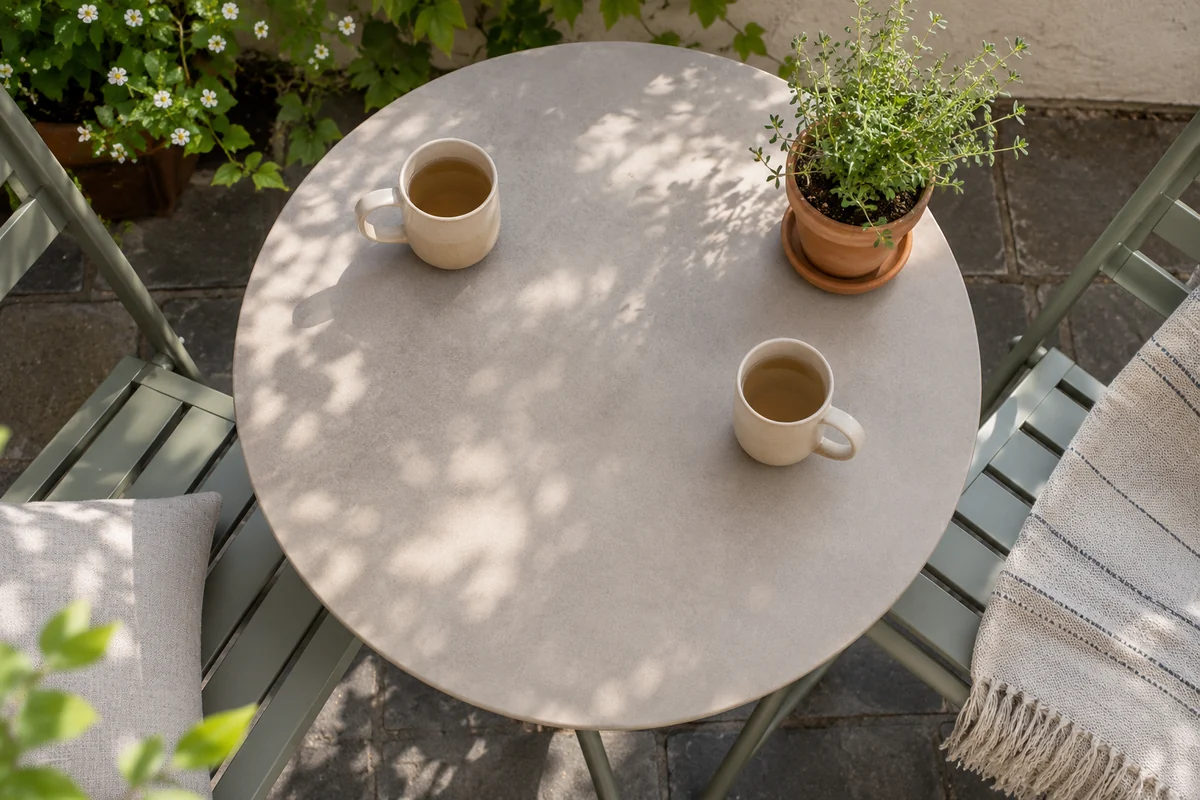
A modest plant container can bring a tabletop into the surrounding garden without covering much of it. Choose the planting arrangement for the actual plant, then check whether the filled container is suitable for the table and easy to handle. A decorative outer pot still needs a workable plan for drainage and collected water.
Place the plant where it receives appropriate conditions. Do not assume the center of the table is the best growing position because it is the neatest composition. You can bring a small suitable container into a temporary arrangement, but its regular home should meet its needs.
Check what sits beneath the pot. Follow the table manufacturer’s care guidance and use suitable surface protection where needed. Keep inspection and removal straightforward. If the pot makes watering awkward or leaves an inaccessible collection point, choose another position. Our container gardening guide covers the planting decisions behind a decorative container.
3. Compare the tray's carrying job with its tabletop footprint
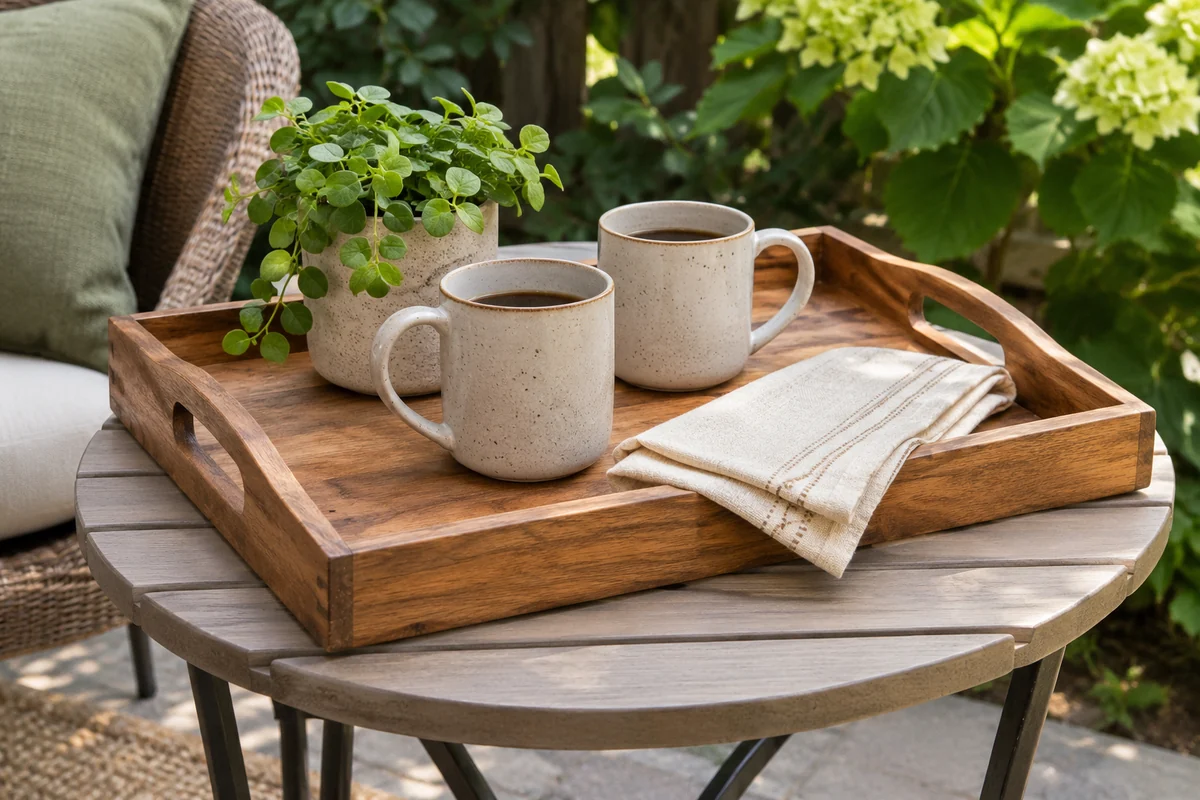
A tray is useful when it helps carry, serve or clear the objects you actually use. Measure the mugs, glasses or small plates it needs to hold and compare the tray’s full outside dimensions, including handles. Then place a paper template on the table and check how much working surface remains beside it.
For example, try a paper rectangle representing a proposed 12-by-8-inch tray before ordering that size. Put the ordinary cups on the template and test the arrangement from both chairs. These are illustrative dimensions, not a recommended tray size for every small table. A smaller tray may still be unsuitable if its handles or rim make comfortable use awkward.
Read the intended-use and handling information for the actual product. A decorative tray is not automatically suitable for every load or outdoor exposure. Give it a storage home when it comes indoors, rather than leaving it permanently full of unrelated objects. Our small balcony storage ideas can help with that return routine. Keep a tabletop plant independently accessible so clearing a tray does not turn into moving a heavy pot as well.
4. Choose a low arrangement for conversation
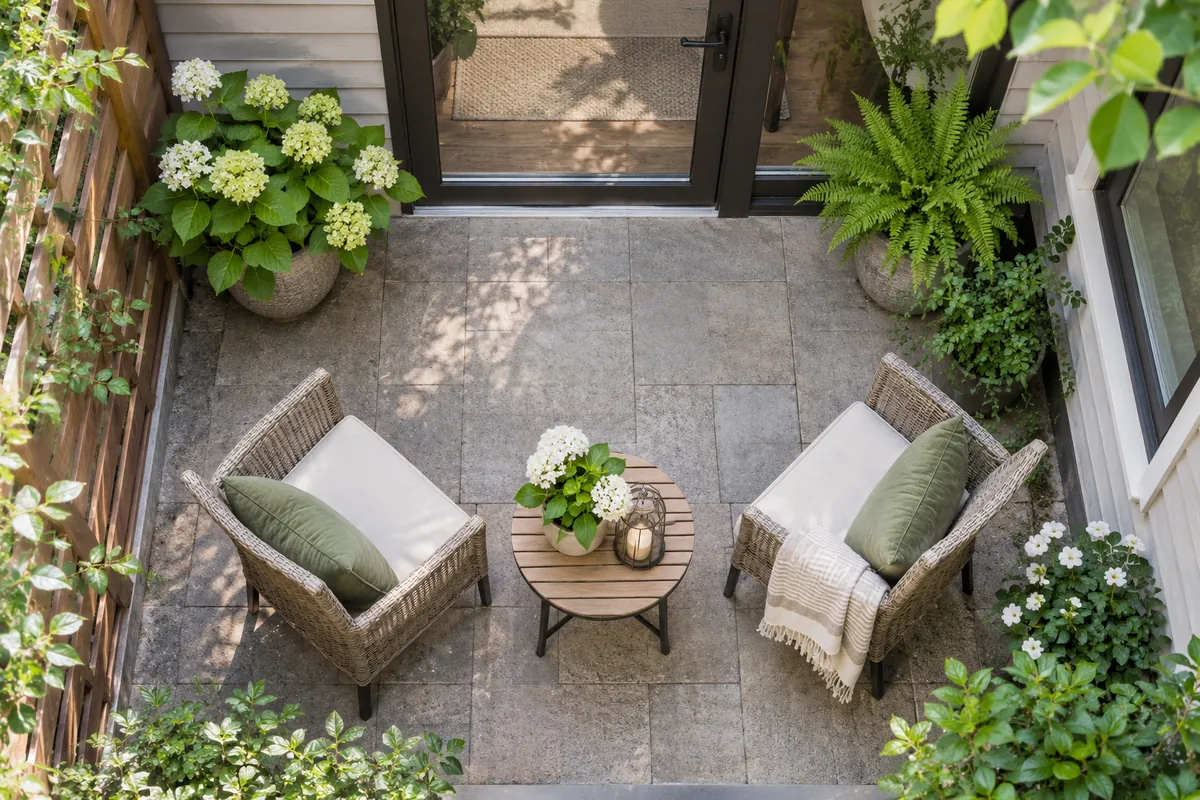
Sit in both chairs before deciding on the height of a table detail. Look toward the person opposite and toward the garden beyond. A container that seems modest while you are standing may interrupt the view from a lower seat. Use the seated perspective as the final test.
A low, simple object can provide interest without competing with faces, cups and hands. The arrangement does not need several height levels to feel considered. Texture, a plant’s outline or the surface of the table itself can create variation within a small footprint.
Check reach as well as sightlines. Leave room for a person to set down a mug naturally rather than carefully threading it between objects. If the decoration requires constant attention to avoid knocking it, simplify the grouping. Our small patio furniture ideas help you assess the seat and table together so the tabletop styling follows a comfortable arrangement instead of compensating for an unsuitable one.
5. Choose one of three small table styling recipes
Use a recipe to limit the collection, not to add every object in the list. Begin with the table and chairs you own, then choose one connection in color or material. Put the functional items on the table first and add the decorative detail only where it comfortably fits.
| Direction | Simple combination | What to keep open |
|---|---|---|
| Warm natural | Wood tray, plain mugs and one small terracotta pot | The main setting-down area |
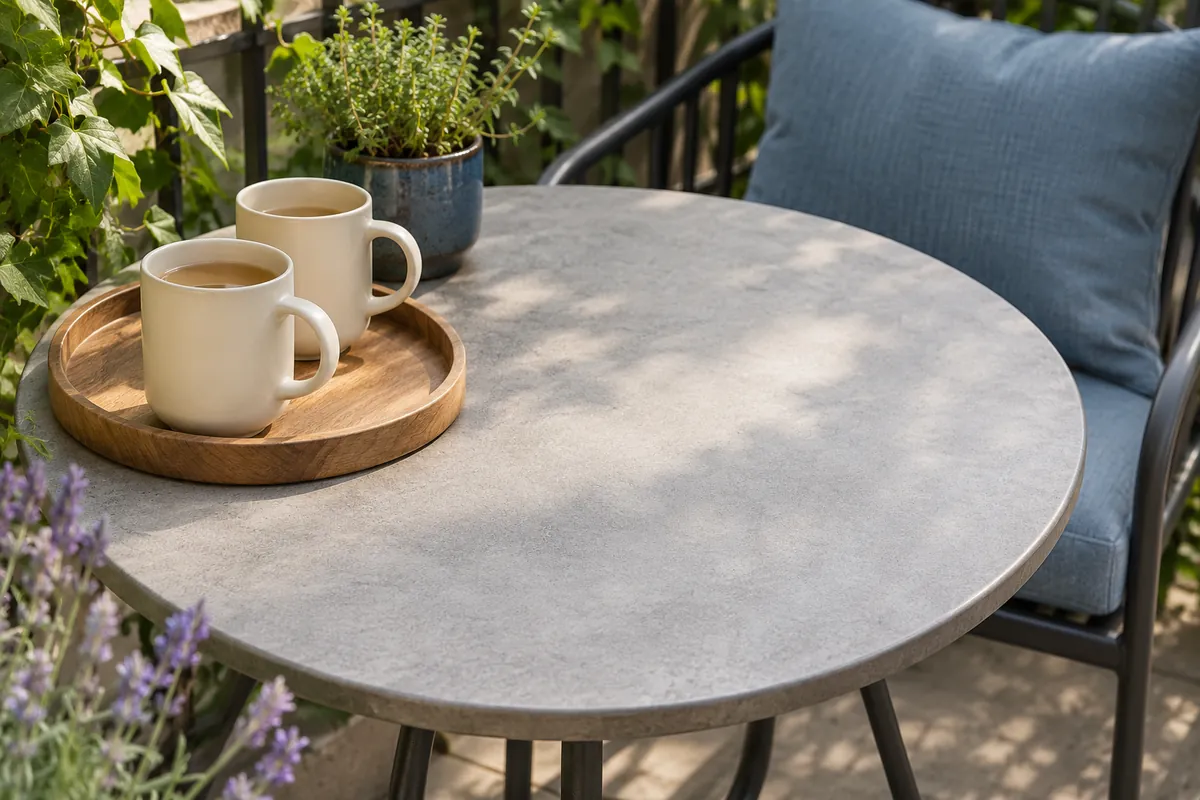
| Cool coastal | Cream mugs with a dusty-blue or sandy neutral detail | Space beside the tray for ordinary use |
| Minimal green | One suitably positioned herb pot and otherwise clear surface | Room for a book or snack |
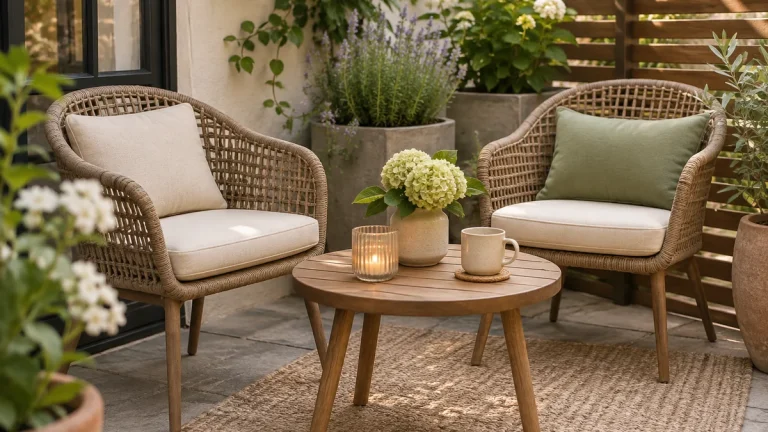
The illustration shows a restrained blue-and-cream direction. The plant still needs suitable growing conditions and manageable drainage; its decorative role does not replace those requirements. You can omit the plant or tray when the surface is too small. Our small patio color ideas offer the wider palette comparison, and the outdoor cushion guide helps connect the table detail with a useful textile instead of buying another matching collection.
6. Let one textile soften the scene
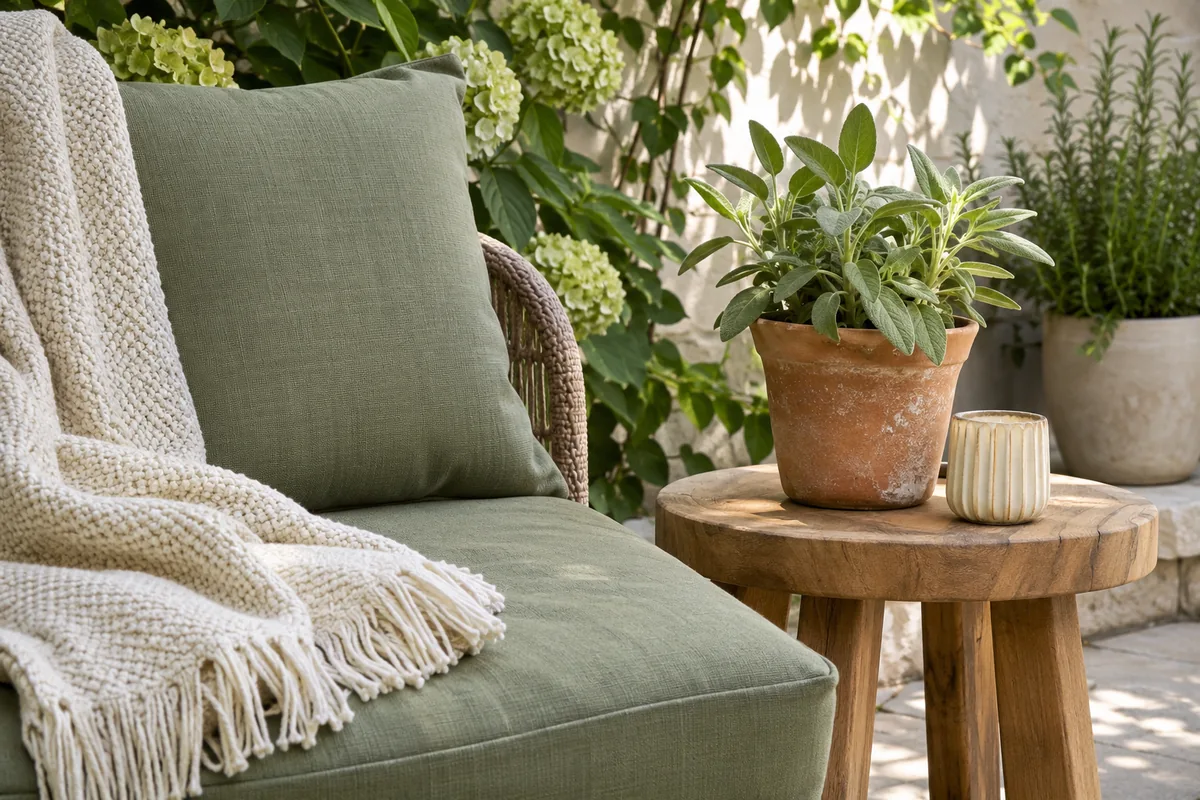
A small, removable textile can add color or texture during use. Choose something appropriate for the purpose, care requirements and conditions, and plan where it will go afterward. A folded napkin beside a cup may provide all the softness the tabletop needs.
Check the relationship with the seat cushions. If they already carry the accent color, the table detail can stay quieter. Repeating a muted tone once can connect the arrangement without placing patterned fabric across every surface. Compare the combination outside rather than relying entirely on a product photograph.
Keep care practical. Follow the instructions for the textile and table, and avoid leaving an item in unsuitable conditions simply to preserve the styled appearance. Our outdoor cushion guide explains how comfort, color and storage work together. Use the same principle on the table: a small detail earns its place when it is pleasant to use and easy to maintain.
7. Move decoration toward an edge when space is tight
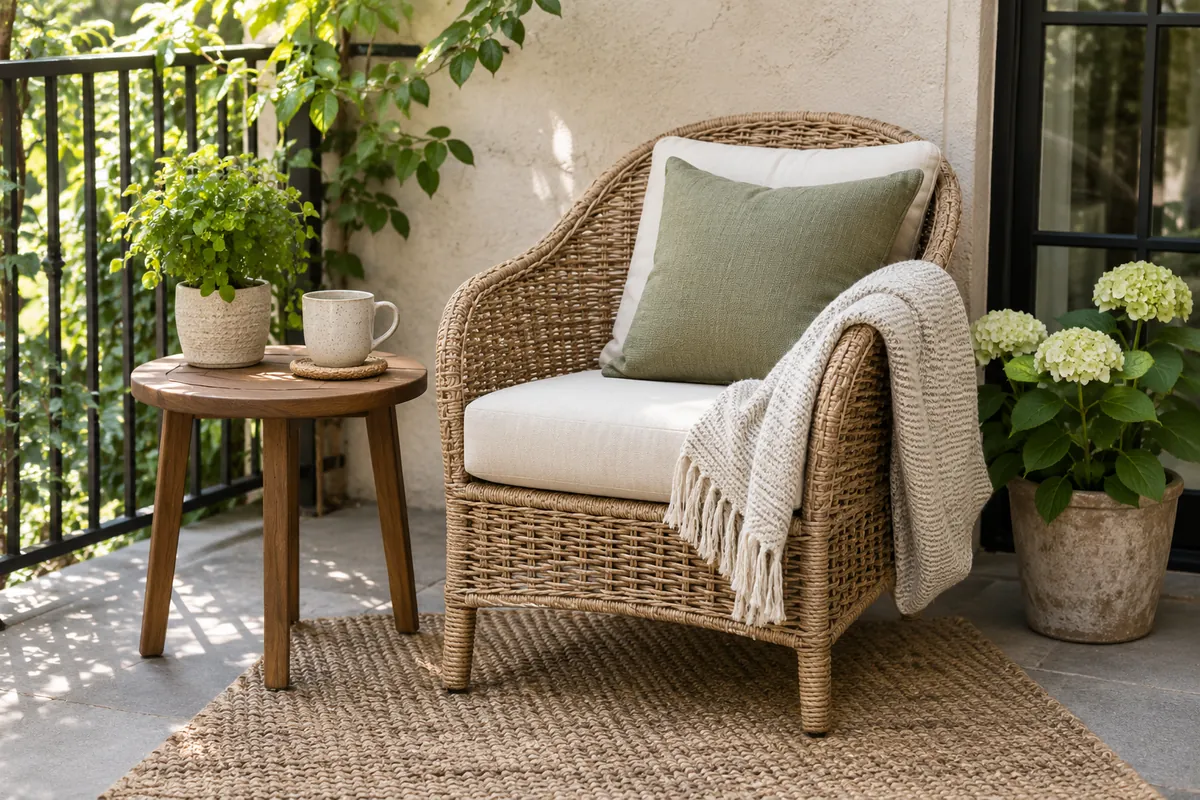
A centerpiece does not have to occupy the center. Try placing one small detail toward the side away from the main reach zone. This can leave a clear working area while still providing a focal point when you look at the table from indoors.
Check the edge position carefully. The object should remain appropriately supported and outside places where arms or chair movement will catch it. Do not balance a pot on a projecting rim to create more apparent space. If the table cannot comfortably support both the object and normal use, remove the object.
Look from every regular seat. An arrangement that leaves one person plenty of room may crowd the other. Test it with the mugs, book or plates you normally use. A slightly asymmetrical arrangement can feel more natural than a symmetrical one when the household uses the table asymmetrically. Let the way you sit and reach guide the composition.
8. Keep a reading table ready for a real book
If you read outside, let the book help define the table’s working area. Put it down open and closed, add glasses or a cup if you use them and see what remains. The display should support the activity rather than use a stack of decorative books that you never intend to read.
Choose a temporary arrangement for items that should return indoors. A tray or a simple carrying routine can make that easy. Keep the table available when you are not reading instead of leaving a permanent collection to represent the activity.
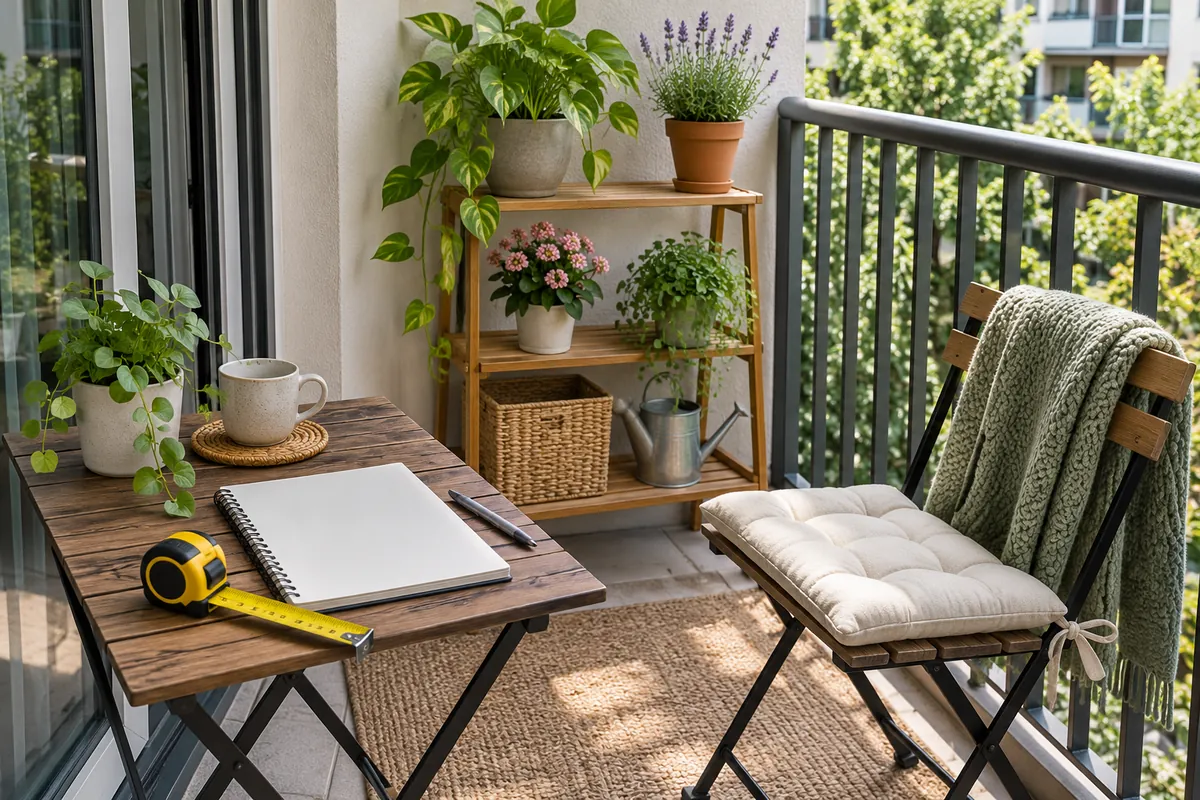
Notice the seat-to-table reach during an ordinary session. If you lean awkwardly around decoration every time you put the book down, change the position or remove a detail. A practical notebook on a side table can be equally useful for planning the garden. The most convincing styling comes from a space that supports an actual habit, with objects that belong to the person using it.
9. Use the surrounding plants as part of the composition
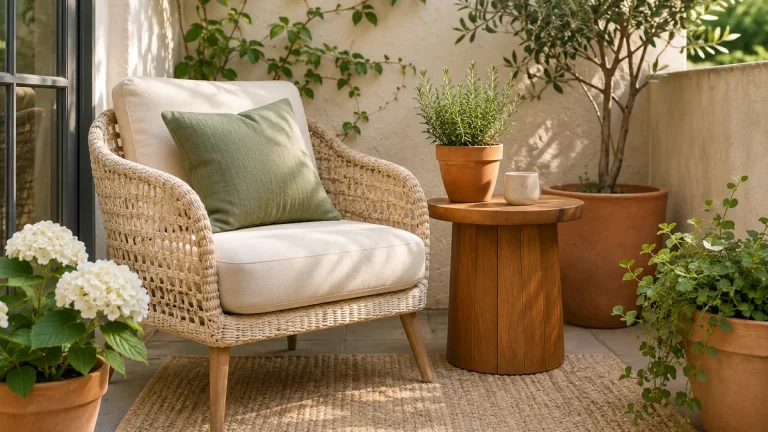
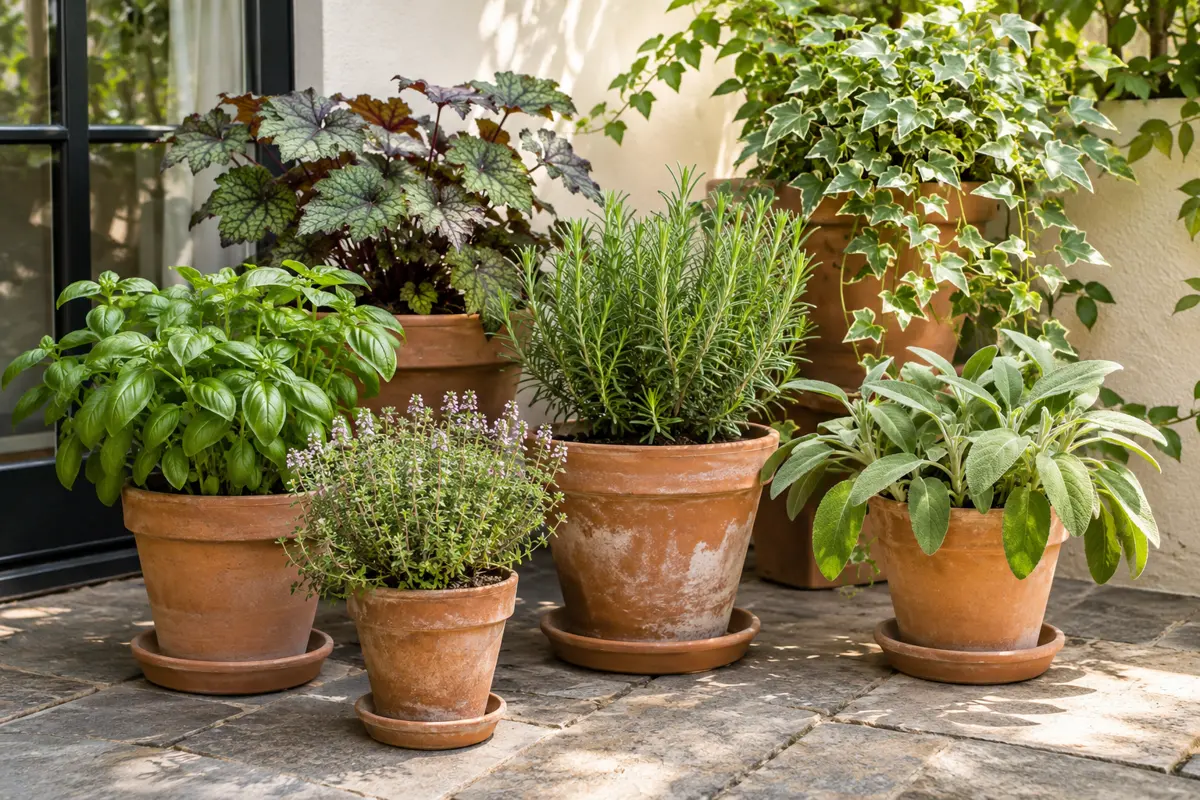
You may not need much greenery on the tabletop if containers beside the seating already provide it. Look at the whole corner from the chair and doorway. A nearby plant group can frame an otherwise simple table while leaving its surface completely available for use.
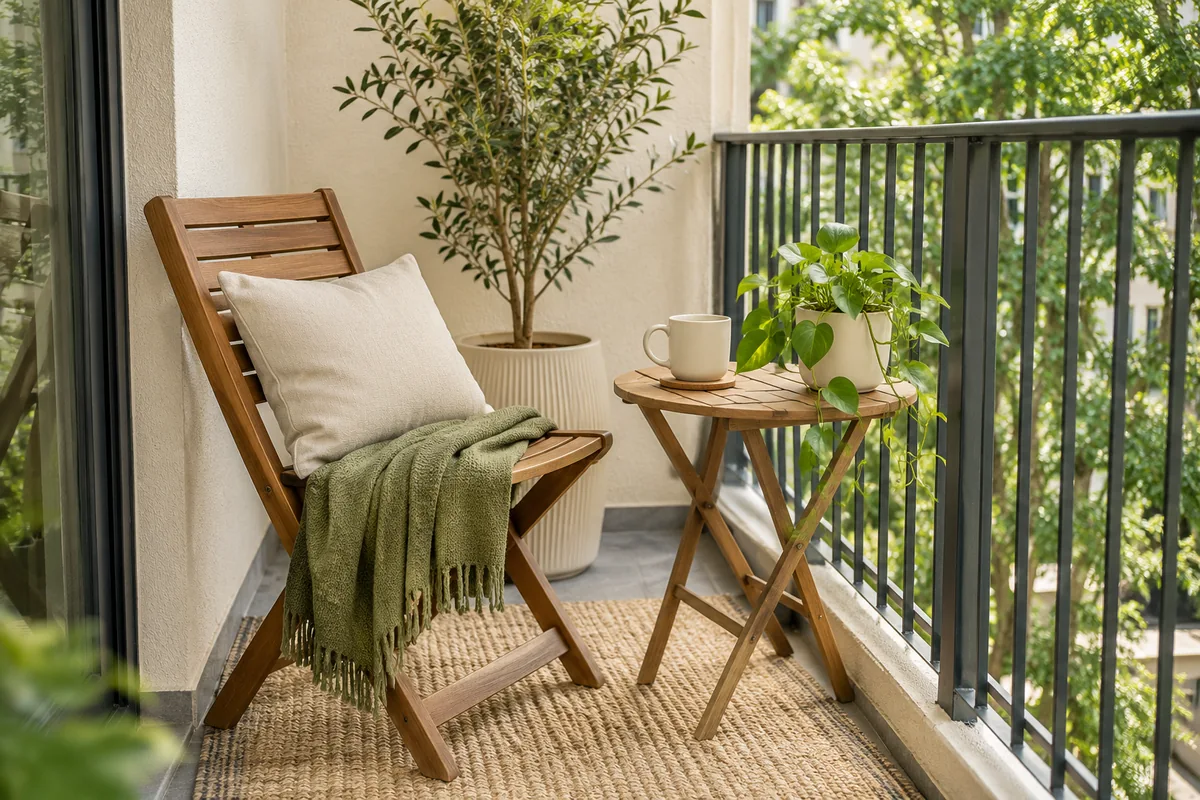
Keep the nearby containers independently accessible and out of chair movement. Consider mature foliage so a tidy gap does not gradually disappear. Our balcony plant arrangement ideas show ways to connect separate pots without covering every edge of the outdoor space.
Try removing the tabletop pot for a few days while keeping the floor-level group. You may prefer the extra room and still feel surrounded by plants. This is a useful alternative when the table is very small or used for food. Decoration can come from the view around the surface rather than from objects occupying the surface itself.
10. Plan a simple coffee-to-snack reset
A small table often serves more than one activity. Make a quick reset routine instead of trying to keep every possible object on it permanently. Move the tray, bring out the items you need and return temporary details to their storage place afterward.
Test the routine with the actual table and chairs. Can someone carry the tray through the doorway while the other person is seated? Is there a sensible place to put the small plant temporarily if more surface is needed? Avoid creating a plan that shifts clutter from the table into the walking route.
The reset should stay small enough to feel worthwhile. If every snack requires moving five accessories, edit the collection. Our budget patio decorating plan emphasizes useful essentials before finishing layers. A flexible tabletop follows that idea by supporting different activities with a few manageable objects rather than several permanent displays.
11. Check the view in ordinary outdoor light
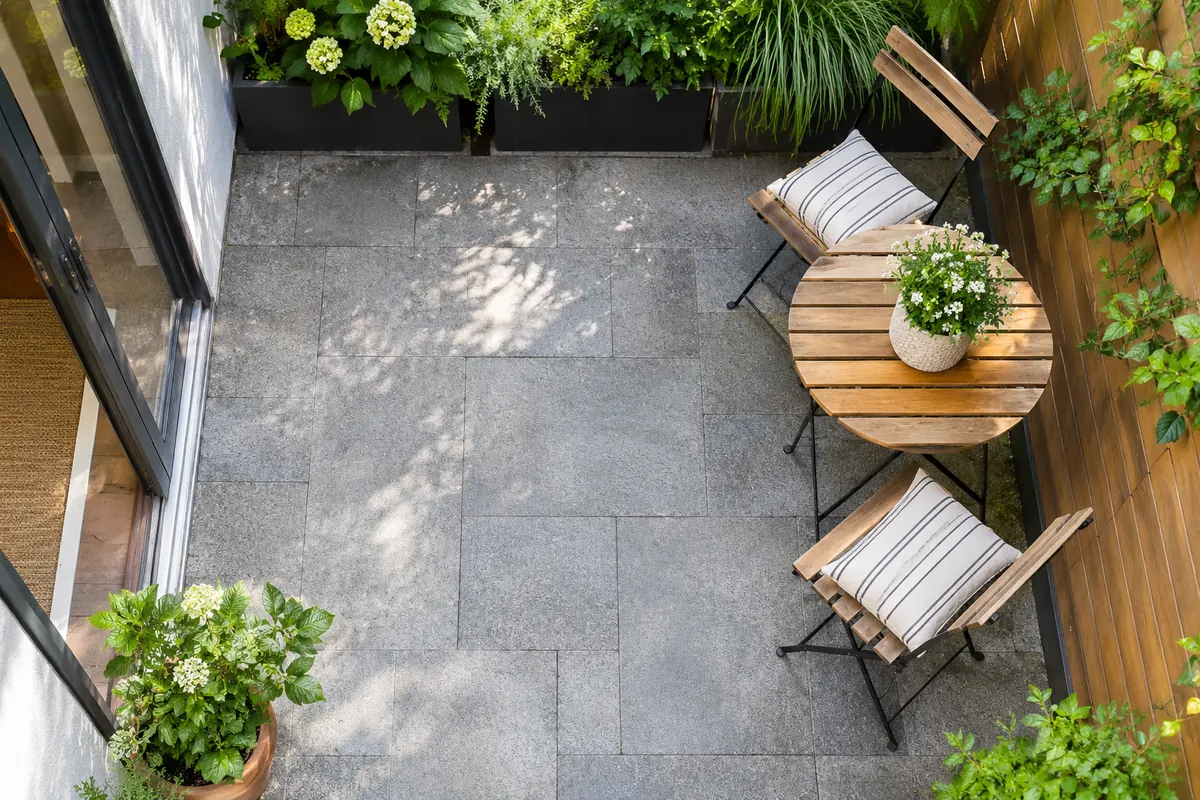
View the table during the hours you actually use the patio. The wall, paving, foliage and furniture all influence how a color or texture appears. A detail that looks quiet indoors may stand out strongly beside a pale wall or a dark table.
Use a small sample or one existing object to test a new accent before buying more. Look from the seat and through the adjoining doorway. Decide whether the accent connects the space or simply adds another unrelated item to an already varied background.
Change one variable at a time. Remove a textile, move the pot or compare a different tray, then use the table again. Keep a photograph for your own reference, but choose the version you enjoy in person. A tabletop can look balanced in a tightly framed image while feeling crowded during ordinary use, so let the daily experience carry more weight than a single camera angle.
12. Finish with a clear-away habit
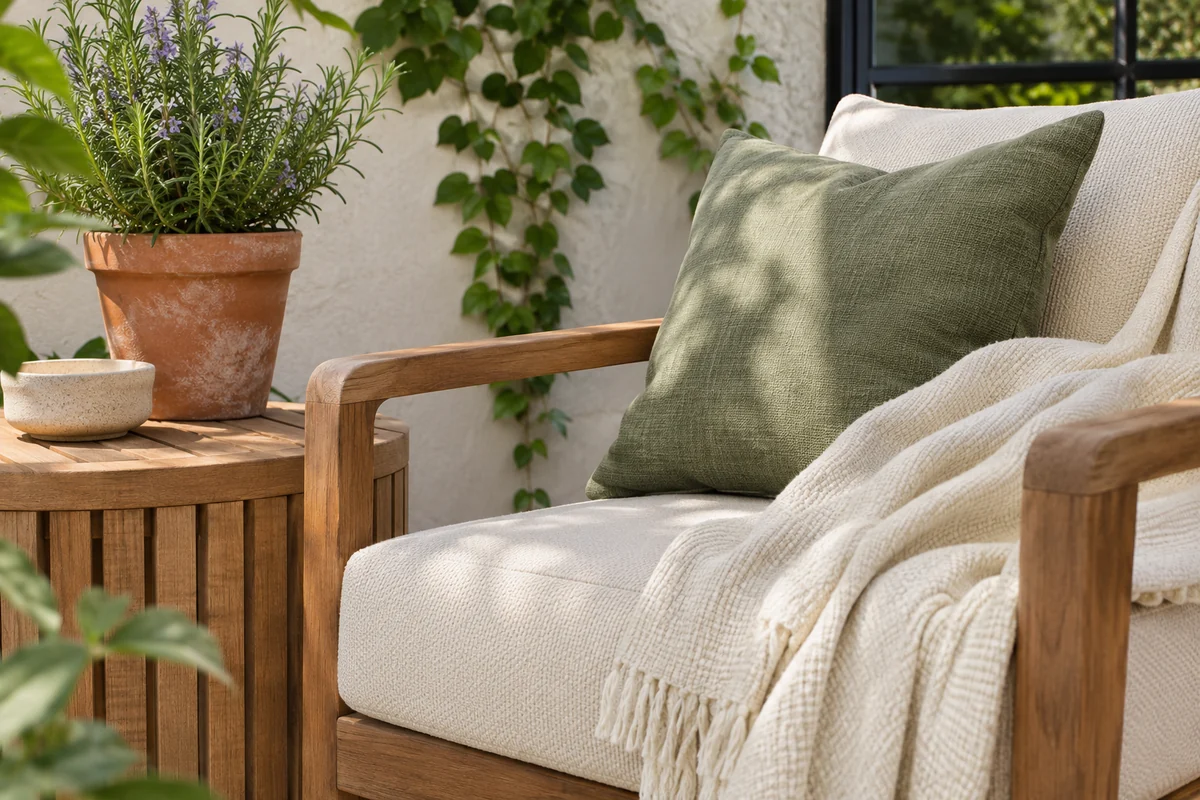
At the end of a normal session, return temporary items to their proper homes. Inspect any plant container or tray as needed and follow care instructions for the table and textiles. Keep the surface ready for the next activity instead of leaving a styling arrangement to become a storage pile.
Review the setup after a week. Which object do you enjoy seeing? Which one is always moved? What makes the surface difficult to clean? Remove or relocate the detail that repeatedly creates work without improving the way you use the space.
Keep the simplest version that feels welcoming. You can change a small accent seasonally or bring out different objects for a meal without rebuilding the arrangement. A useful table, comfortable chairs and nearby plants already create an inviting outdoor corner. The finishing details should make that corner easier to enjoy, with enough clear surface for the cup, conversation or quiet moment that brought you outside.
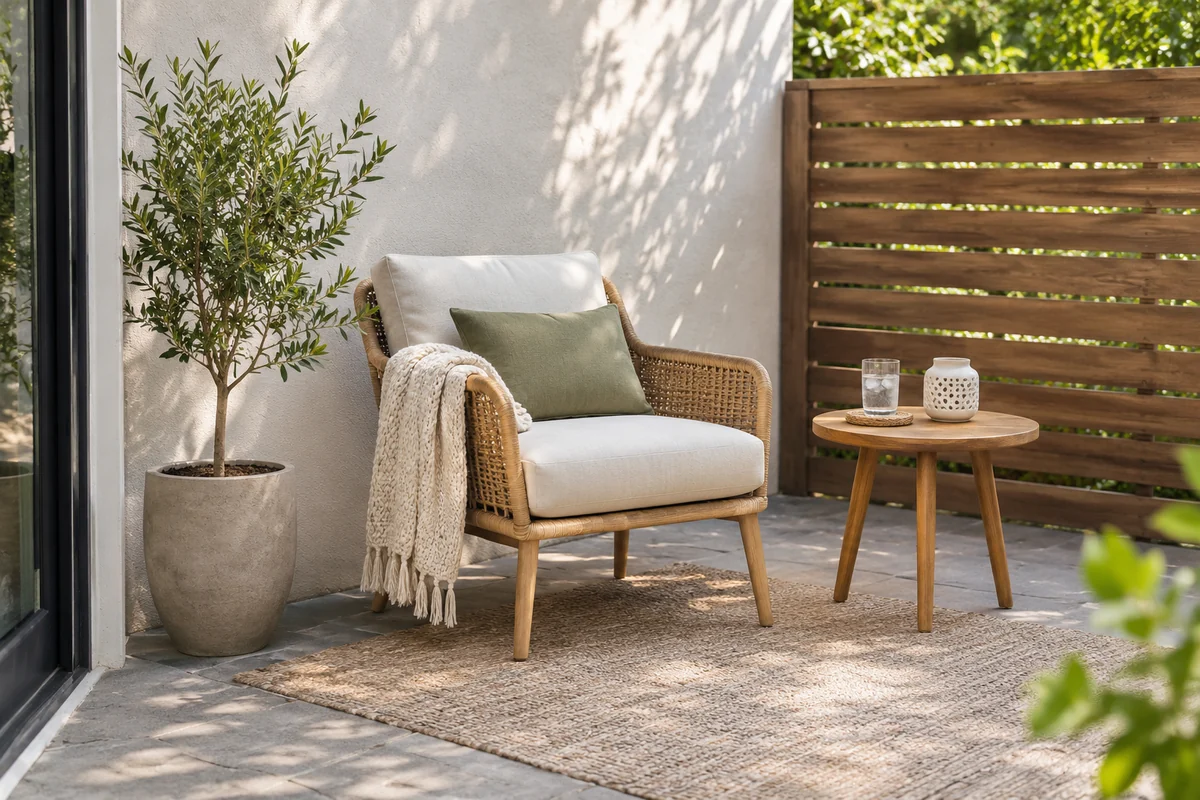
A small tabletop checklist
Before calling the arrangement finished, sit in every regular seat, place the everyday objects on the surface and check reach. Confirm that the main view remains comfortable, plant care is accessible and temporary items have a storage place. Remove one unnecessary object and compare the result. Keep the version that stays useful during an ordinary week.
How many decorative objects should a small patio table hold?
There is no fixed number. Begin with one detail and add only if the surface still supports its main activity comfortably. Empty space is part of a useful tabletop.
Does the centerpiece need to match the furniture?
No. A related material, tone or texture can connect different pieces. Choose something you enjoy beside the existing surfaces without turning the arrangement into a matching-set requirement.
Can I leave the table completely undecorated?
Yes. The table’s own finish and the surrounding plants may provide enough visual interest. A clear surface ready for use can be the most welcoming choice in a compact space.
Continue planning your space with our Small Balcony Storage Ideas: A Renter-Friendly Plan for Tools and Cushions and Vertical Herb Garden: A Small Balcony Plan for Separate Pots. Keep the walking route, everyday maintenance and the amount of available space in mind as you combine ideas.
Save this guide for later
Use these Pinterest graphics to save the ideas you want to try. The images in this article are design illustrations; adapt the arrangements to your own measurements, light and rental rules.