Small Balcony Storage Ideas: A Renter-Friendly Plan for Tools and Cushions
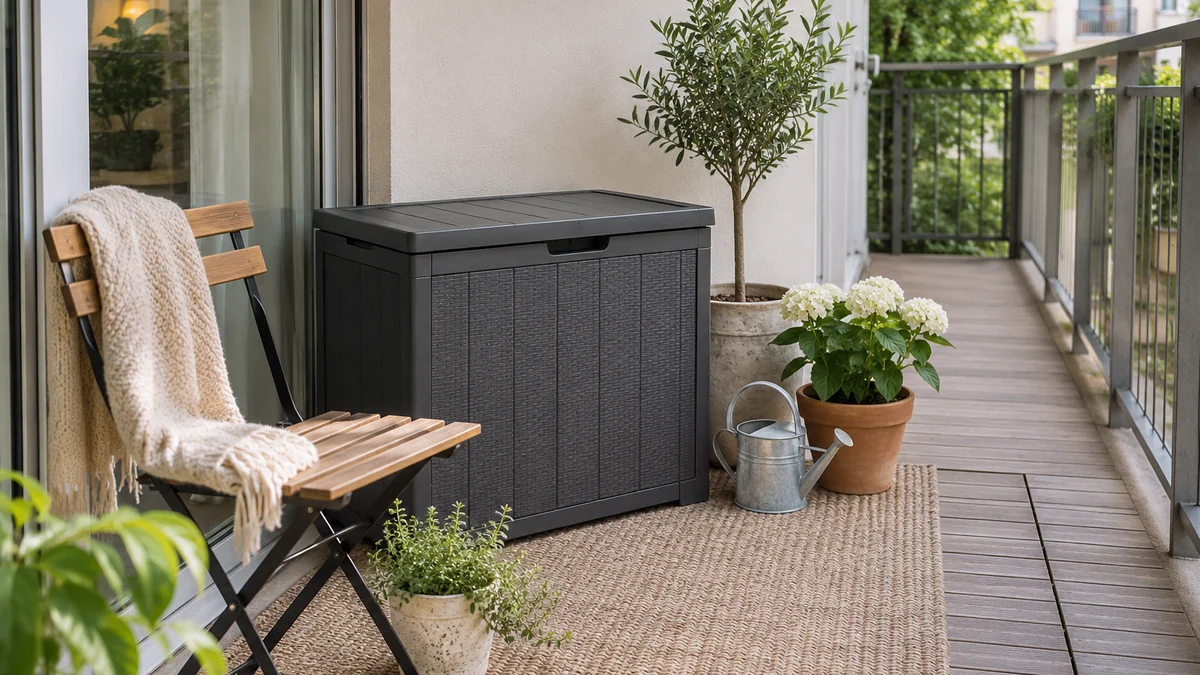
Useful small balcony storage ideas begin by reducing what needs to live outside. A storage box can look tidy while occupying the route you need for a chair or watering can. A shelf can organize pots yet become cluttered with unrelated tools. Start with the tasks you do regularly, then give each essential item an appropriate home.
This guide focuses on movable, practical organization for a rental balcony. It does not require building a fitted unit or attaching storage to the property. For the overall sequence of a rental refresh, use our renter-friendly balcony makeover plan. Check the building rules and the instructions for any furniture or storage product before adding it. Choose the smallest system that supports the routine you will actually follow.
In this guide
- 1. Build an inventory by task and storage conditions
- 2. Protect the route before allocating storage space
- 3. Give cushions a measured indoor or outdoor return point
- 4. Check a storage box in its open working position
- 5. Store folding furniture without creating a new obstacle
- 6. Make a small gardening caddy for regular tasks
- 7. Keep product storage guided by the label
- 8. Use a plant shelf for plants and reachable essentials
- 9. Plan for watering equipment to dry and reset
- 10. Keep a small inventory instead of a large reserve
- 11. Design a quick end-of-day reset
- 12. Review storage after a week of ordinary use
- A practical storage plan to write down
1. Build an inventory by task and storage conditions
Sort the collection before choosing a box. Put regular plant-care tools in one group, removable textiles in another and occasional furniture or project supplies in separate groups. Record how often each item is used and where it is appropriate to store it. An outdoor-related object does not automatically need to live outside all year.
| Item group | Everyday job | Storage decision |
|---|---|---|
| Cushions and textiles | Comfortable seating | A suitable dry return point under the care instructions |
| Watering can and basic tools | Regular plant care | A reachable permitted home outside the route |
| Garden products | Occasional planting or feeding | The location required by the product label |
| Spare pots and accessories | Future or seasonal use | Whether they need prime balcony space at all |
Make an active-use list and a reserve list. The active collection deserves convenient access; the reserve should not crowd the doorway or hide drainage. Keep labels and care information with the relevant items. Our renter-friendly makeover guide helps establish the main seating and plant arrangement before storage is added around it. The smallest useful system is the one that makes essential objects easy to find and return.
2. Protect the route before allocating storage space
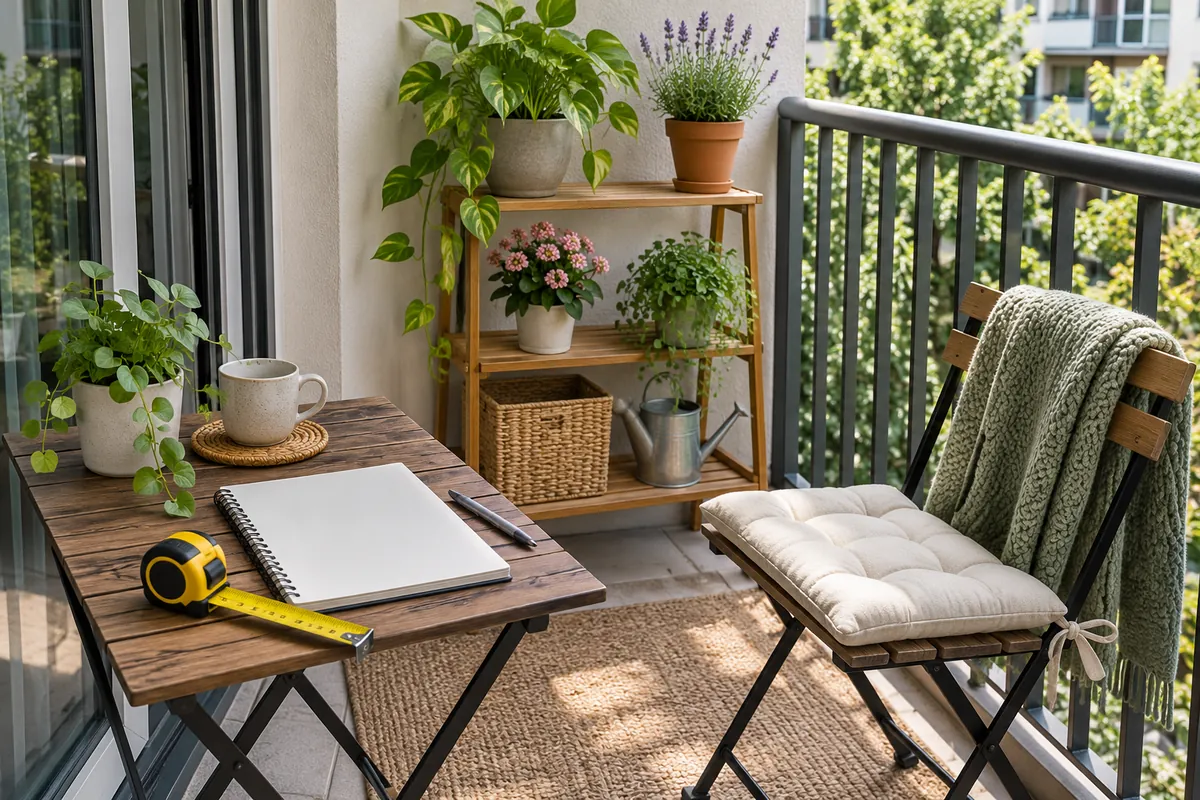
Measure the usable balcony and the door’s complete movement. Mark drains, service points and access that must remain clear. Then check where you walk with a watering can or a cushion. A storage position should support those movements rather than require you to turn sideways around it every day.
Test a proposed box or shelf with removable paper templates. Include projecting handles, feet and a lid or door in its open position. The closed dimensions alone do not show the room needed to use the storage. Try the chair occupied at the same time.
For a long balcony, our narrow balcony layout ideas help you preserve a clear relationship between furniture, plants and access. If a storage piece fits only by taking over the route or blocking a feature, choose another solution. Moving a few objects indoors may be more useful than trying to solve the problem with a smaller version of the same unsuitable outdoor box.
3. Give cushions a measured indoor or outdoor return point
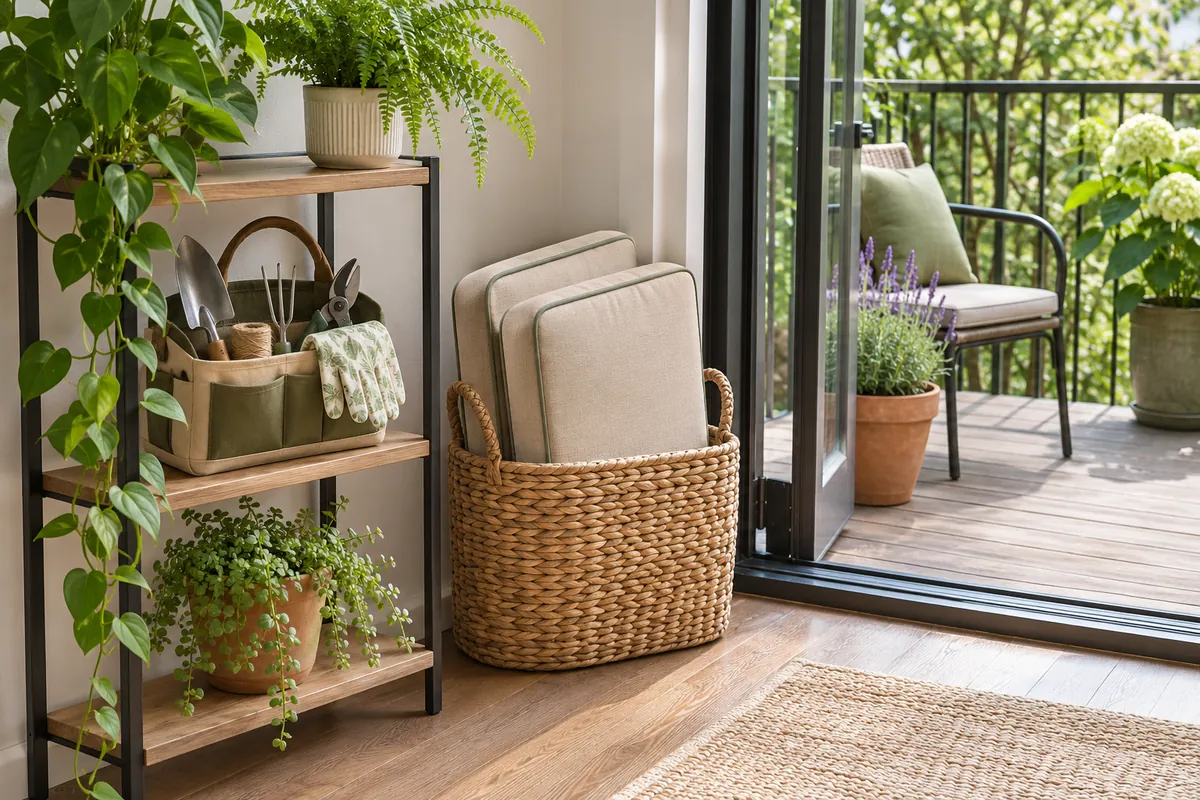
Stack the actual cushions and measure their natural footprint and height. As a hypothetical example, a stack around 20 inches square and 10 inches high needs more consideration than a storage product’s headline capacity. Check the usable opening and internal shape, and do not assume soft items can always be compressed into a smaller space. The example dimensions explain the method rather than recommending a particular container.
Follow the cushion’s care instructions and store it appropriately dry. Compare a basket or cupboard near the door with a suitable outdoor box. The illustration shows an indoor return point, keeping removable textiles separate from the gardening caddy. It is a routine you can adapt rather than a requirement to buy the same furniture.
Carry the cushions along the route and put them away as you would after an ordinary evening. If the task is inconvenient, adjust the location or reduce the collection. Our outdoor cushion guide connects care, comfort and storage. Extra decorative pillows are optional when they create more handling than enjoyment in a small space.
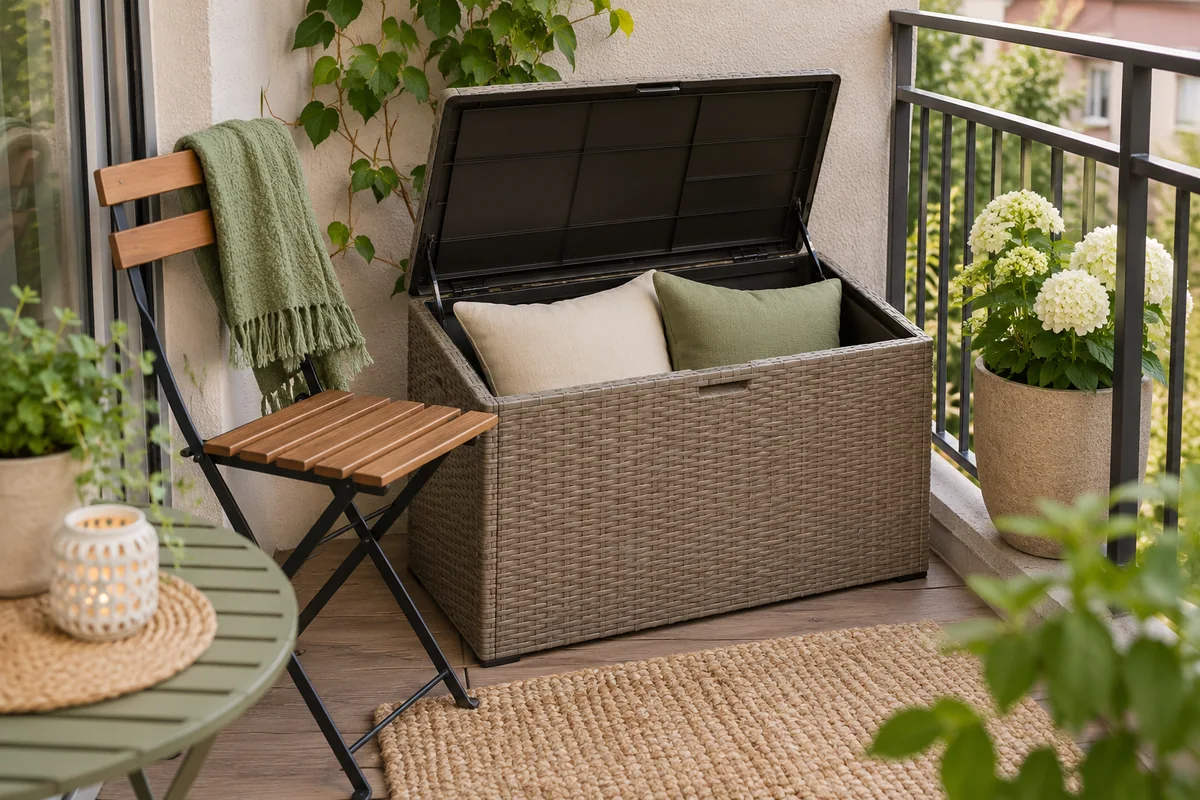
4. Check a storage box in its open working position
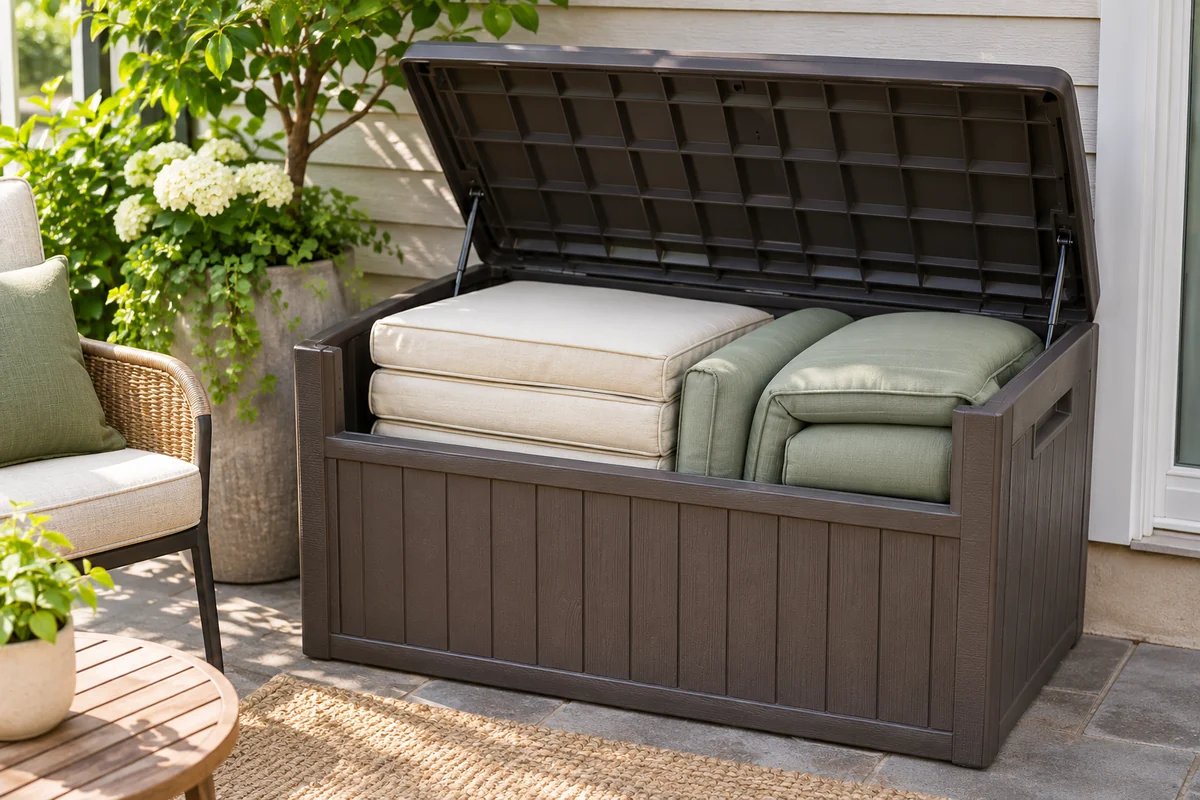
Decide exactly what the box will hold, then compare its usable interior with those objects. Measure the outside footprint too, including projecting handles and feet. Open the lid fully in the proposed location or use a suitable template to understand the space required. A box that fits closed can still be impossible to use beside a chair or beneath a window.
Read the actual product information about intended contents, weather exposure, ventilation and care. A closed lid alone does not establish that textiles or garden products can be stored there appropriately. Keep garden products under their label instructions rather than moving everything into one box to make the balcony look tidy.
Do not use the lid as a bench unless the specific product is intended for seating and you follow its instructions. Compare the box’s useful job with the patio space it occupies. Our small patio furniture ideas help if storage is being used to compensate for oversized furniture. Choose the box when it supports a repeated task; otherwise, a smaller active collection or another storage location may leave a more comfortable balcony.
5. Store folding furniture without creating a new obstacle
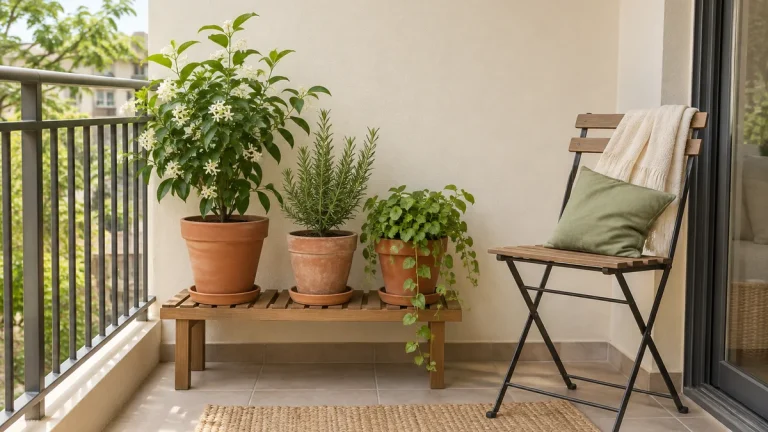
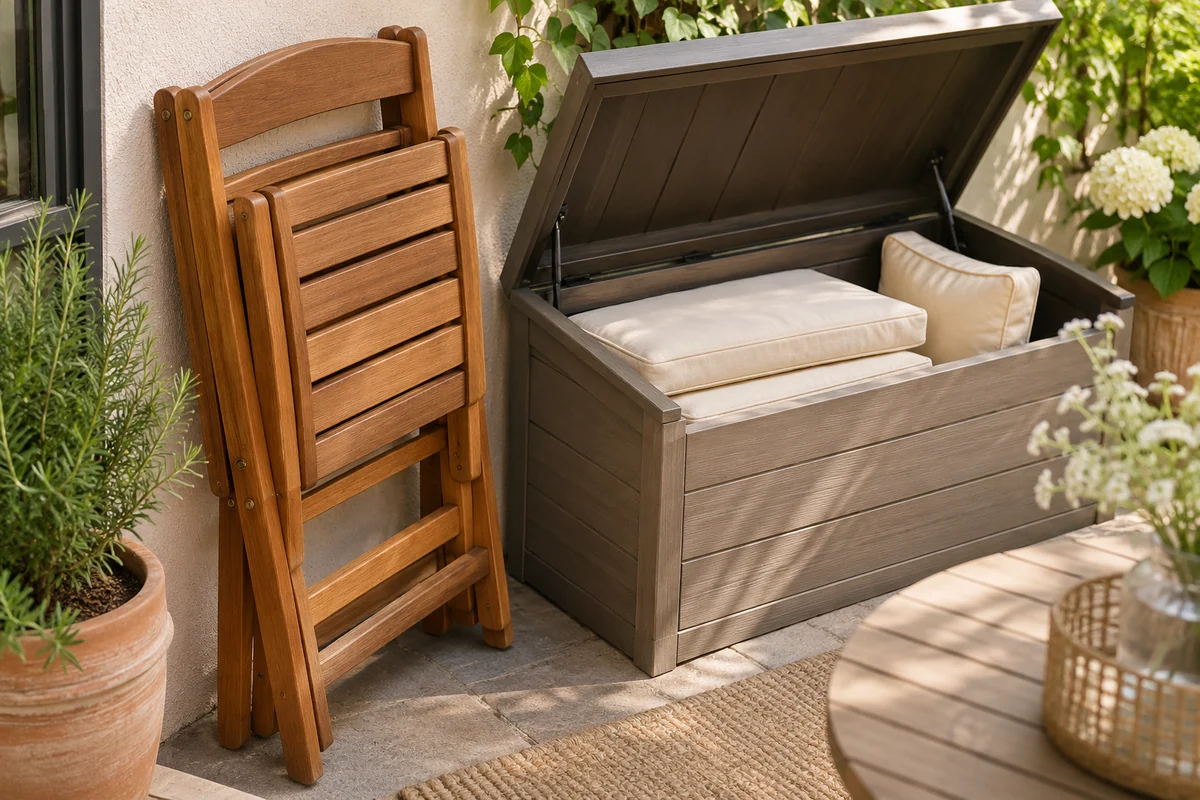
Folding furniture can reduce the permanent seating footprint when you have a real place for the folded piece. Measure that position and check the route between it and the balcony. A chair that folds flat still needs appropriate storage and should not become an unsecured object leaning in a doorway.
Follow the product’s folding, handling and storage instructions. Choose a routine you can perform comfortably. One spare chair brought out for occasional company may be easy; several pieces moved every evening may discourage use of the balcony.
Keep the main activity comfortable in the normal arrangement. Our small patio furniture ideas explain why the occupied footprint matters as much as the folded dimensions. Storage should support a useful everyday setup, not compensate for furniture that is permanently too large for the space. If the routine requires constant rearrangement, revise the furniture plan before adding another storage piece.
6. Make a small gardening caddy for regular tasks
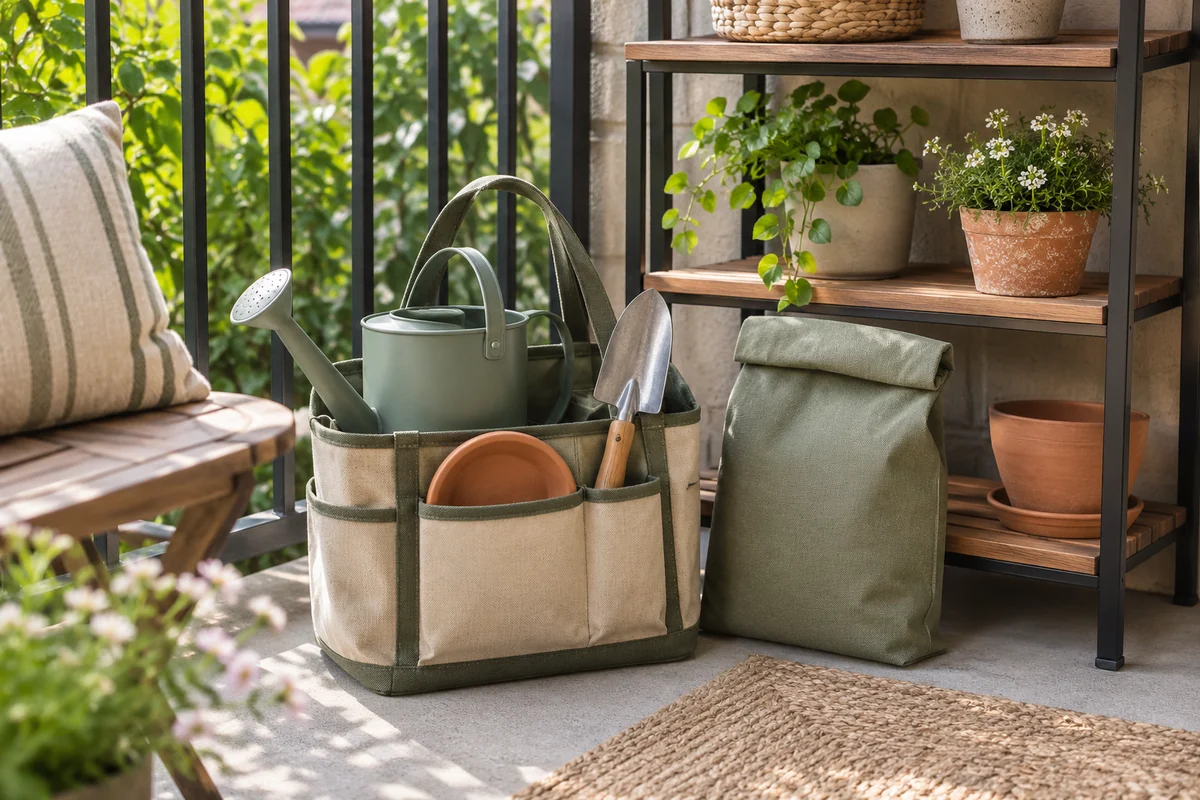
Group the few tools used during ordinary plant care in a suitable portable container. A small hand tool, an appropriate clean tray and a record or label supply may be enough. Keep the watering can nearby if the storage position and building rules allow it, rather than buying a larger tool collection to fill the caddy.
Choose a caddy you can carry and inspect easily. Check its intended use and keep sharp or potentially hazardous items stored appropriately for the household. Do not leave tools exposed where someone reaching past a plant could catch them.
Use the caddy during one complete care session, then return it to its home. Notice whether you actually use everything inside. Removing rarely used objects makes the kit easier to handle and keeps the regular task focused. The point is a ready set of essentials that reduces trips and clutter, not a decorative display of gardening equipment that occupies useful shelf space.
7. Keep product storage guided by the label
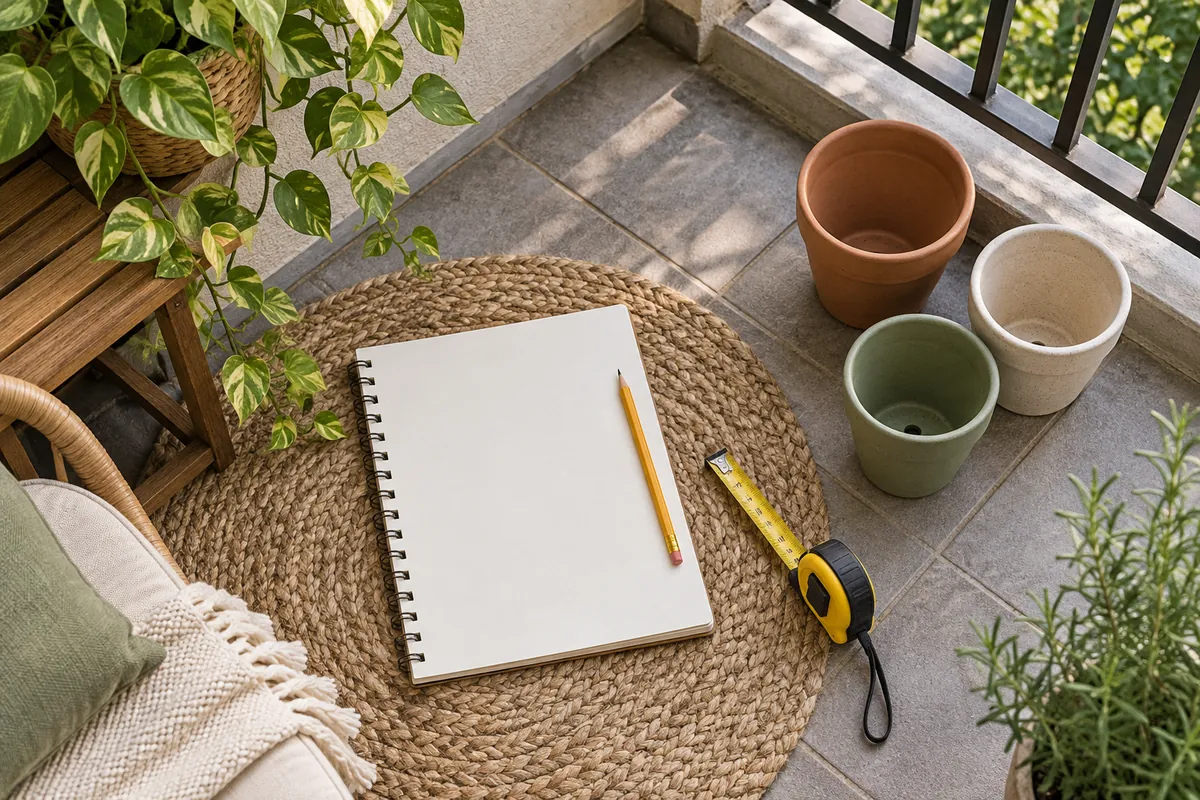
Growing mix, fertilizer and other garden products need storage that follows their instructions. Do not assume a closed balcony box is appropriate simply because it keeps packaging out of view. Check the label and choose a location suited to the product and household.
Keep products in their proper containers with identification available. Record what you have before buying another bag or bottle for a new project. An inventory can prevent several partly used products from accumulating because nobody remembers what is already stored.
Separate temporary project materials from the regular care kit. After planting, clean up appropriately and put remaining supplies away rather than leaving them beneath the plant stand indefinitely. Our beginner container gardening guide provides the setup sequence. A tidy storage system should help you find accurate product information, not hide an increasingly mixed collection of unlabelled materials behind a neat exterior.
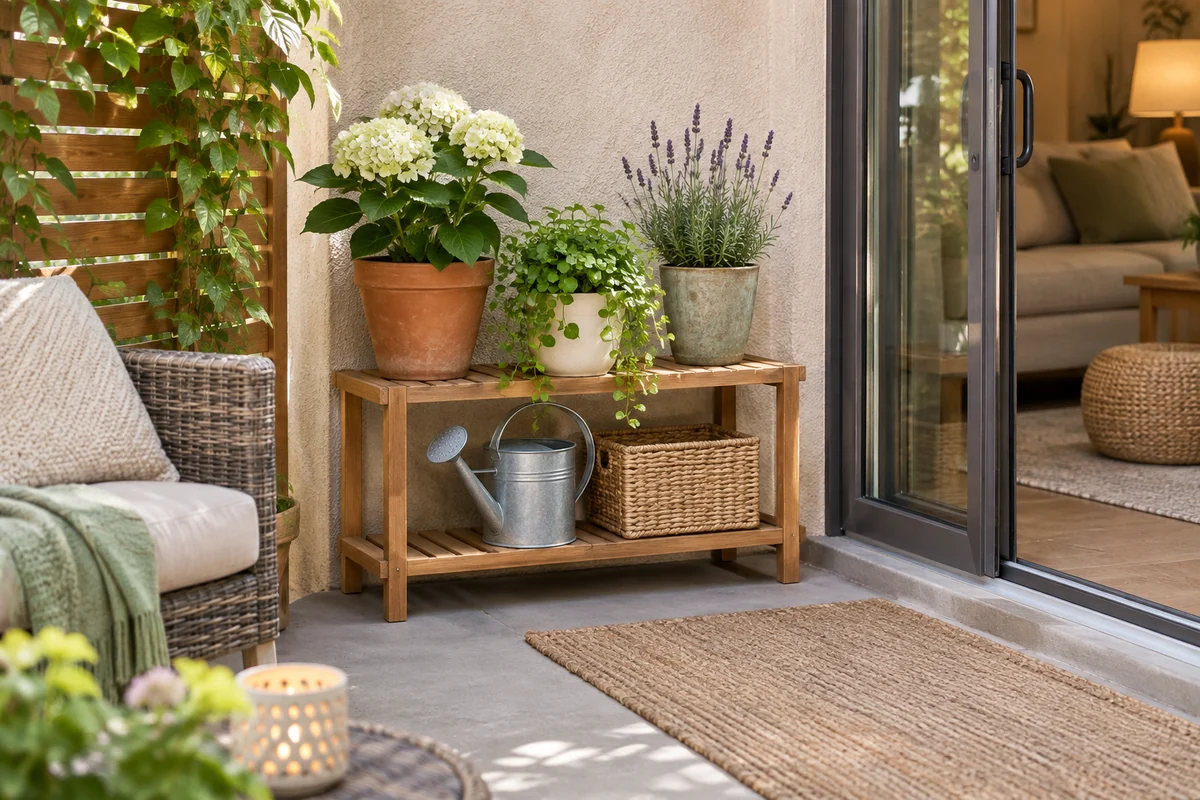
8. Use a plant shelf for plants and reachable essentials
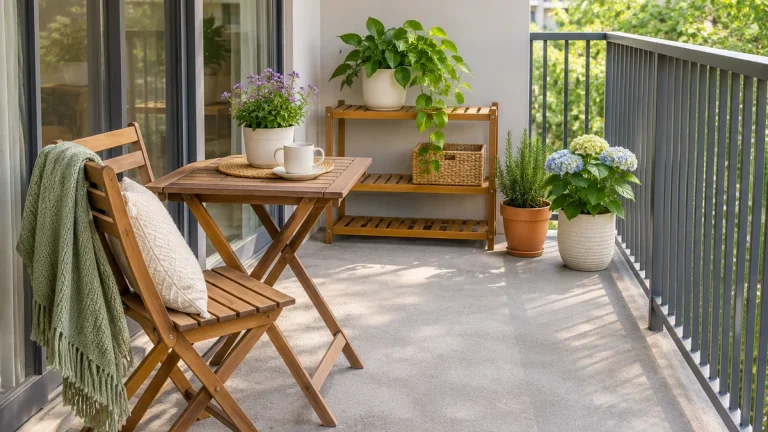
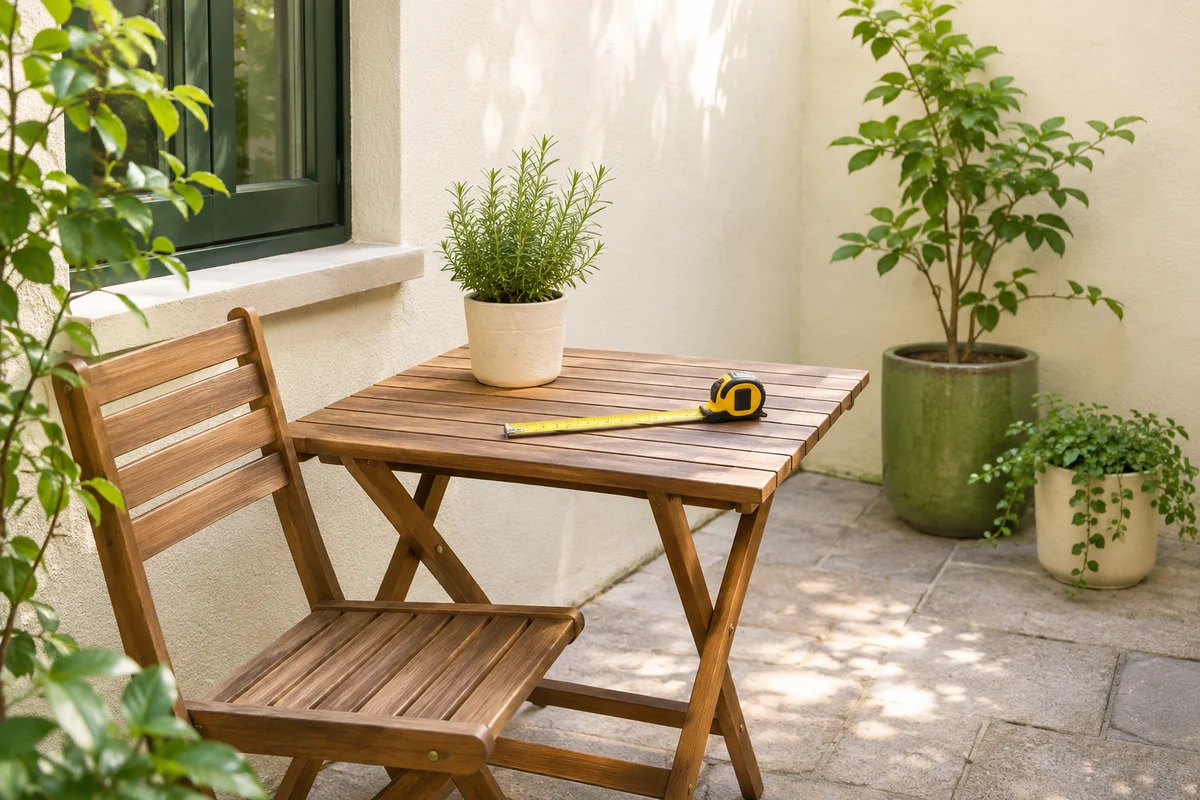
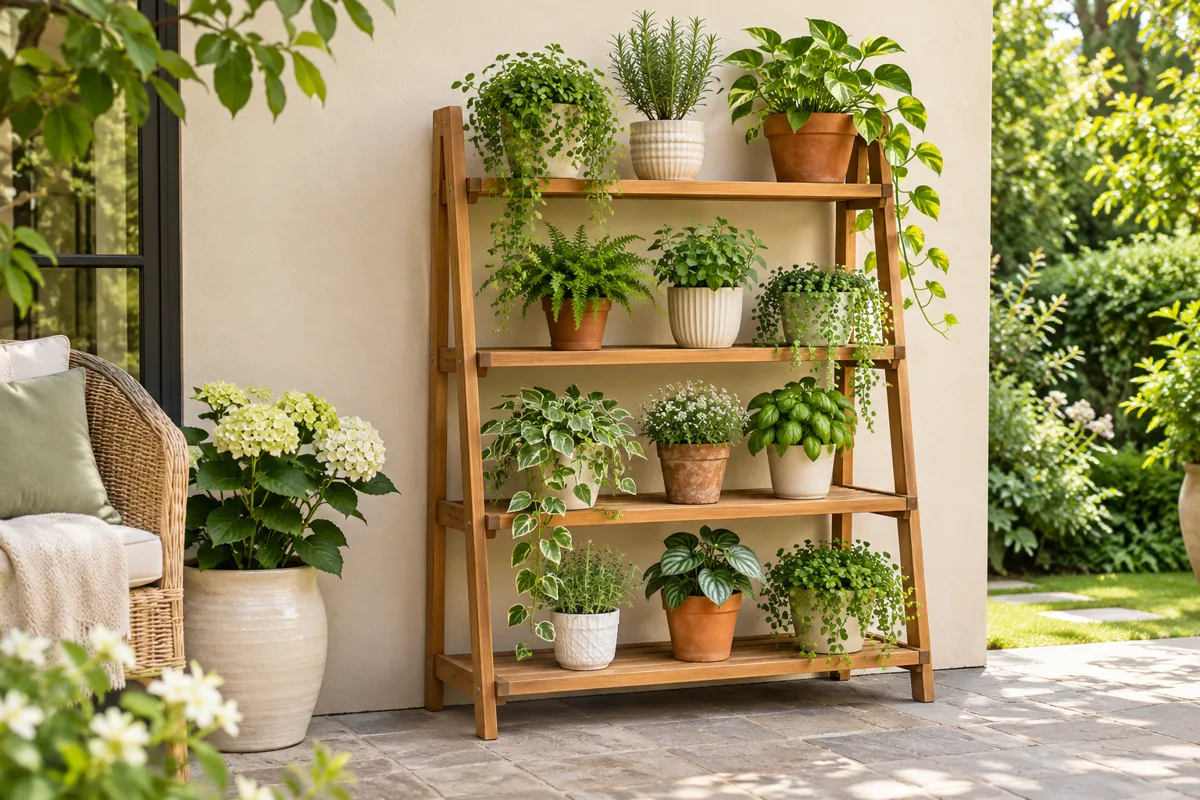
A freestanding shelf may provide a defined display, but its available spaces should not automatically become general storage. Keep the stand’s instructions, load limits and intended use central to the arrangement. Any required anchoring must be compatible with the property rules; otherwise choose another solution.
Leave room to inspect pots, reach the growing mix and remove collected water. Loose bags or tools beneath a shelf can conceal spills and make cleaning awkward. A display that looks organized from the front may still be difficult to maintain if every gap is filled.
Use our vertical balcony garden guide to compare the stand’s footprint with the pots alone. If one small, appropriate item can be stored without compromising care, give it a clear position. Keep the rest elsewhere. The shelf earns its place by improving access and organization for the plants, not by becoming a catch-all unit for everything associated with outdoor living.
9. Plan for watering equipment to dry and reset
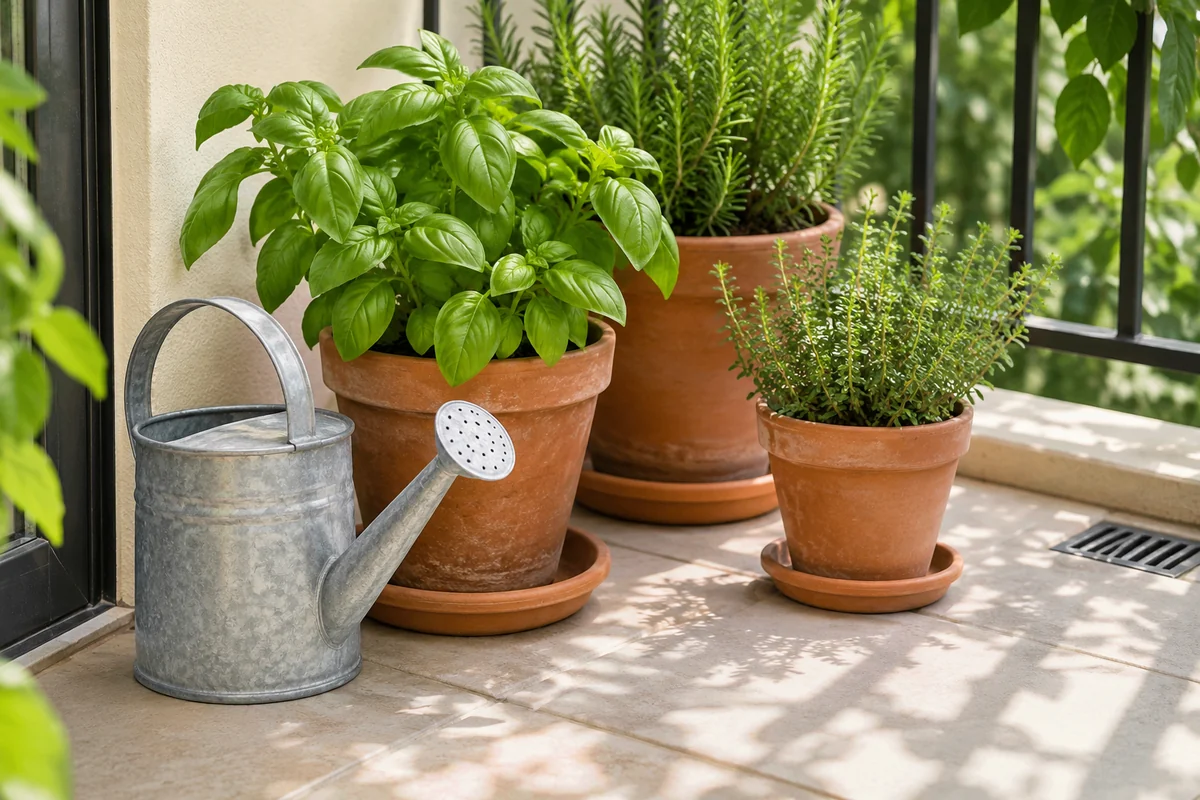
Choose a manageable watering can and a defined place for it after use. Inspect any temporary collecting tray or saucer and deal with water appropriately. Keep the area around the plants visible enough to notice a spill rather than hiding the base of the display behind equipment.
Use the care routine to test the storage layout. Can you pick up the can, inspect each pot, water as appropriate and return the equipment without blocking the route? If not, move an item or reduce the stored collection. The most useful storage position is the one that makes this ordinary sequence straightforward.
Our container watering guide explains the observation behind the task. A reminder to check plants does not mean watering every pot automatically. Keep notes and tools accessible enough to support individual decisions. Finish with equipment returned to its proper home and the balcony ready for sitting or movement again, rather than leaving a temporary maintenance setup in place all week.
10. Keep a small inventory instead of a large reserve
List the items stored in each place and review the list before starting another project. A simple note can show that you already have a spare saucer, an unused container or the tool you are about to buy. This reduces the temptation to solve uncertainty by keeping more of everything outdoors.
Give occasional items a separate review date. Seasonal textiles, empty pots and unused accessories do not all need prime access beside the door. Check their condition and storage requirements, then decide whether they still belong in the active balcony setup.
Avoid turning the inventory into a complicated system you will not maintain. A short list and a photograph of a tidy shelf can be sufficient. The value comes from knowing what you have and where it belongs. Our DIY balcony plant corner guide uses the same idea to keep a small project from expanding into a permanent collection of spare materials and half-finished arrangements.
11. Design a quick end-of-day reset
Choose a short sequence you can repeat after using the balcony: return temporary textiles, clear the tabletop, put tools away and check the route. Adapt it to the actual objects and care instructions rather than adding a task for every decorative item you might own.
Keep each storage home close enough to the activity to make the reset realistic. If cushions repeatedly remain on a chair because their storage is inconvenient, improve the location or reduce the number. If the watering can is always left in the route, give it a clearer permitted home.
The reset should restore the useful arrangement without rearranging the entire space. Our budget patio decorating plan can help you prioritize the essentials. A balcony that becomes easy to tidy through fewer objects and better positions is often more comfortable than one that requires several large storage units to conceal a complicated collection.
12. Review storage after a week of ordinary use
Use the balcony normally and notice what happens to the system. Which item is always outside its assigned home? Which lid or shelf is awkward to reach? Which stored object has not been needed at all? These observations are more useful than judging the plan only when everything has just been put away.
Change one thing at a time. Move a small caddy, simplify the cushion collection or relocate an occasional item indoors. Keep required access and drainage clear throughout. If a storage piece is heavy or difficult to move, plan appropriate handling rather than forcing a change for the sake of a comparison photograph.
Keep the smallest version that works. Storage is successful when the balcony remains available for its main activities and you can find, use and return essential objects easily. A tidy plant corner, a comfortable seat and a clear route do not require every spare pot, textile and garden supply to live beside them.
A practical storage plan to write down
For each item, record how often you use it, where it belongs, any care or label requirements and the route for returning it. Compare the total footprint of proposed storage with the space it releases. Choose an outdoor box only when its specific job and instructions justify that footprint. Keep indoor options in the comparison instead of treating all outdoor-related objects as outdoor-storage requirements.
Can I use an outdoor storage box as a bench?
Only when the actual product is intended for seating and you follow its instructions. Do not infer a permitted use from the shape of the lid or a similar-looking product.
Do I need wall-mounted storage to keep a balcony tidy?
No. A smaller collection, a portable caddy and suitable indoor storage may solve the problem. A freestanding unit is optional when its footprint and instructions fit the property.
What should stay easiest to reach?
Give priority to the essentials for your regular activities and plant care, while storing products and tools appropriately. Occasional extras should not displace the route, useful seating or access to containers.
Continue planning your space with our Small Patio Table Decor Ideas: 12 Ways to Style a Useful Surface and Vertical Herb Garden: A Small Balcony Plan for Separate Pots. Keep the walking route, everyday maintenance and the amount of available space in mind as you combine ideas.
Save this guide for later
Use these Pinterest graphics to save the ideas you want to try. The images in this article are design illustrations; adapt the arrangements to your own measurements, light and rental rules.