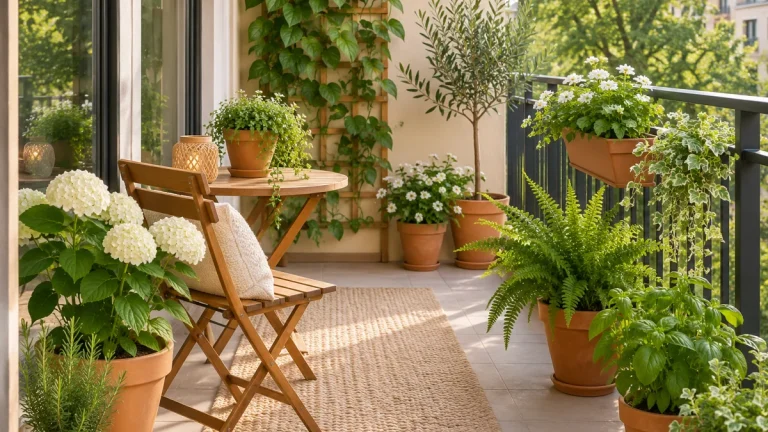
Narrow Balcony Layout Ideas: 8 Ways to Fit Plants and Seating
A narrow balcony can feel difficult to furnish because every purchase competes with the route through the space. A chair that looks small in a shop may occupy most of the floor once you pull it out. A row of pots can look tidy until you need to reach the far end with a watering can. The most useful narrow balcony layout ideas begin with movement, then add a comfortable place to pause and a manageable collection of plants.
These eight arrangements are starting points to adapt, not measured construction plans. Choose the one that suits your doorway, light, household, and building rules. Before adding weight or attaching anything, check the lease and ask management about restrictions. For a broader planning checklist, begin with our small apartment balcony garden guide.
In this guide
- 1. Put one comfortable seat at the far end
- 2. Keep furniture and pots on one side
- 3. Use a compact bistro arrangement for shared coffee
- 4. Arrange a few pots as one garden zone
- 5. Add a low freestanding shelf where it earns its place
- 6. Leave an open maintenance landing near the door
- 7. Choose pieces that can change roles
- 8. Edit the view from indoors
- Work through a one-seat layout with actual measurements
- Compare four narrow-balcony arrangements before buying
- Give folding furniture and cushions a real storage plan
- Run a seven-day trial and fix the repeated inconvenience
- Questions to settle before shopping
- Plan the next part of your space
1. Put one comfortable seat at the far end
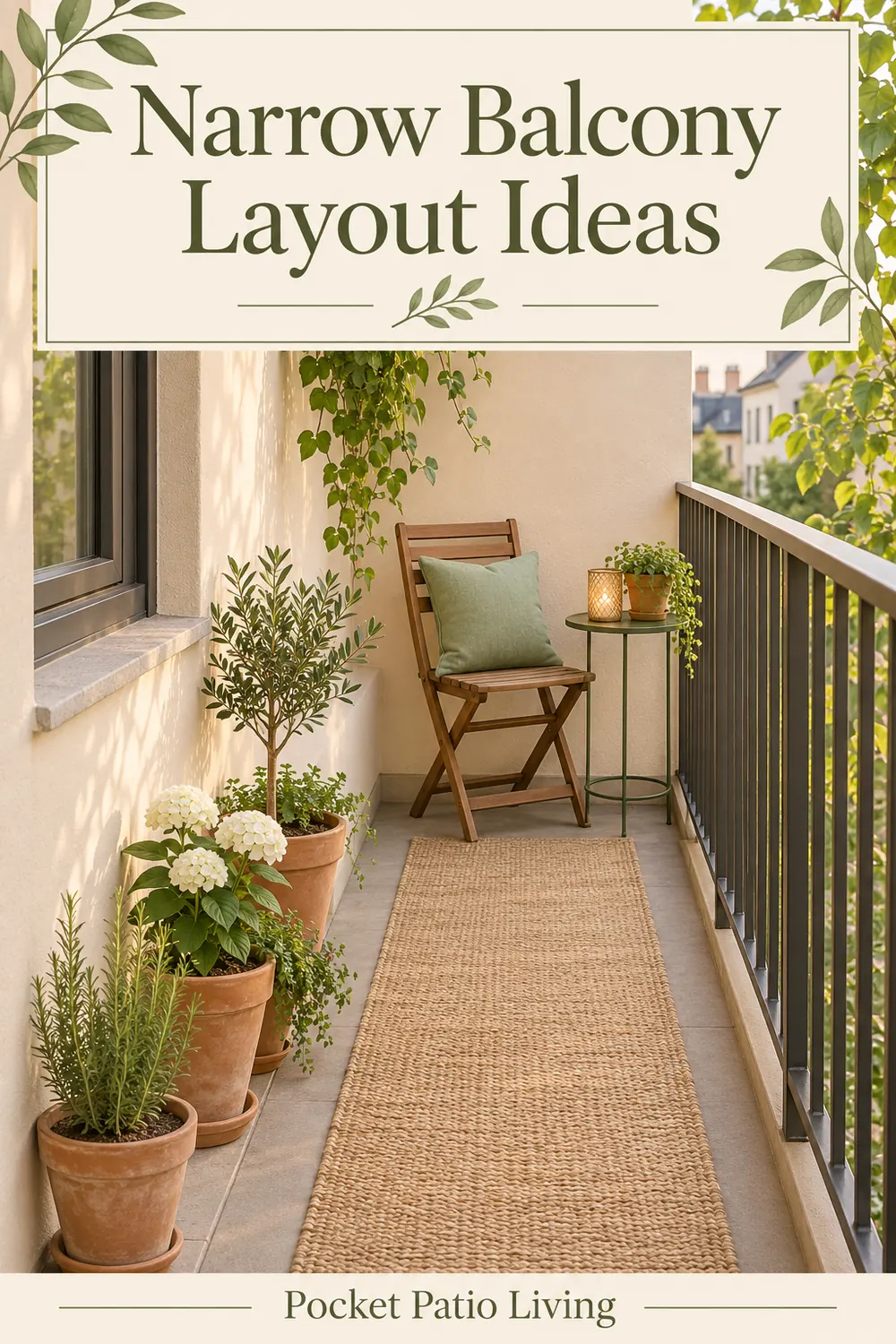
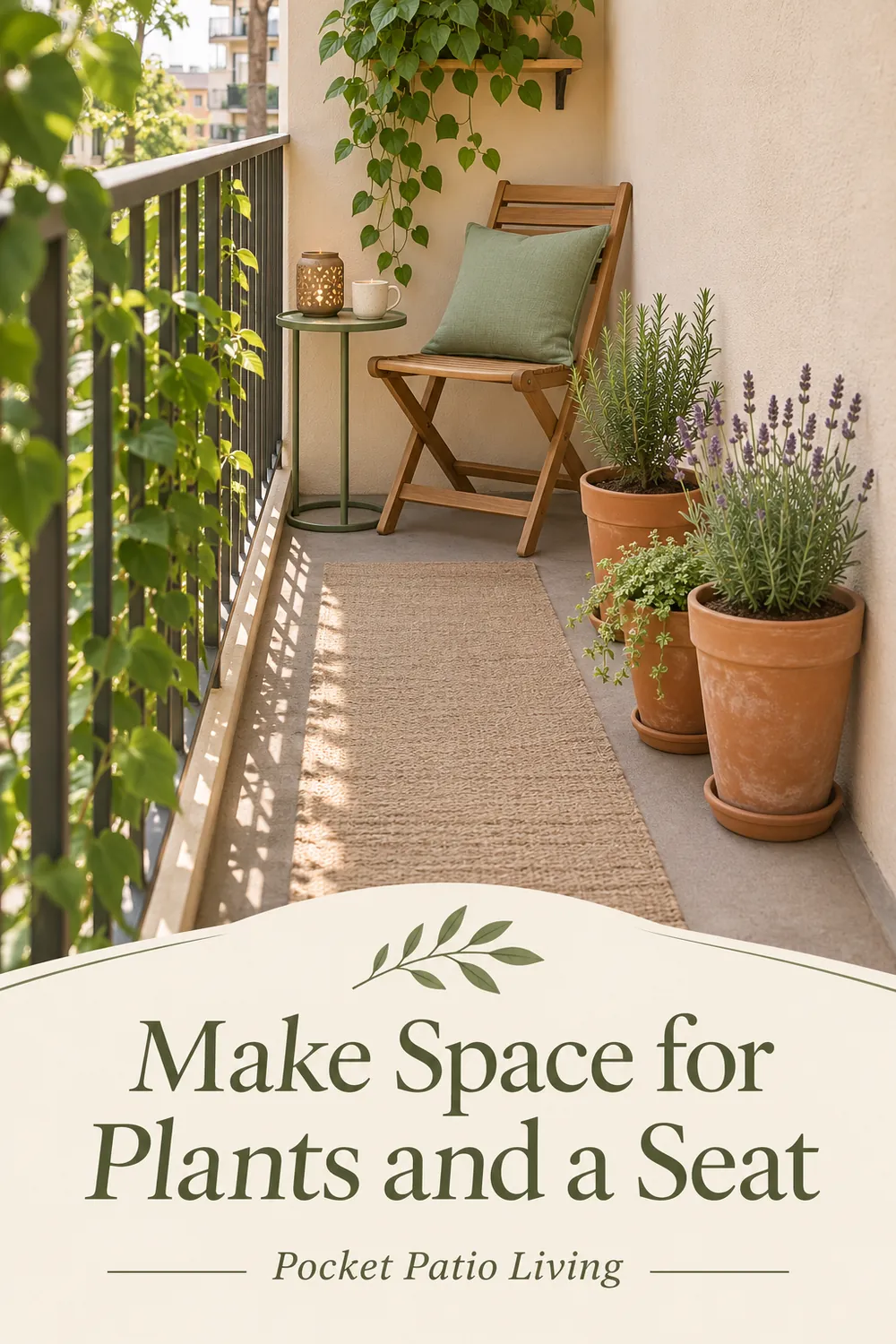
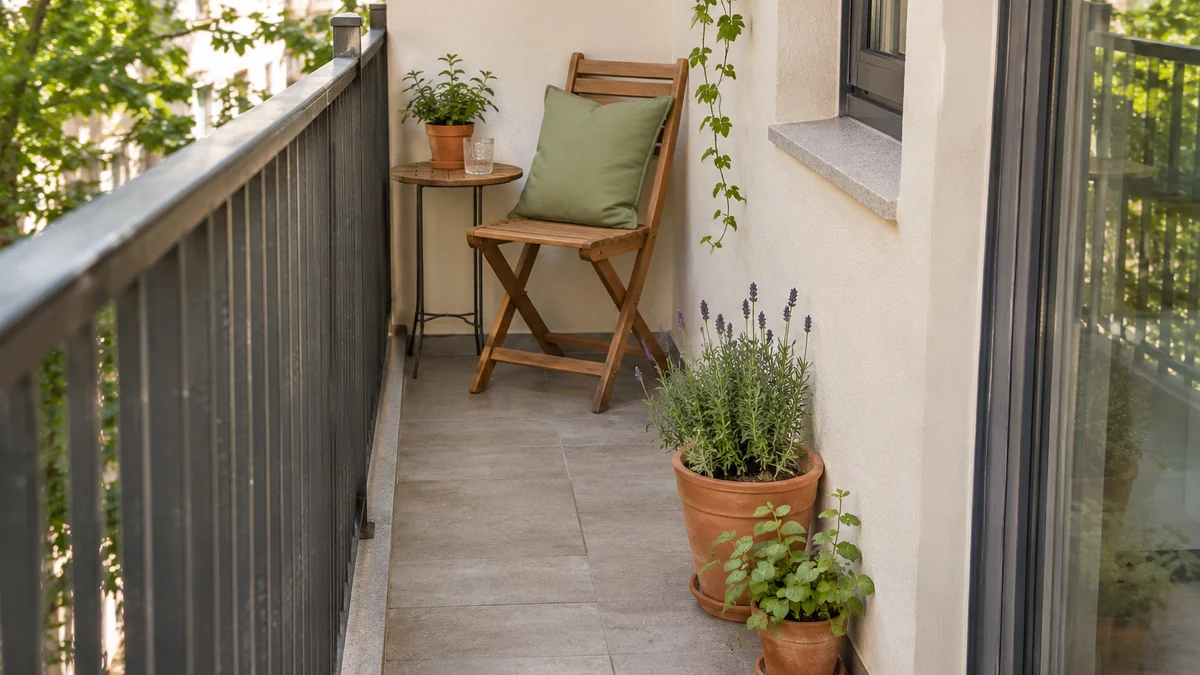
An end-positioned chair gives a long balcony a clear destination. You walk toward the seat rather than weaving between furniture placed along both sides. Start with the chair alone and check whether you can sit down, stand up, and turn without catching your clothing on nearby pots. Measure the usable footprint with the chair occupied; the product width tells only part of the story.
Place a small table beside the seat if the route remains comfortable. A surface for a cup often adds more daily value than a second chair that rarely gets used. Keep plant foliage clear of your face and shoulders, especially when the plants will grow larger during the season.
This arrangement works particularly well when one person usually uses the balcony. It is less suitable if the far end contains a drain, service hatch, or other feature that must remain accessible. In that case, leave the end clear and try a side-facing arrangement instead.
2. Keep furniture and pots on one side
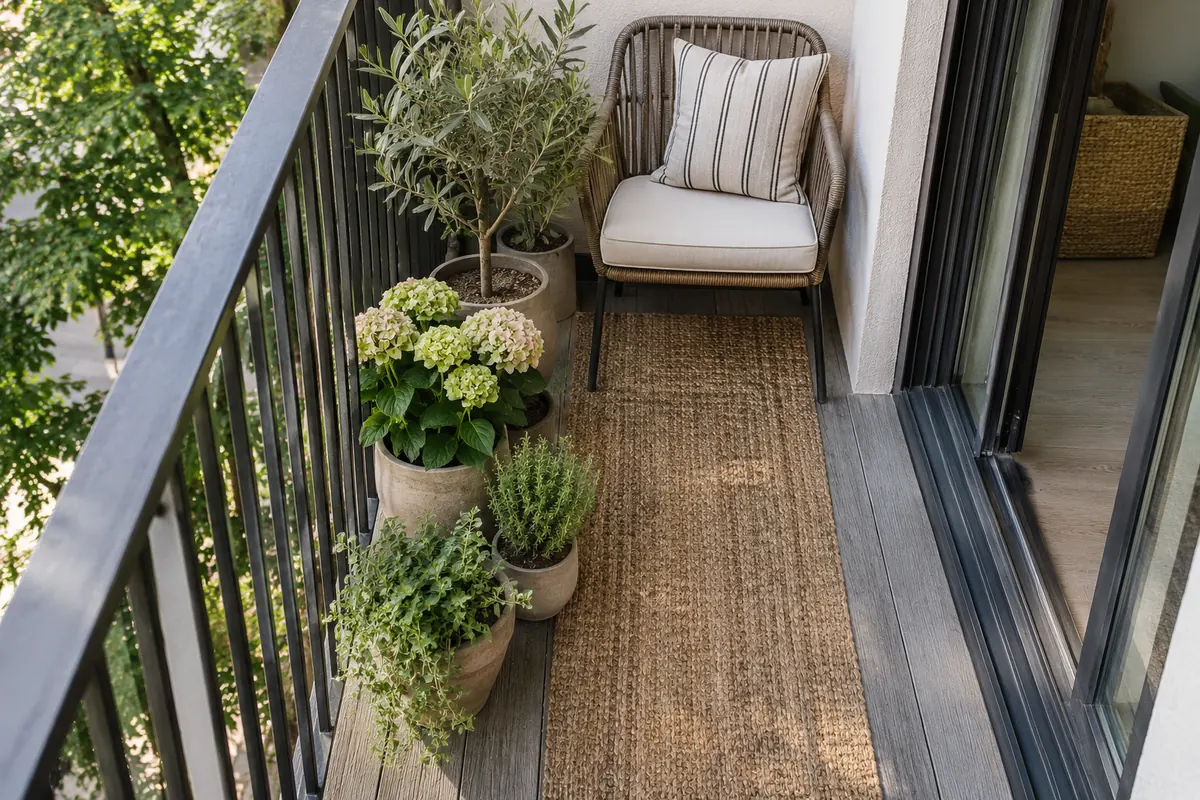
A one-sided layout preserves a visible strip of floor from the door toward the end. Choose the side by testing the door swing and the direction you naturally step outside. Avoid placing the thickest furniture directly opposite an outward-opening door. A beautiful arrangement becomes frustrating quickly if you need to move a pot every time you enter.
Use removable paper templates to represent the chair, table, and filled containers. Walk through the space carrying something ordinary, such as a small watering can or cushion. This test is more useful than judging the arrangement from a photograph because it reveals where your elbows, knees, and feet need room.
Do not assume that a narrow-looking gap is an acceptable exit route. Follow the requirements that apply to your building and keep required access clear. If the available width will not support both furniture and plants comfortably, reduce the number of pieces. One useful chair and three containers can be a complete balcony.
3. Use a compact bistro arrangement for shared coffee
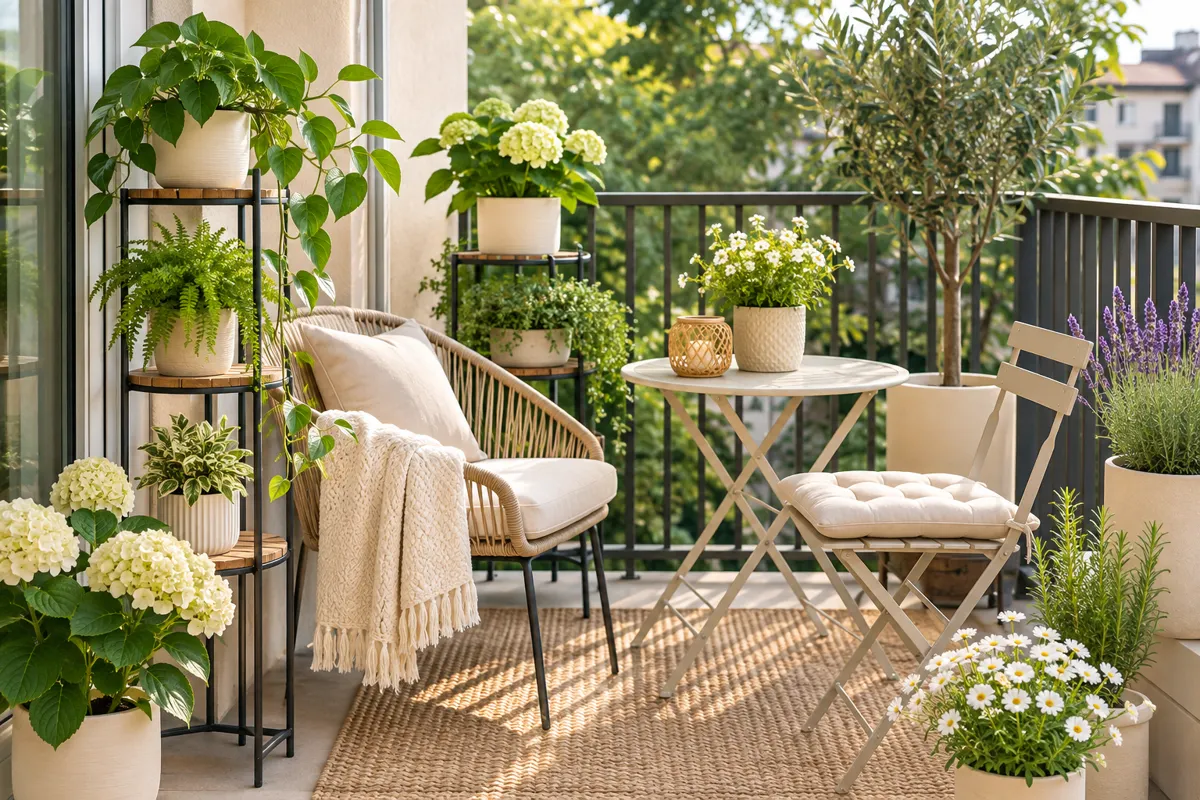
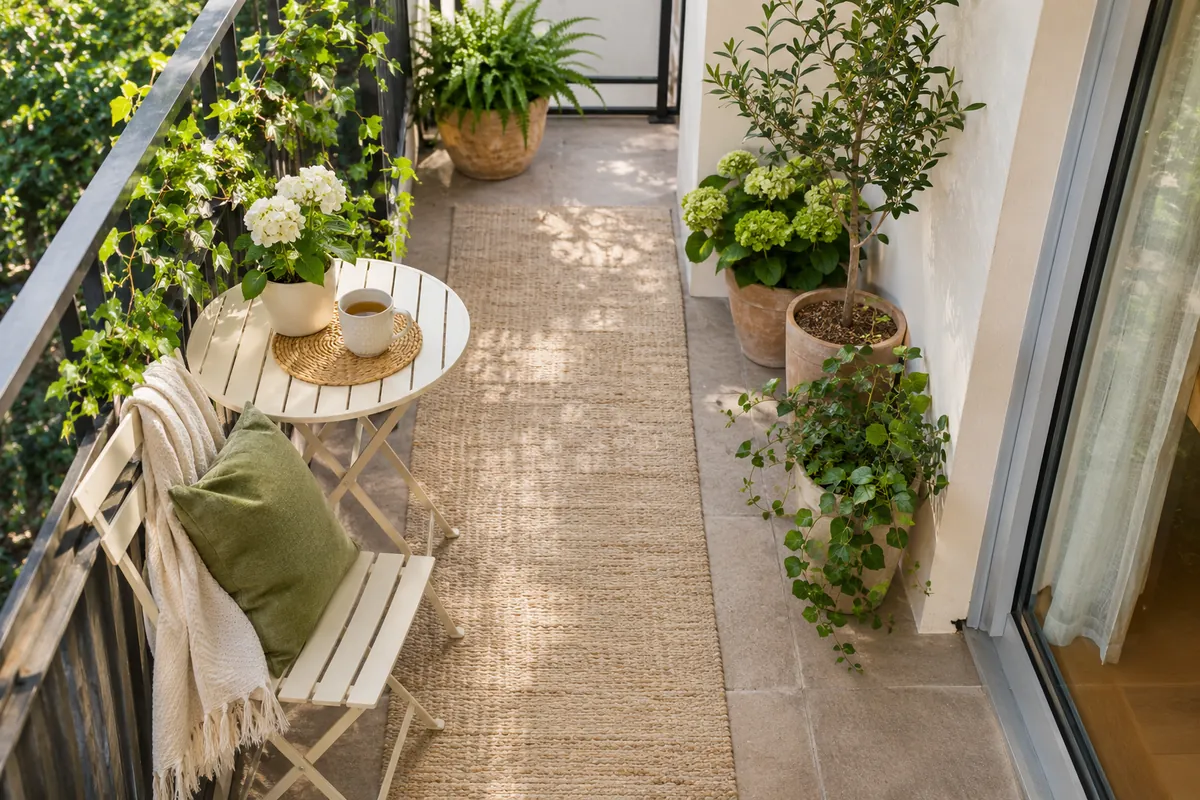
If two people regularly sit outside, test a small table with two compact chairs before buying a matching set. The table diameter matters, but the distance needed to pull out each chair matters just as much. Try positioning the chairs slightly toward one end instead of placing them directly across the narrowest part of the balcony.
Folding chairs can make storage easier when the space changes purpose. Check the actual folded dimensions and decide where the spare chair will live. Leaning it against a doorway or railing is not a storage plan. Choose outdoor-suitable pieces with stable feet and a folding mechanism you can operate comfortably.
Keep the tabletop useful. A small plant may be enough decoration when the surface also needs to hold cups or breakfast plates. Place larger containers at floor level away from chair legs. Our small patio decorating plan on a budget explains how to prioritize practical furniture before finishing details.
4. Arrange a few pots as one garden zone
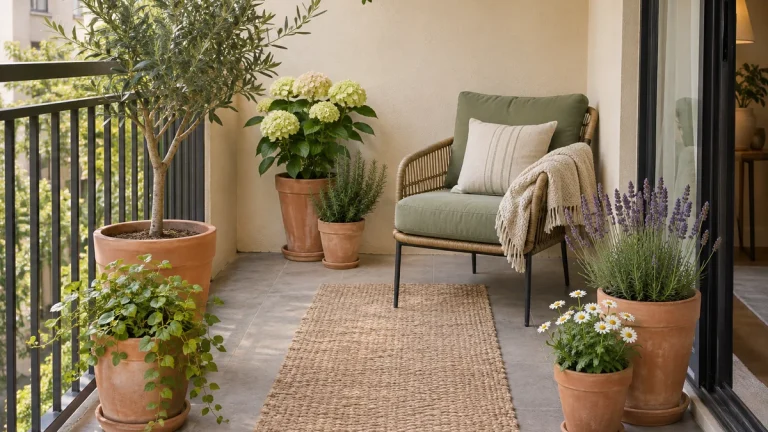
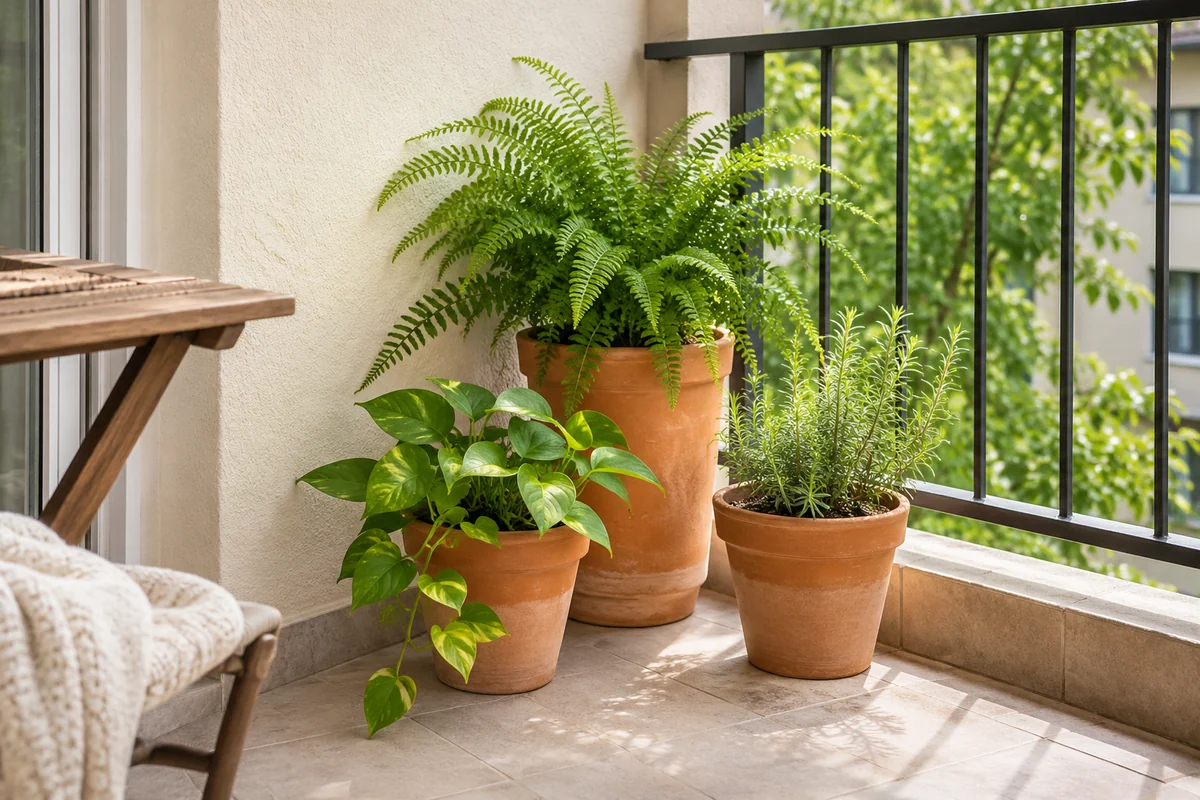
Instead of spacing tiny pots along the entire perimeter, try a small coordinated group near the seat. Grouping creates a distinct garden zone while leaving other surfaces open. Select the location according to the plants’ light needs, then check that the containers do not obstruct the door or an existing drainage route.
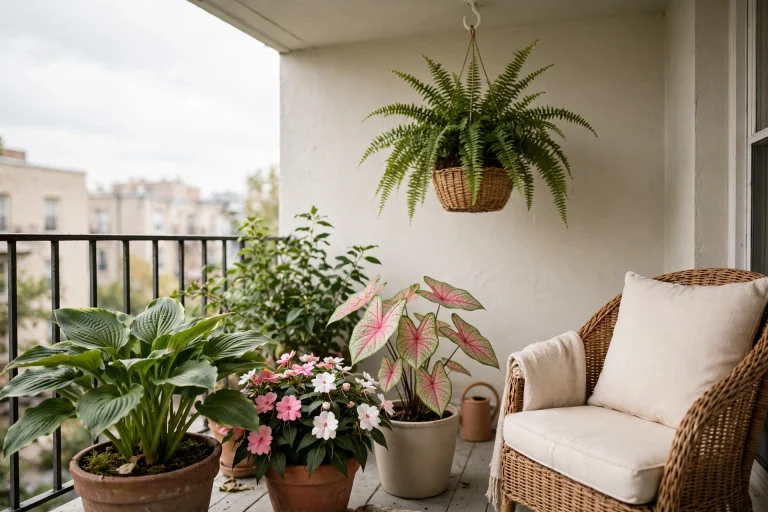
Think about mature foliage as well as current pot size. A plant that fits neatly today may spread into the route later. Leave enough space to inspect leaves, reach the growing mix, and lift any removable saucers. A container hidden behind several others is easy to overlook during routine care.
Keep plants with different moisture needs in separate containers so you can respond to each one. Similar pot materials or a repeated color can connect the group visually without forcing every plant into the same conditions. If you are new to growing in pots, our beginner container gardening guide covers the essential decisions before planting.
5. Add a low freestanding shelf where it earns its place
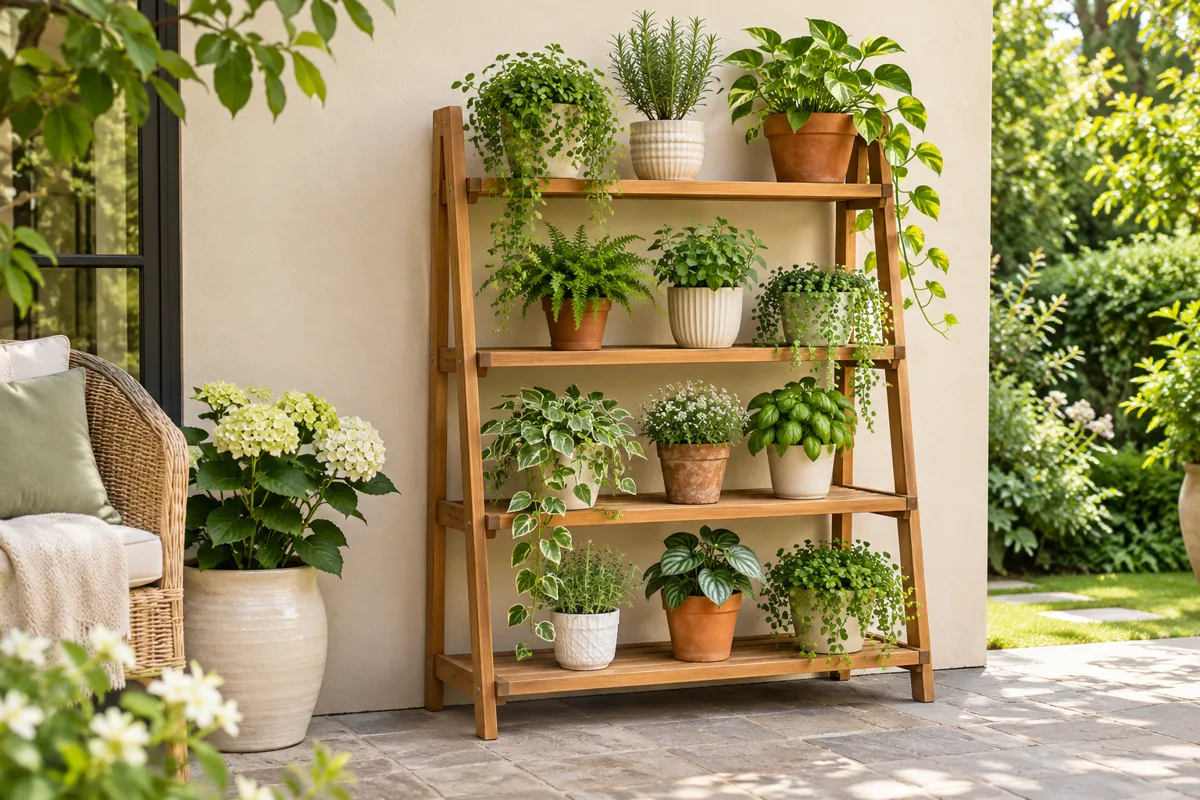
A plant shelf can organize small containers, but its footprint still occupies floor space. Measure its feet, any projecting edges, and the room needed to water plants on each level. Compare that total with the area occupied by the pots alone. Choose a shelf because it makes maintenance easier, not simply because vertical storage sounds efficient.
Look for an outdoor-suitable stand whose instructions permit the intended use. Keep heavier containers low and avoid loading the top with tall plants. Some freestanding furniture requires anchoring; if the product requires a wall attachment your rental does not allow, select another arrangement rather than skipping the instructions.
Use the upper levels sparingly so light reaches the plants below. Check stability on the actual balcony surface before adding containers. Do not wedge a stand against a railing or use the railing as an improvised support. A low, manageable display is often more practical than a tall wall of plants on an exposed balcony.
6. Leave an open maintenance landing near the door
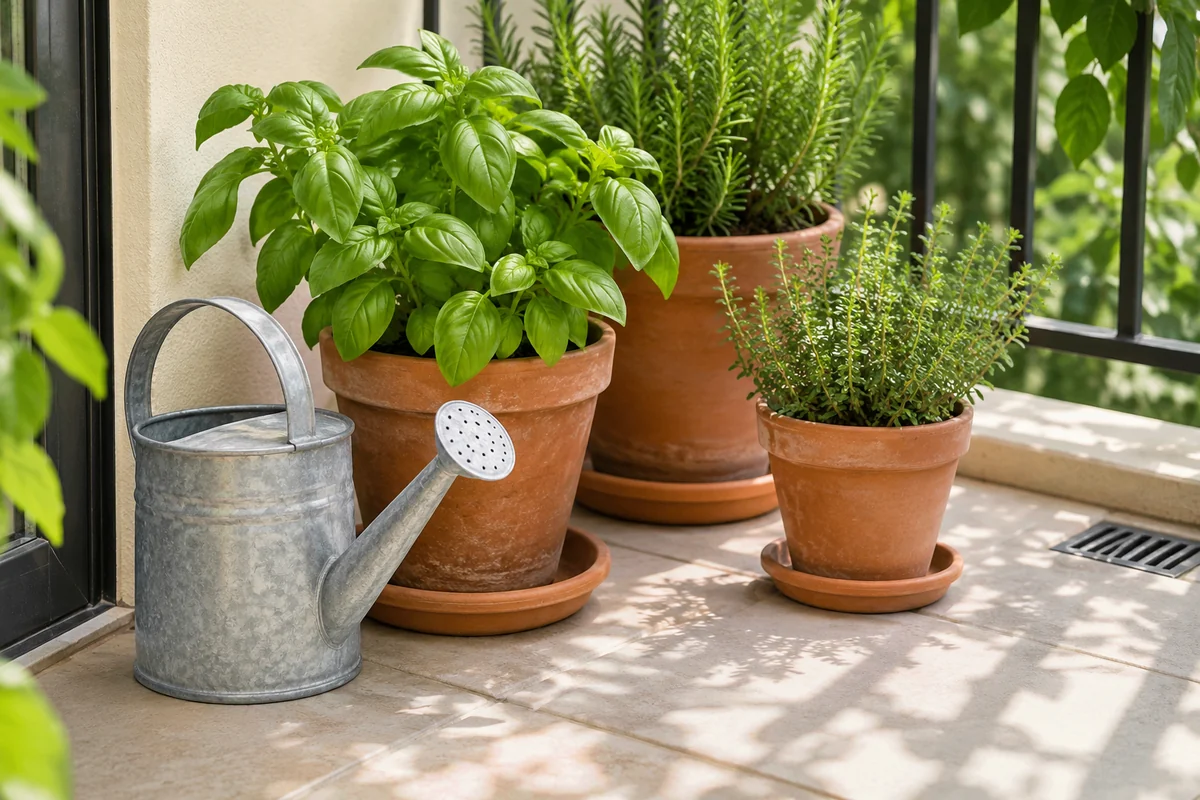
An open patch of floor near the entrance makes everyday care less awkward. It gives you somewhere to pause with a watering can, set down a clean tray briefly, or bring cushions inside. Treat this area as working space rather than an empty corner waiting for another purchase.
Keep tools small enough to store properly after use. A watering can that fits in an indoor cupboard may be more convenient than a large decorative one permanently taking up the balcony. Store growing mix and fertilizer according to their labels, with household and building rules in mind.
Observe where water goes when containers drain. Protect the balcony surface appropriately and avoid sending runoff onto neighbors. Empty collected water as needed and keep building drainage clear. The layout should allow you to inspect these areas without dismantling the seating arrangement. If watering feels difficult during your trial week, move the pots closer together or reduce their number before adding more plants.
7. Choose pieces that can change roles
A small side table may serve morning coffee, a notebook, and occasional plant maintenance at different times. A folding chair can make room for cleaning when it has a defined storage location. Flexible pieces are useful when they solve a real routine; they are less useful when every activity requires rearranging the entire balcony.
Make a short list of the two activities that matter most. For example, reading alone and tending three pots call for a different arrangement than dining for two every evening. Give the main activity a permanent, comfortable setup and make the secondary activity easy to accommodate.
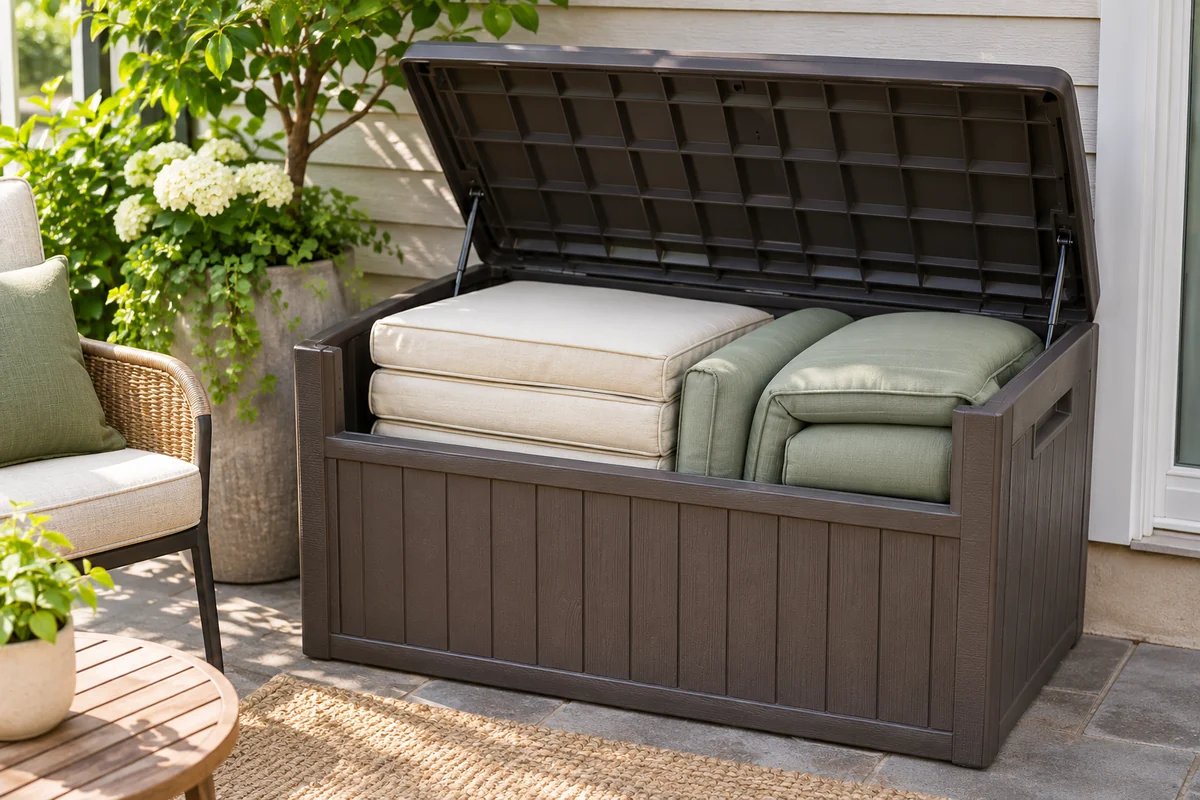
Avoid buying a storage bench purely for the promise of hidden capacity. Check lid clearance, exterior dimensions, outdoor suitability, and whether cushions or tools can be stored there under the manufacturer’s instructions. On a narrow balcony, a bulky storage piece can consume more useful space than the objects it holds. Sometimes a simple chair and indoor storage remain the better fit.
8. Edit the view from indoors
The balcony is also something you see through the doorway. Stand inside and look at the arrangement at your normal eye level. A single tidy plant group and an inviting chair can create a calmer view than a collection spread across every edge. This is a useful final test after practical access and plant care are resolved.
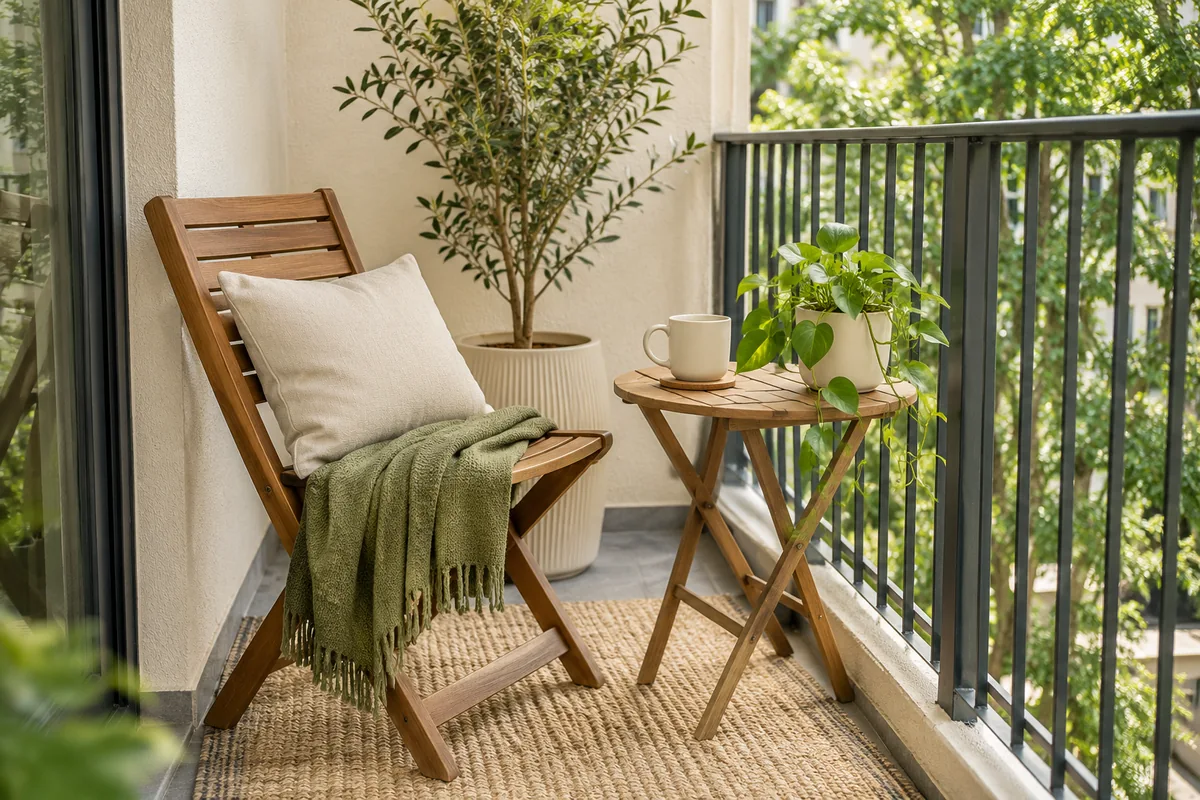
Repeat one or two materials rather than introducing a different finish with every purchase. Terracotta, natural wood, and a sage cushion are one possible combination, but existing furniture should guide the palette. You do not need to replace functional pieces to make the group feel connected.
Live with the edited layout for several days. Note whether you use the chair, whether any pot is difficult to reach, and whether you keep moving the table. Photograph the arrangement for your own comparison, then change one thing at a time. The right layout is the one that stays easy to use after the initial styling session.
Work through a one-seat layout with actual measurements
Take a hypothetical balcony measuring 4 feet wide by 10 feet long as a paper exercise, not a ready-made plan. A chair that projects about 30 inches across the width can leave only about 18 inches beside it before considering the table, feet or plant foliage. That arithmetic explains why turning furniture lengthwise or placing the seat at an end can matter. It does not establish an acceptable access width for your building.
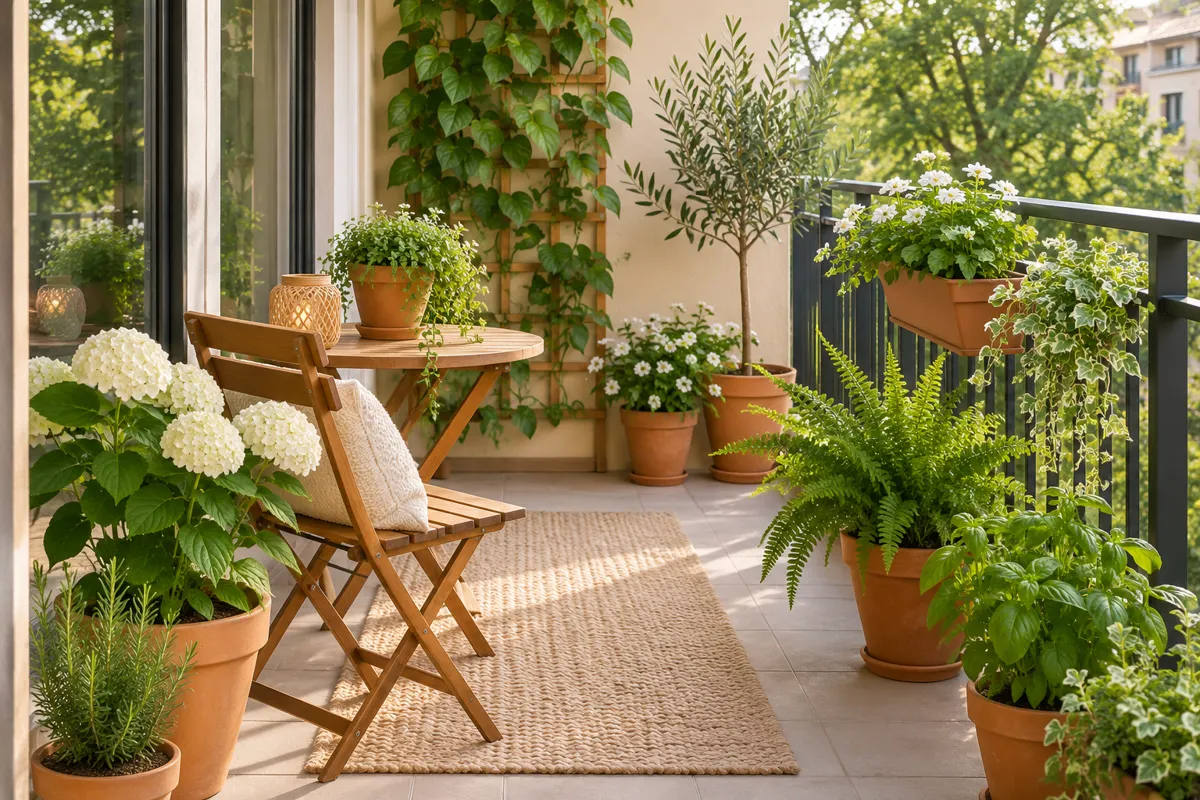
Draw the doorway and its full swing before positioning the chair template. Then put the table on the side that remains comfortably reachable. Group two low containers on one side only and test whether that group competes with the route. The accompanying illustration shows the principle of an open middle, rather than the dimensions of this hypothetical example.
If the paper plan is too tight, try a different chair footprint, one container or a smaller table. Do not keep reducing the route until the preferred furniture appears to fit. The usable layout is the version that follows property requirements and works with a person actually moving through it. Our balcony garden planning guide helps connect the layout to growing conditions.
Compare four narrow-balcony arrangements before buying
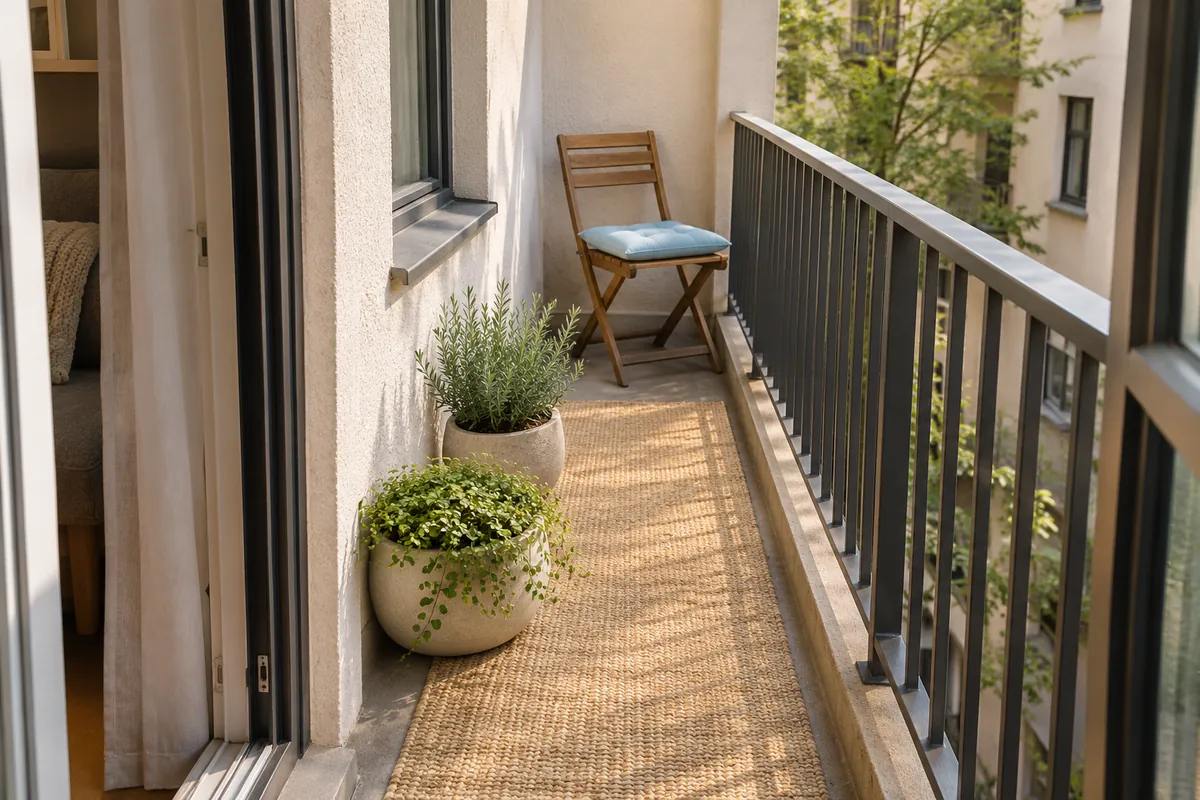
Use these options to identify the first arrangement worth testing with existing furniture. Each trades one benefit against a practical limitation. The best choice depends on your door, light and main activity, rather than the shape of a photograph you want to reproduce.
| Arrangement | Useful when | Main test |
|---|---|---|
| One chair at the end | Reading is the main activity | Can you approach and leave the occupied seat? |
| Two small seats along one side | Two people regularly use the balcony | Do feet and knees intrude into the route? |
| One seat with an occasional folding chair | Company is infrequent | Is suitable storage available for the spare? |
| Plant-first display with one compact seat | Growing is the priority | Can every container be watered without moving furniture? |
Measure the candidate pieces completely, including feet, armrests and folded dimensions. Make templates from paper and compare them on the dry balcony. Walk the normal route with a watering can, then sit down and stand again. This reveals conflicts that disappear in an overhead sketch because the sketch shows empty chairs instead of people.
Keep notes on the reason you rejected a layout. Too much table projection is a useful buying criterion; it feels cramped is harder to act on. Take those specific limits into your next furniture comparison.
Give folding furniture and cushions a real storage plan
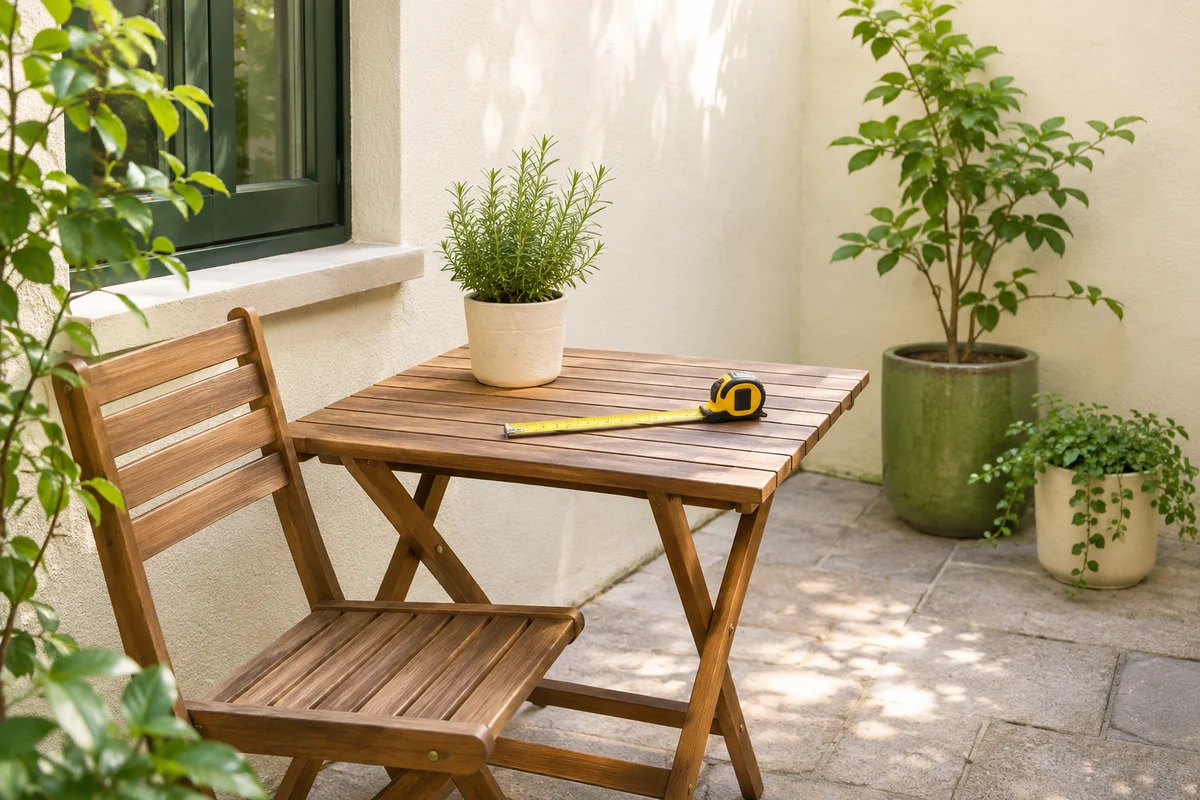
Folding furniture saves everyday space only when the folded piece has a suitable home. Include the route from that home to the balcony in the plan. An extra chair that must lean unsecured in the doorway between uses has not solved the layout problem. Follow the product’s handling and storage instructions and avoid improvised railing storage.
Treat cushions separately from the furniture frame. Measure the stack you actually own and choose a location that fits its care requirements. A basket just inside the door may be simpler than a large outdoor box. If you do choose a box, measure the lid open and verify the product is suited to its intended contents and conditions.
A narrow balcony benefits from a short reset: put away temporary textiles, clear the cup surface and return watering equipment. This does not mean dismantling the entire balcony each evening. The normal arrangement should remain comfortable, with occasional items stored elsewhere. Our small balcony storage guide explains how to decide which objects need an outdoor address and which do not.
Run a seven-day trial and fix the repeated inconvenience
Use the chosen layout for a week before adding another decorative layer. Record where the mug ends up, which pot you keep moving and whether the chair is used at the time of day you expected. Check the view from the seated position as well as from the doorway. A layout can look open from indoors while making watering awkward behind the chair.
Change only the part that creates the repeated problem. If a table is too far away, move or replace the table rather than rebuilding the plant display. If foliage spreads into the route, reconsider the plant position and mature size. A problem caused by one large piece is unlikely to be solved by several smaller accessories.
At the end of the trial, keep the arrangement that supports the main activity with the least daily rearranging. Use our balcony plant arrangement ideas for refining the container group after the route and seating work. Your measurements and observations are now a more useful guide than a generic list of things every balcony should contain.
Questions to settle before shopping
Can a very narrow balcony hold two chairs?
Sometimes, but test the occupied footprint and doorway first. A folding spare chair may work better than two permanent seats. If using both chairs blocks required access, choose a single-seat plan instead.
Should every empty corner have a plant?
No. Empty space supports movement, cleaning, and visual calm. Add a container only when its light, watering needs, weight, and mature size fit the space you have.
What should I buy first?
Measure and observe before buying anything. Then prioritize the main seat or table, essential containers, and the plants you can maintain. Decorative layers can wait until you have used the basic layout.
Plan the next part of your space
Continue with our renter-friendly balcony makeover guide for a related part of your setup. For another practical starting point, explore vertical balcony garden ideas and adapt the ideas to your space.
Save this guide for later
Save one of these Pinterest-style designs for your next outdoor-space planning session. All article images are design illustrations.