North-Facing Balcony Plants: 15 Shade-Friendly Picks for Small Spaces
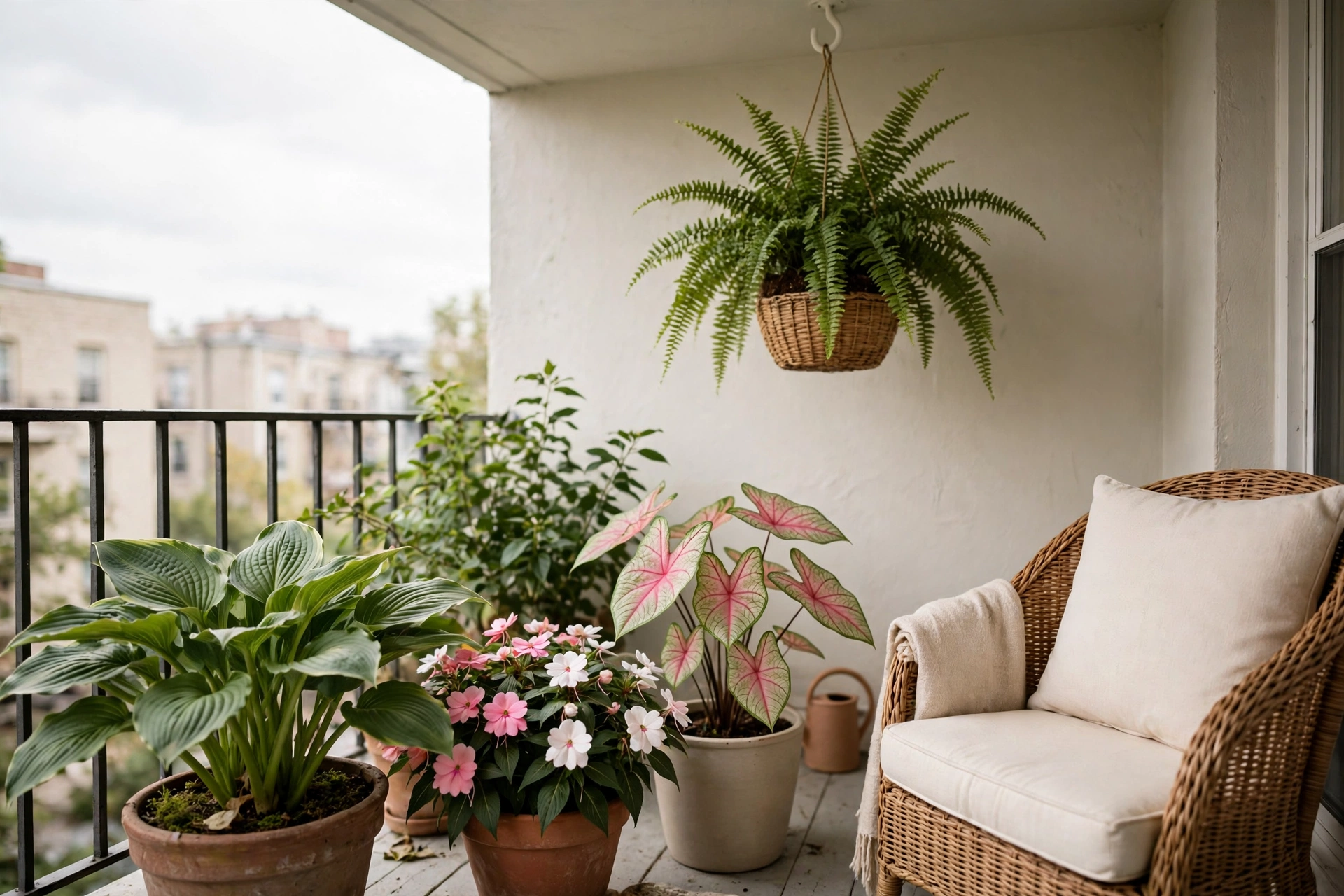
A north-facing balcony gets less direct sun than any other direction, and that single fact decides which plants will thrive there. In the Northern Hemisphere, the sun travels across the southern sky, so a north-facing balcony sits in the building’s shadow for most of the day. What it does receive is bright indirect light, reflected light from nearby walls, and — in summer — a little early-morning or late-evening sun at the edges. This guide lists 15 shade-friendly plants for containers on a north-facing balcony, with notes on light, water, container size, and USDA hardiness zones.
Start with our small apartment balcony garden ideas to plan the layout before you buy plants.
What “north-facing” really means for plants
Direction is only a starting point. A north-facing balcony in Phoenix and one in Seattle do not behave the same way. Still, the pattern holds: in the Northern Hemisphere, a north-facing space receives little or no direct sun for most of the year. Light arrives as bright indirect light — daylight reflected off the sky, clouds, and nearby surfaces.
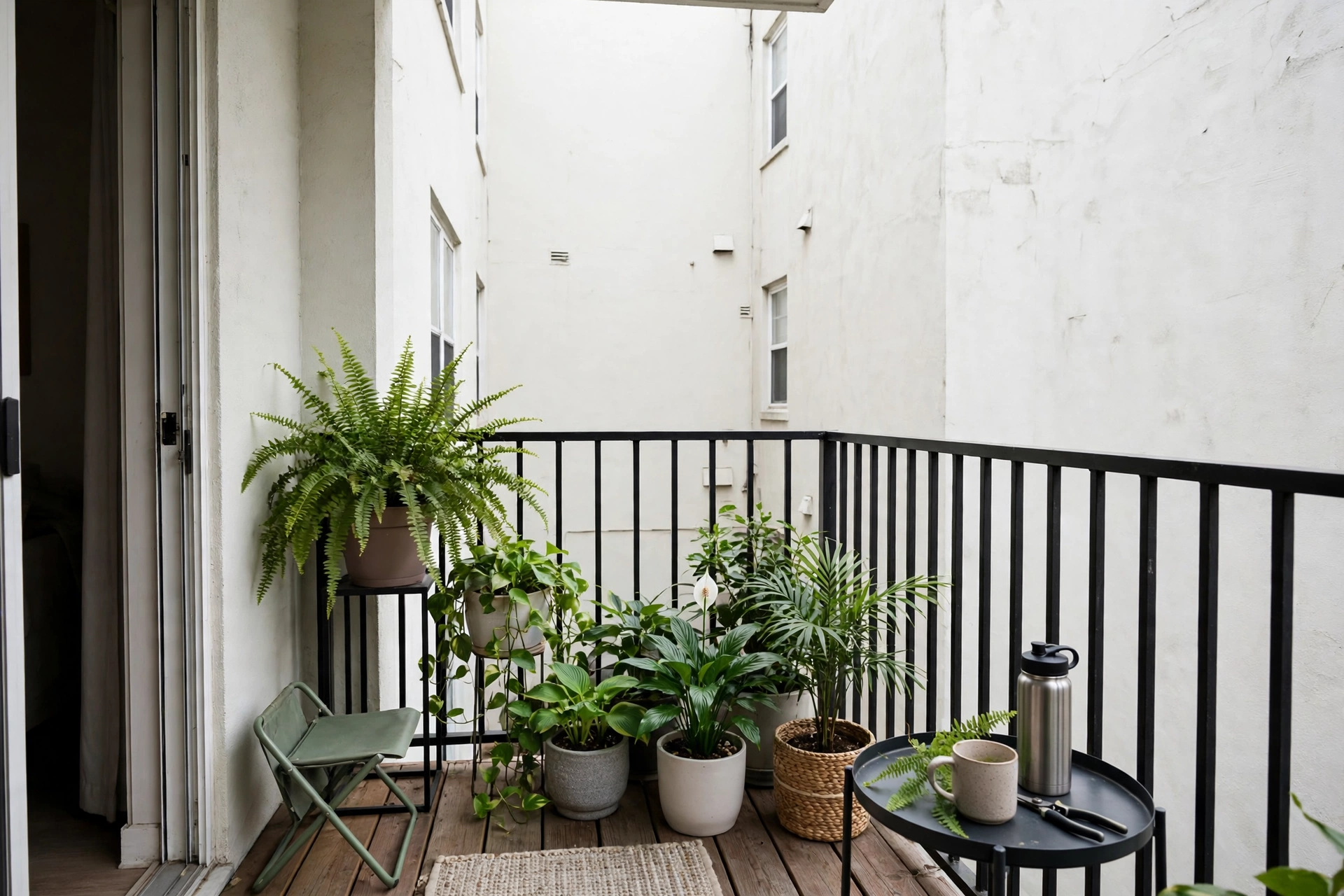
Plant labels use three terms. Full sun means at least six hours of direct sun a day; almost nothing here needs it. Part shade means roughly three to six hours of direct sun, or dappled light — on a north-facing balcony, that usually means the brightest spots near the railing. Full shade means less than three hours of direct sun, often none. But full shade does not mean no light: a plant in a dark corner with almost no sky light will still struggle.
Reflected light also counts — a pale wall or a light-colored building across the street can bounce real growing light onto your plants. And the light changes with the season: in summer the sun rises in the northeast and sets in the northwest, so the edges of a north-facing balcony can catch an hour or two of gentle sun. In winter, that goes away. Plan for winter light and treat summer sun as a bonus.
How to read your balcony’s light in one day
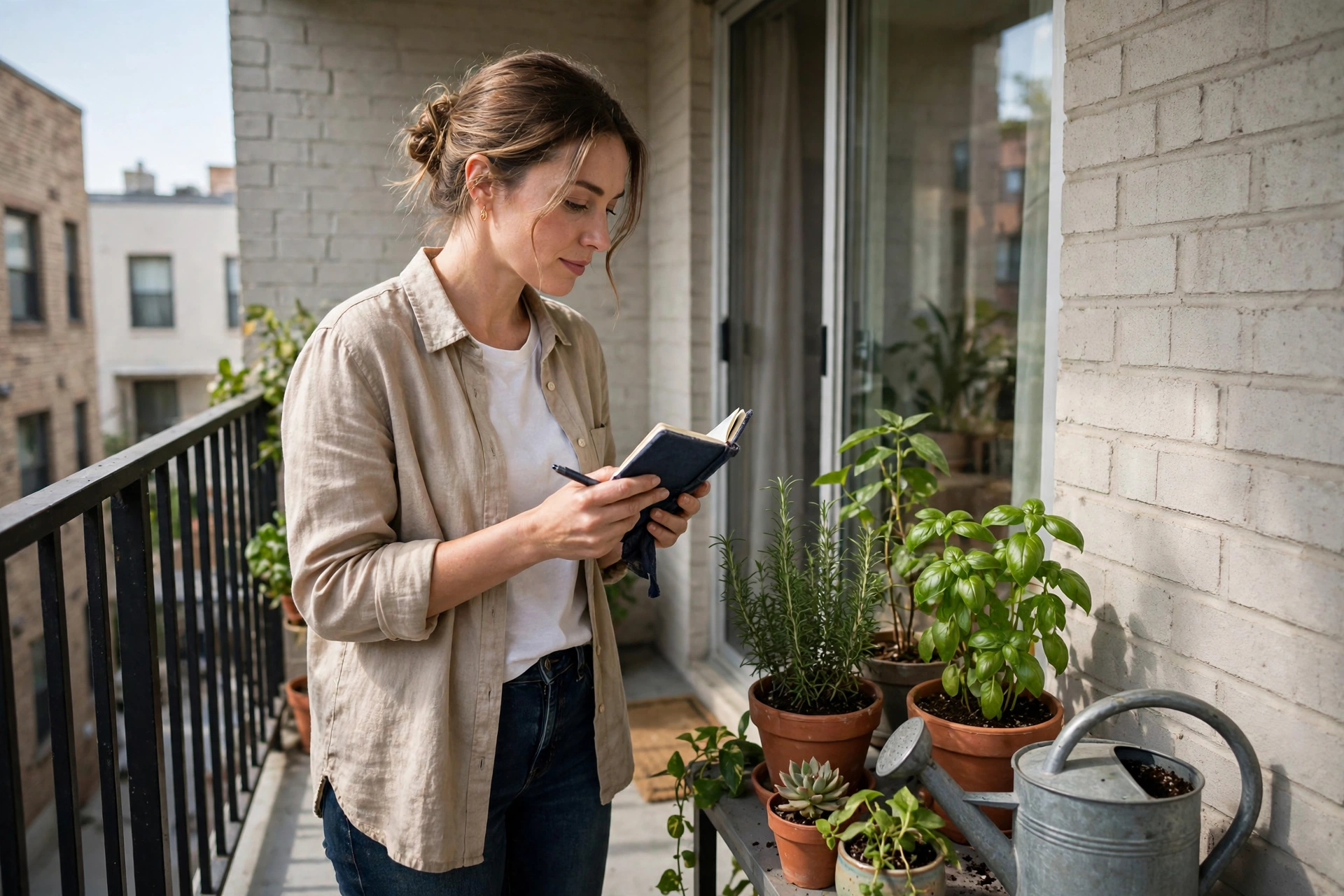
Before buying plants, spend one ordinary day watching the light. Check at 9 a.m., 1 p.m., and 4 p.m. on a clear day, and note whether direct sun reaches each growing position. A spot is in bright indirect light if you can read a book there comfortably without a lamp; it is in deep shade if it feels dim even at midday. Finally, check the building rules before choosing heavy containers or a tall stand — weight limits, railing restrictions, and drainage rules affect the whole plan.
Our narrow balcony layout ideas show how to fit plants and seating when space is tight.
The 15 plants at a glance
| # | Plant | Light | Water | Container | USDA zones* |
|---|---|---|---|---|---|
| 1 | Hosta | Part to full shade | Evenly moist | 3–5 gal | 3–9 |
| 2 | Boston fern | Bright indirect light | Consistently moist | 2–3 gal / hanging basket | 9–11 |
| 3 | Japanese painted fern | Full to part shade | Moist, rich mix | 1–2 gal | 3–8 |
| 4 | Impatiens | Part to full shade | Moist, never soggy | 1–2 gal | 10–11 |
| 5 | Wax begonia | Part shade | Moist, well-drained | 1 gal | 10–11 |
| 6 | Rex begonia | Bright indirect light | Moist, avoid wet leaves | 1–2 gal | 10–12 |
| 7 | Coleus | Part shade | Moist, well-drained | 1–3 gal | 10–11 |
| 8 | Caladium | Bright indirect / part shade | Consistently moist | 2–3 gal | 9–11 |
| 9 | Fuchsia | Part to full shade | Moist, cool roots | Hanging basket / 2 gal | 6–9† |
| 10 | Coral bells (Heuchera) | Part shade | Moist, well-drained | 1–2 gal | 4–9 |
| 11 | Cast iron plant | Deep shade | Let top 2 in. dry | 2–3 gal | 7–11 |
| 12 | Pothos | Low to bright indirect | Let top 1 in. dry | 1–2 gal / hanging basket | 10–12 |
| 13 | Snake plant | Low to bright indirect | Sparingly, drought-tolerant | 1–2 gal | 9–11 |
| 14 | Peace lily | Low to medium shade | Evenly moist | 1–2 gal | 10–12 |
| 15 | Torenia (wishbone flower) | Part shade | Moist | 1 gal | 10–11 |
*Zones = surviving outdoors year-round. Tender plants (zones 9–12) are grown as warm-season annuals in most of the US, or brought indoors before frost. Pots run colder than the ground, so treat a potted plant as roughly one zone colder than your map says. †Hardy fuchsia types survive in zones 6–9; tender types are perennial only in zones 9–11 and are grown as annuals elsewhere.
The 15 shade-friendly picks
1. Hosta
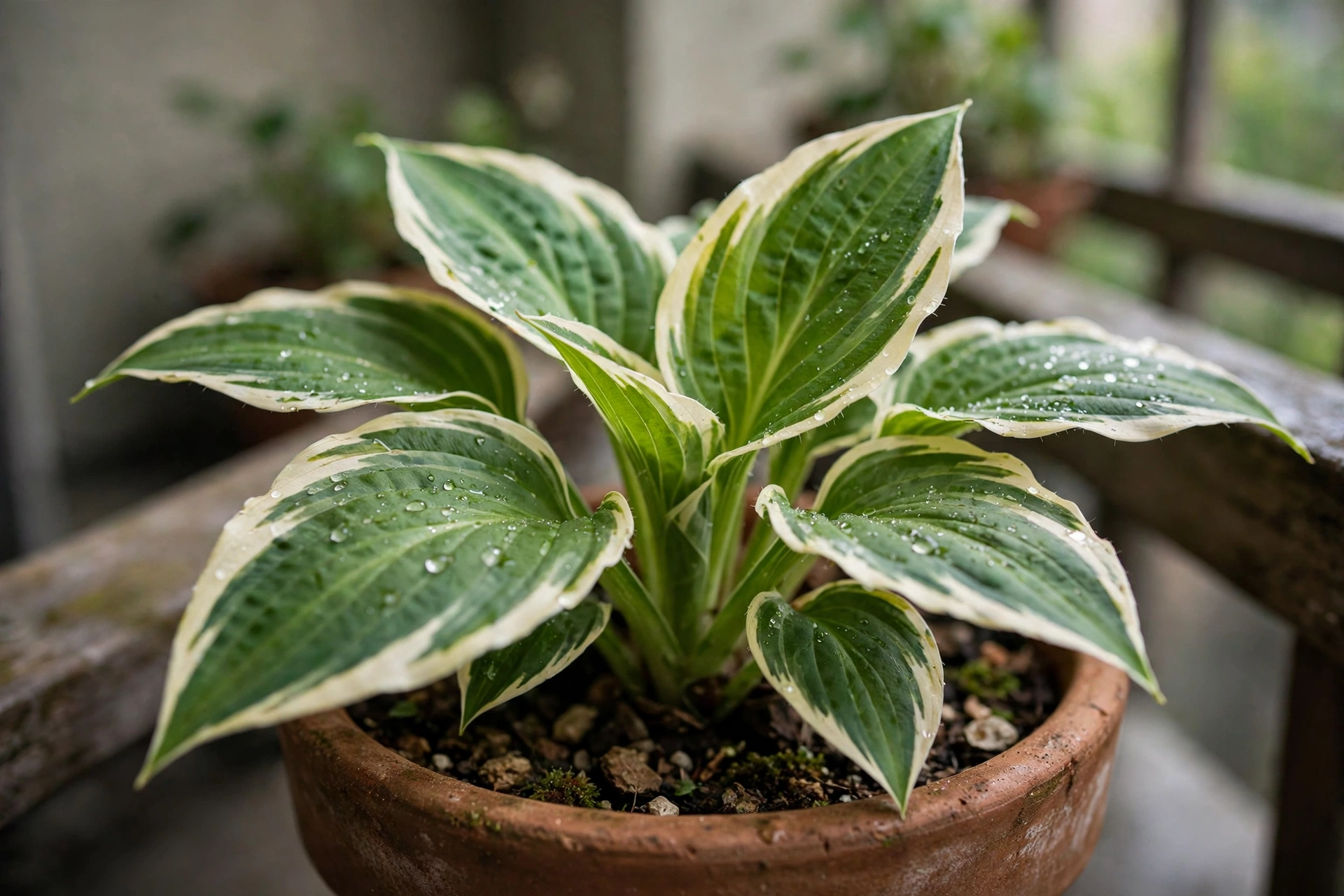
Hostas are the classic shade perennial, and compact varieties suit containers well. Broad leaves in deep green, blue-green, chartreuse, and variegated cream let one plant carry a whole pot. Give it part to full shade and evenly moist, free-draining mix in a 3- to 5-gallon container. Hardy in zones 3–9, it dies back in winter and returns in spring.
2. Boston fern
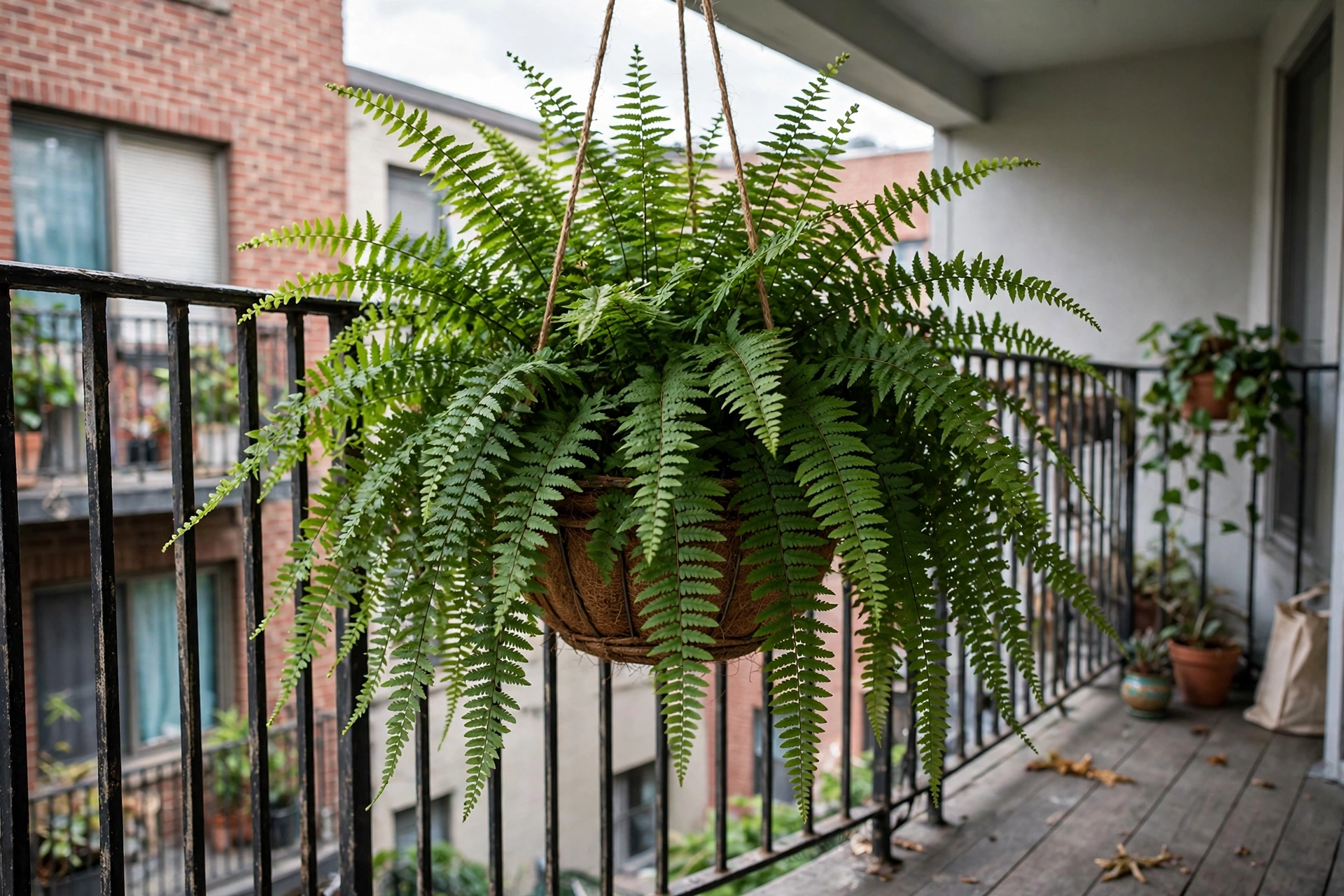
Few plants soften a shaded balcony as quickly as a Boston fern. Its arching, feathery fronds spill over a hanging basket or tall pot, and it asks mainly for bright indirect light and steady moisture. Keep the mix consistently moist Use a 2- to 3-gallon pot or basket. Perennial in zones 9–11; elsewhere, bring it indoors before frost.
3. Japanese painted fern
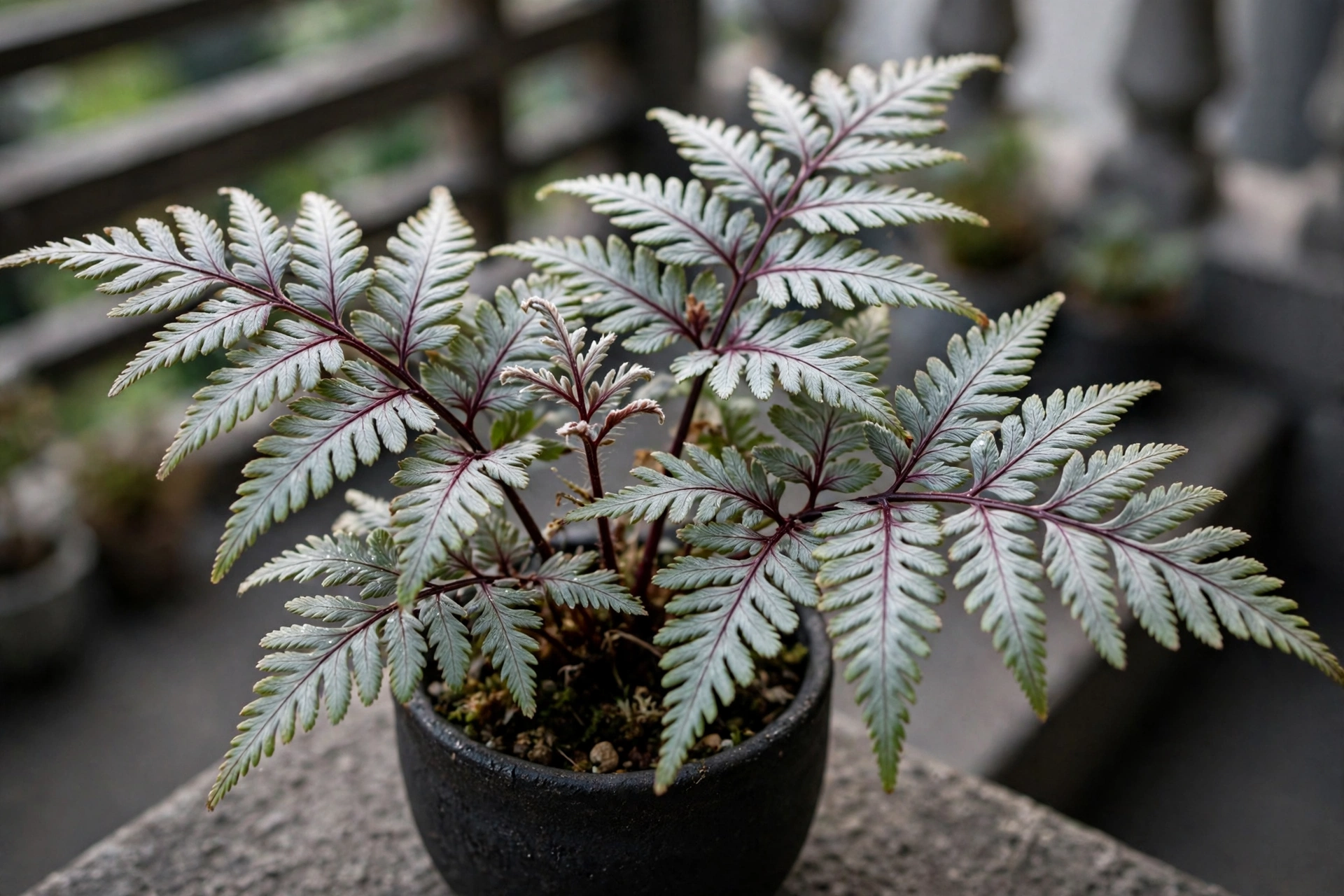
If you want color without flowers, the Japanese painted fern is hard to beat. Its fronds mix silver, green, and burgundy in a way that looks almost metallic in soft light, and it is genuinely shade-tolerant. Give it full to part shade and a moist, rich mix, and keep it out of drying wind. A 1- to 2-gallon pot is enough. Hardy in zones 3–8.
4. Impatiens
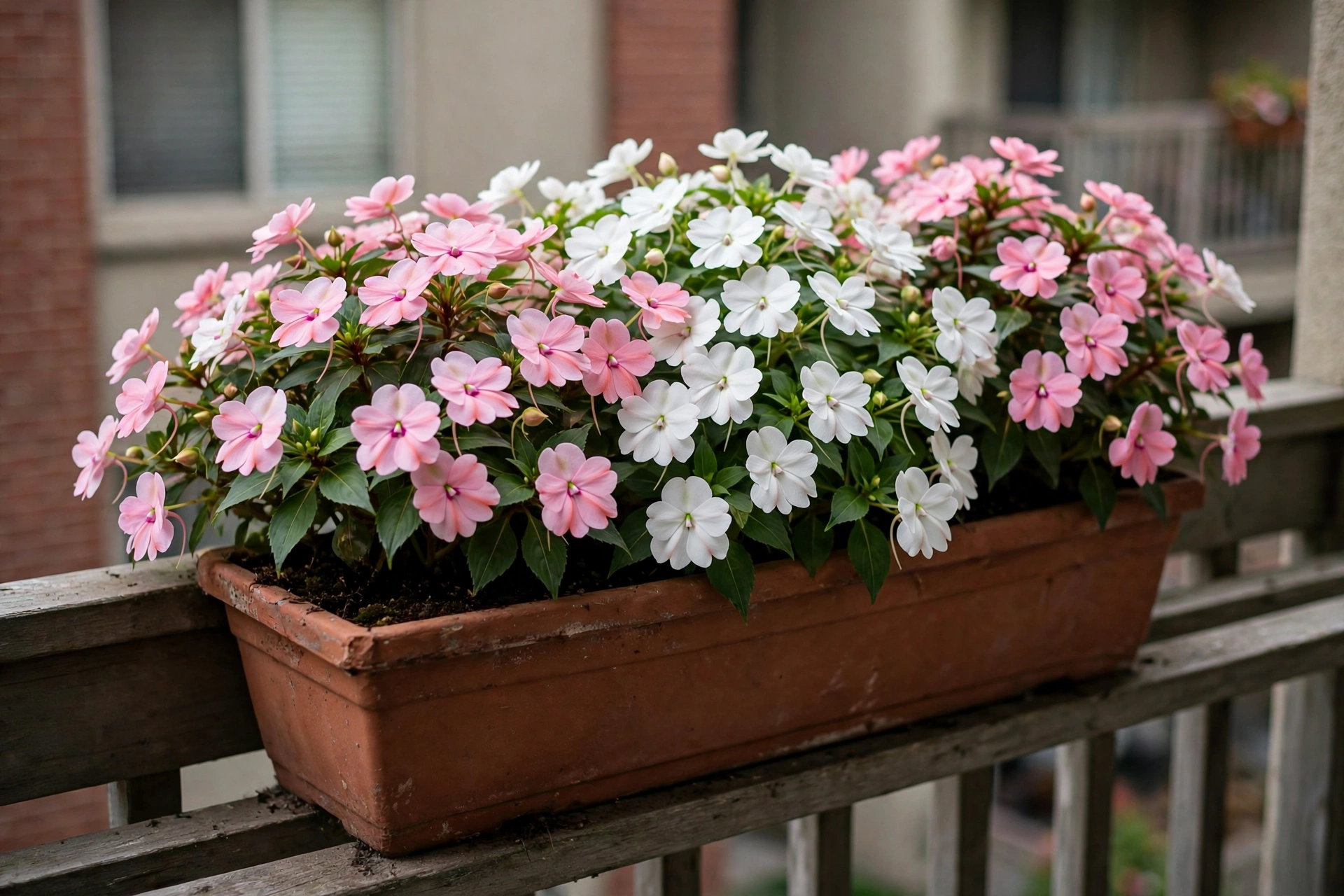
Impatiens are the workhorse flower of the shaded balcony. They bloom continuously from late spring until the first frost in part to full shade, in pink, white, red, orange, and purple, and they fill a pot faster than almost any other shade annual. Keep the mix moist but never soggy A 1- to 2-gallon pot suits them. Perennial only in zones 10–11.
5. Wax begonia
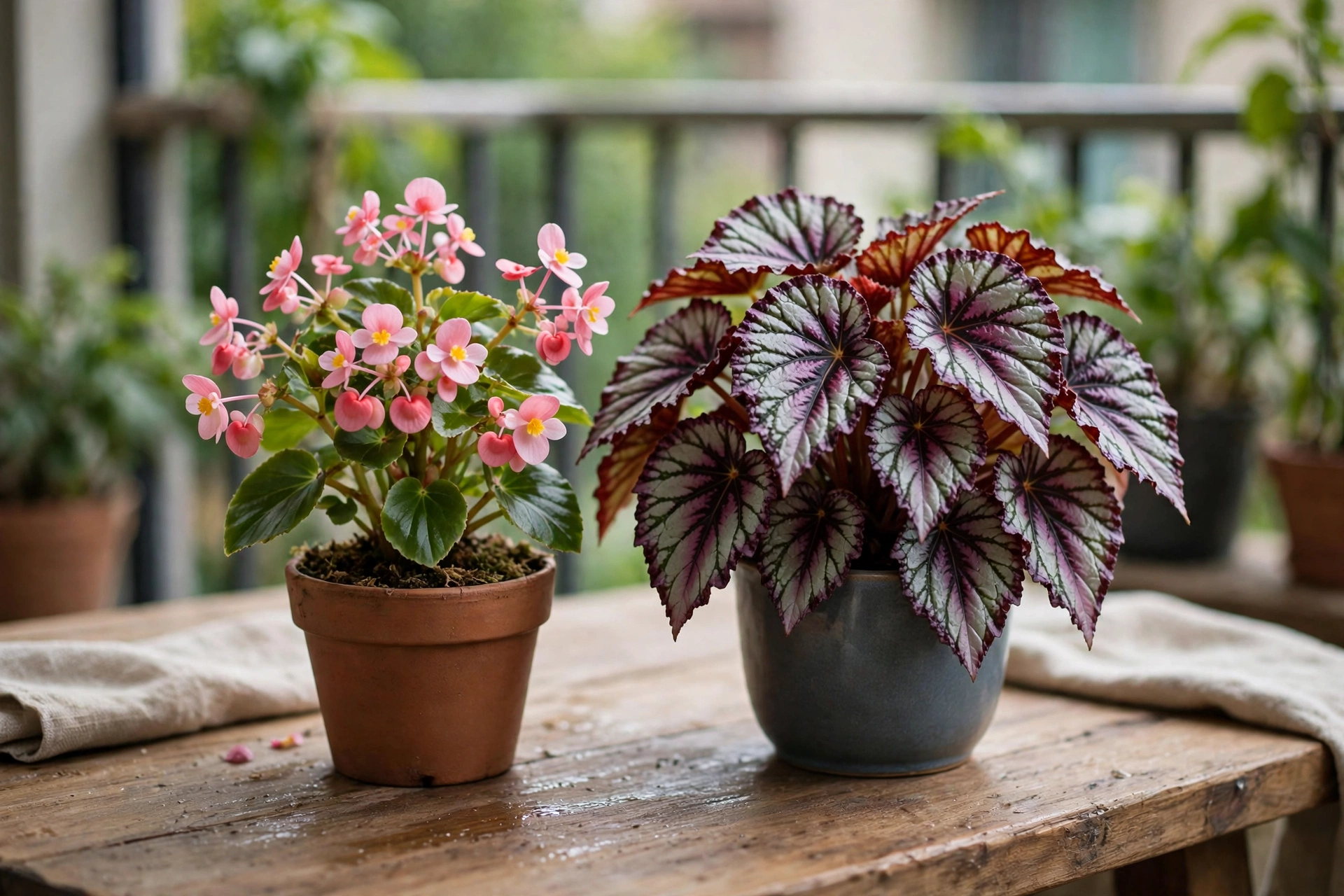
Wax begonias are one of the easiest flowering plants for a shaded container. Their waxy leaves and small pink, white, or red flowers tolerate part shade and the variable moisture of a balcony pot. Give them a moist, well-drained mix and a 1-gallon pot; they stay compact, so they work at the front of a mixed container or alone by the door. Perennial in zones 10–11.
6. Rex begonia
Rex begonias are grown for their leaves — swirled patterns in silver, burgundy, deep green, and pink. They want bright indirect light rather than deep shade, so place them at the brightest edge. Keep the mix moist but avoid wetting the leaves, which can spot. A 1- to 2-gallon pot suits most varieties. Perennial in zones 10–12; bring it indoors before frost.
7. Coleus
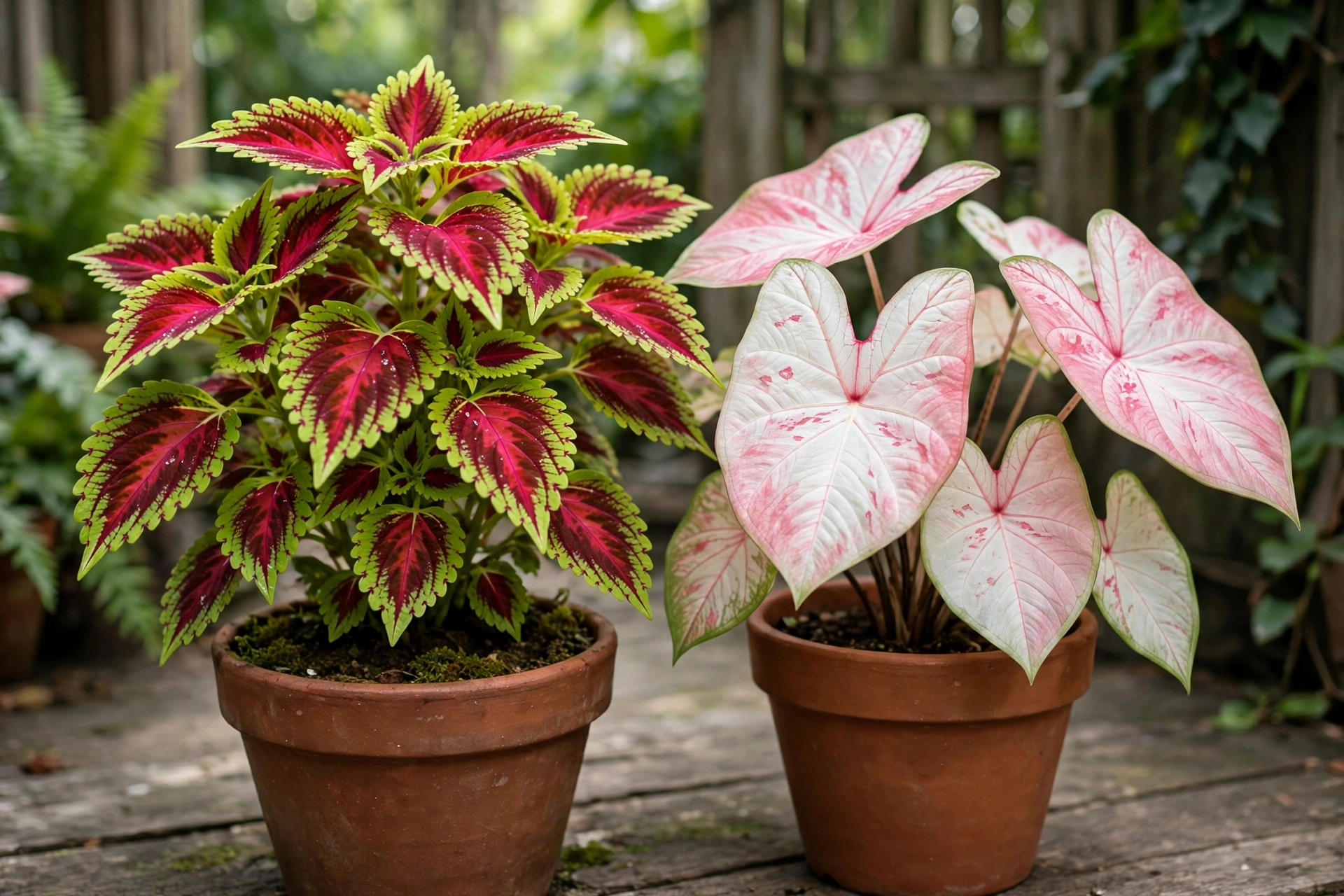
Coleus turns shade into color. Modern varieties come in red, lime, burgundy, pink, and near-black, and most hold their color best in part shade Keep the mix moist and well-drained, and pinch the tips regularly to keep the plant bushy. A 1- to 3-gallon pot fits most varieties. Perennial in zones 10–11; extremely cold-sensitive, so wait until nights are warm.
8. Caladium
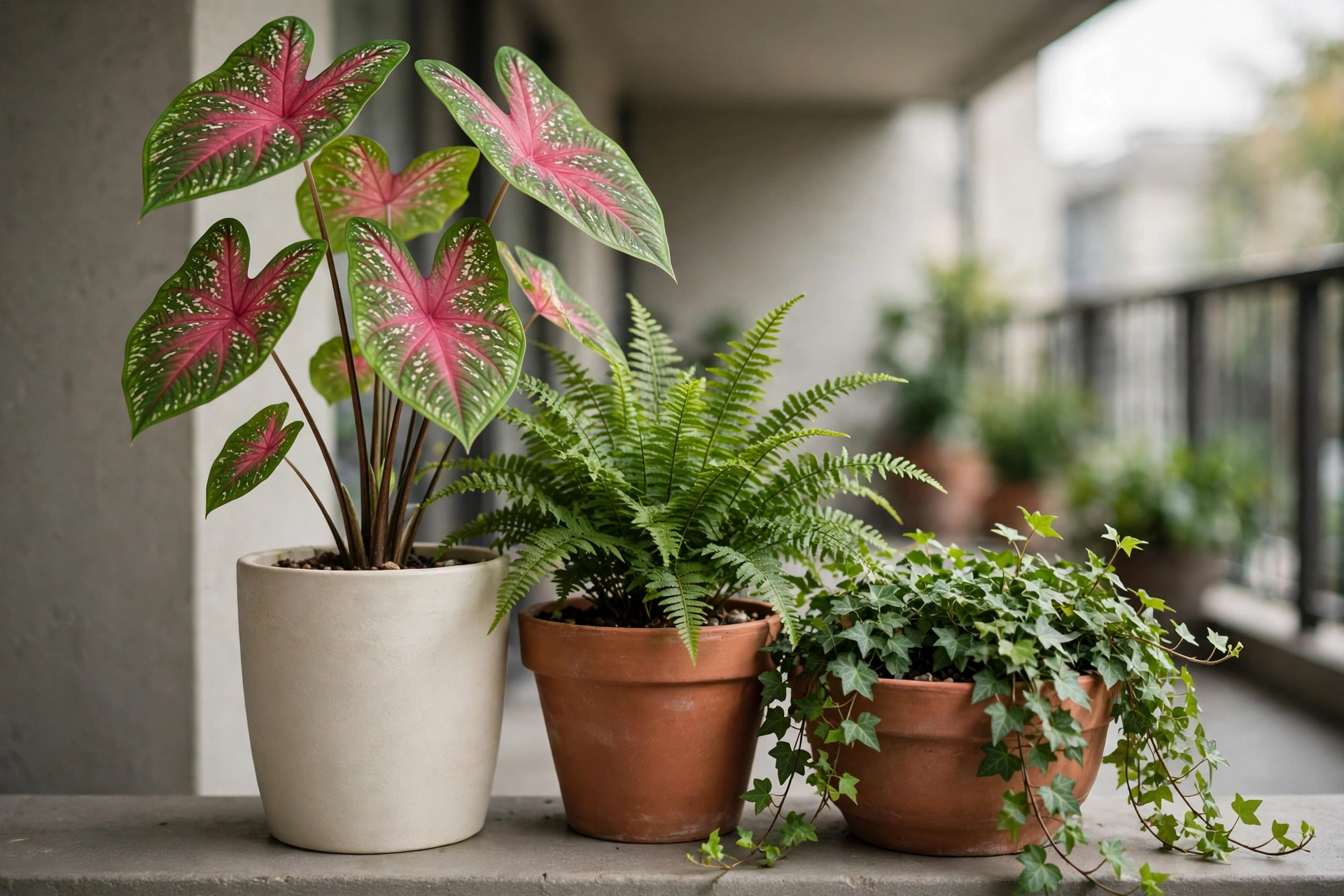
Caladiums are grown for large, heart-shaped leaves in pink, white, red, and green marbling — among the most dramatic foliage plants for a shaded container. They want bright indirect light and a mix that stays consistently moist without becoming soggy. Plant tubers after the last frost, once soil has warmed. A 2- to 3-gallon pot suits a small group. Perennial in zones 9–11; elsewhere, lift tubers before frost and store indoors.
9. Fuchsia
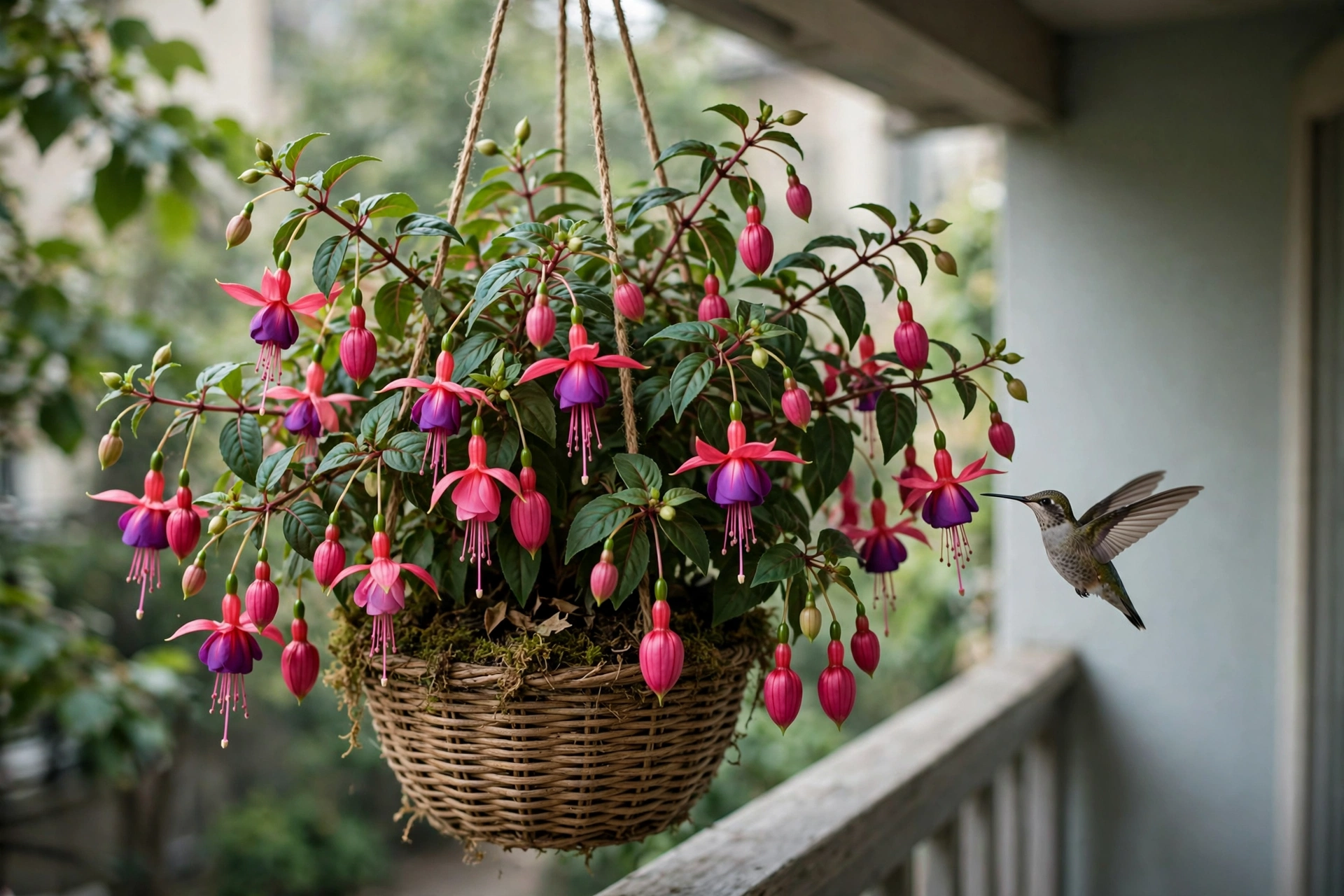
Fuchsias are made for hanging baskets on a north-facing balcony. Their dangling two-tone flowers in pink, purple, red, and white appear through summer, and hummingbirds visit them regularly. Give them part to full shade, a moist mix, and cool roots — a basket that bakes in reflected heat will struggle. Hardy types survive in zones 6–9; tender types are perennial only in zones 9–11.
10. Coral bells (Heuchera)
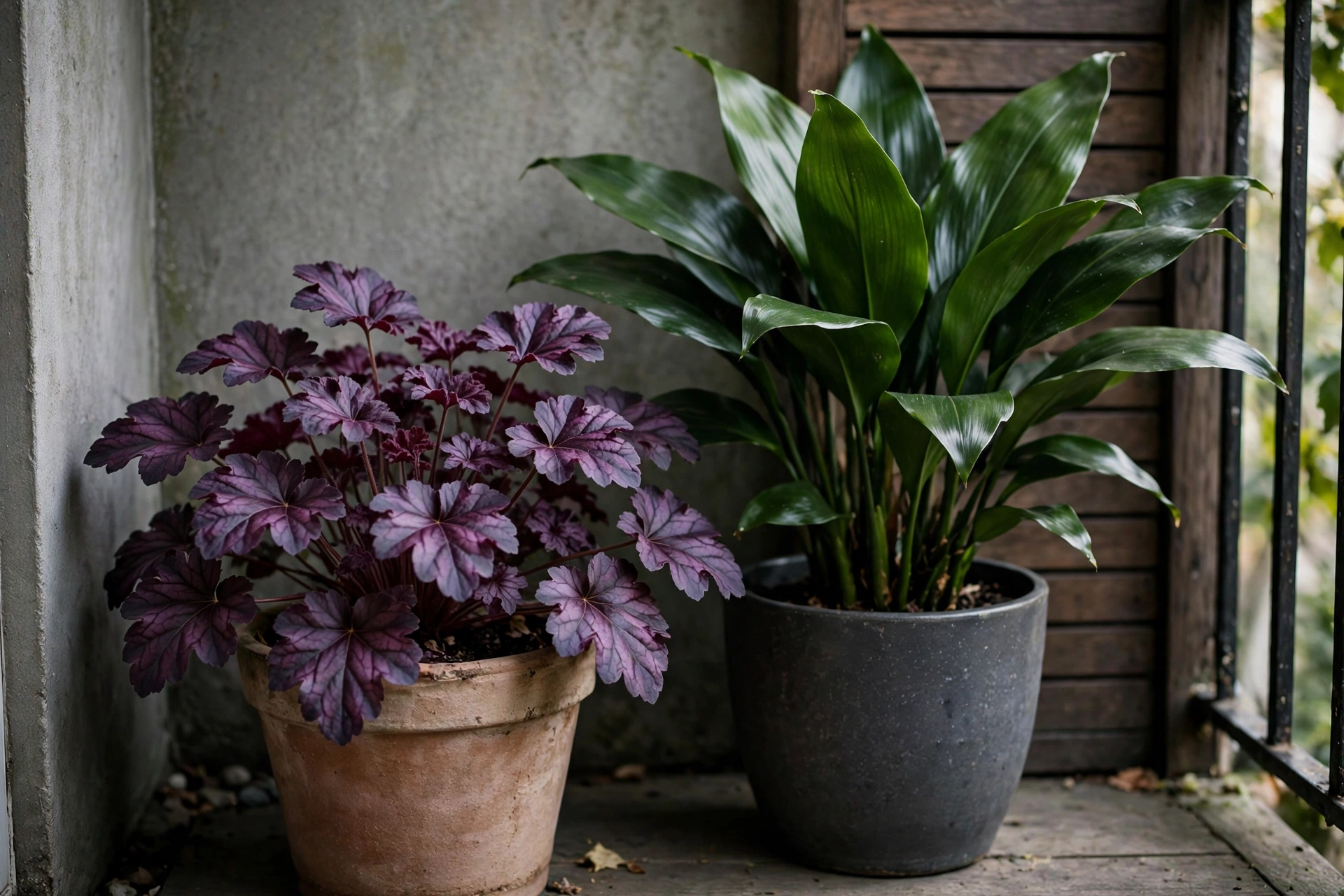
Coral bells are compact perennials grown mainly for foliage — leaves in lime, caramel, deep purple, and silver-veined green — with slender flower stems in late spring. They prefer part shade and a moist, well-drained mix, and dislike sitting in wet soil through winter A 1- to 2-gallon pot is enough. Hardy in zones 4–9; they can stay outside in a pot year-round if the container drains.
11. Cast iron plant
The cast iron plant earns its name. It tolerates deep shade, neglect, low humidity, and irregular watering better than almost any plant on this list, and its broad dark-green leaves give a shaded corner a calm, architectural look. Let the top two inches of mix dry between waterings — overwatering is the most common way to harm it. A 2- to 3-gallon pot suits a mature plant. Hardy in zones 7–11.
12. Pothos
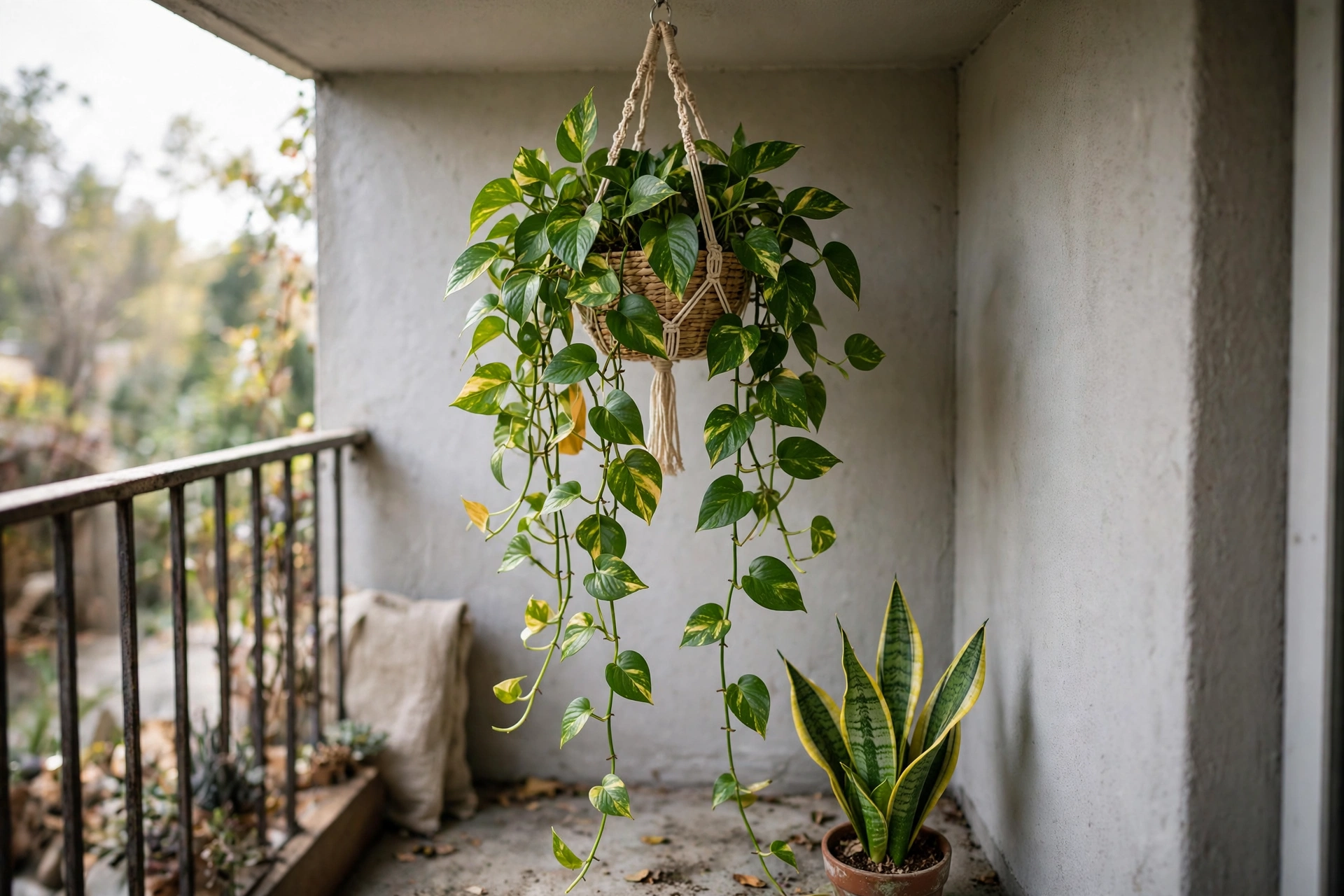
Pothos is the trailing plant that makes a shaded balcony look finished. Heart-shaped leaves cascade from a hanging basket or trail down from a high shelf, and it tolerates low to bright indirect light with very little fuss. Let the top inch of mix dry between waterings A 1- to 2-gallon pot or basket works well. Perennial outdoors only in zones 10–12; bring it indoors well before frost.
13. Snake plant
Snake plants survive neglect, and they do it in shade too. Their stiff, upright leaves tolerate low to bright indirect light, and they store water, so they need far less watering than the ferns and impatiens on this list — water sparingly and let the mix dry out between waterings. A 1- to 2-gallon pot with reliable drainage is enough Perennial outdoors in zones 9–11; elsewhere, grow as a seasonal outdoor plant or houseplant.
14. Peace lily
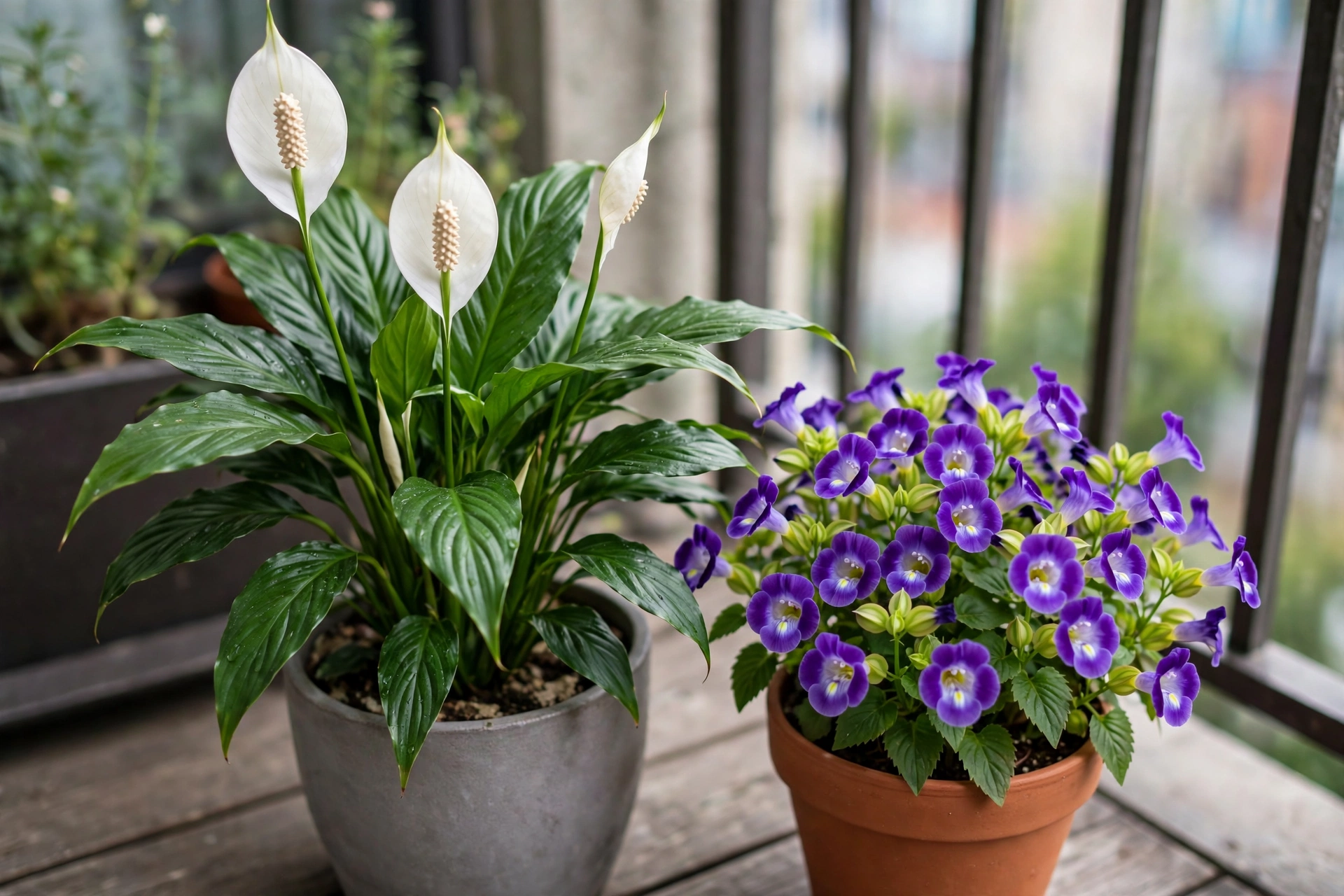
Peace lilies bring elegant white flowers to a spot where few flowering plants will bloom. They prefer low to medium shade and evenly moist mix — drooping leaves are usually a request for water, and the plant generally recovers quickly after a drink. Keep it out of direct sun, which scorches the leaves A 1- to 2-gallon pot suits most plants. Perennial outdoors only in zones 10–12.
15. Torenia (wishbone flower)
Torenia is the heat-tolerant shade annual many gardeners discover too late. Small trumpet-shaped flowers in purple, pink, blue, and white bloom all summer in part shade, and unlike impatiens it keeps flowering through hot, humid weather. Give it a moist mix and a 1-gallon pot, and use it at the front of a mixed container or alone near the brightest edge. Perennial only in zones 10–11.
Three container combinations that work
The lush corner (full shade): one caladium in a 3-gallon pot, a Japanese painted fern beside it, and creeping Jenny spilling from a low pot in front — all want consistent moisture, so one routine covers the group. The color pot (part shade): one coleus, impatiens around it, and torenia at the front edge — for the brightest spot, near the railing. The low-maintenance trio (deep shade): a cast iron plant, a snake plant, and a pothos in three separate pots
See our balcony plant arrangement ideas for more ways to group pots in a small space, and our vertical balcony garden ideas if you want to lift plants toward the light.
Containers, mix, and drainage for shade
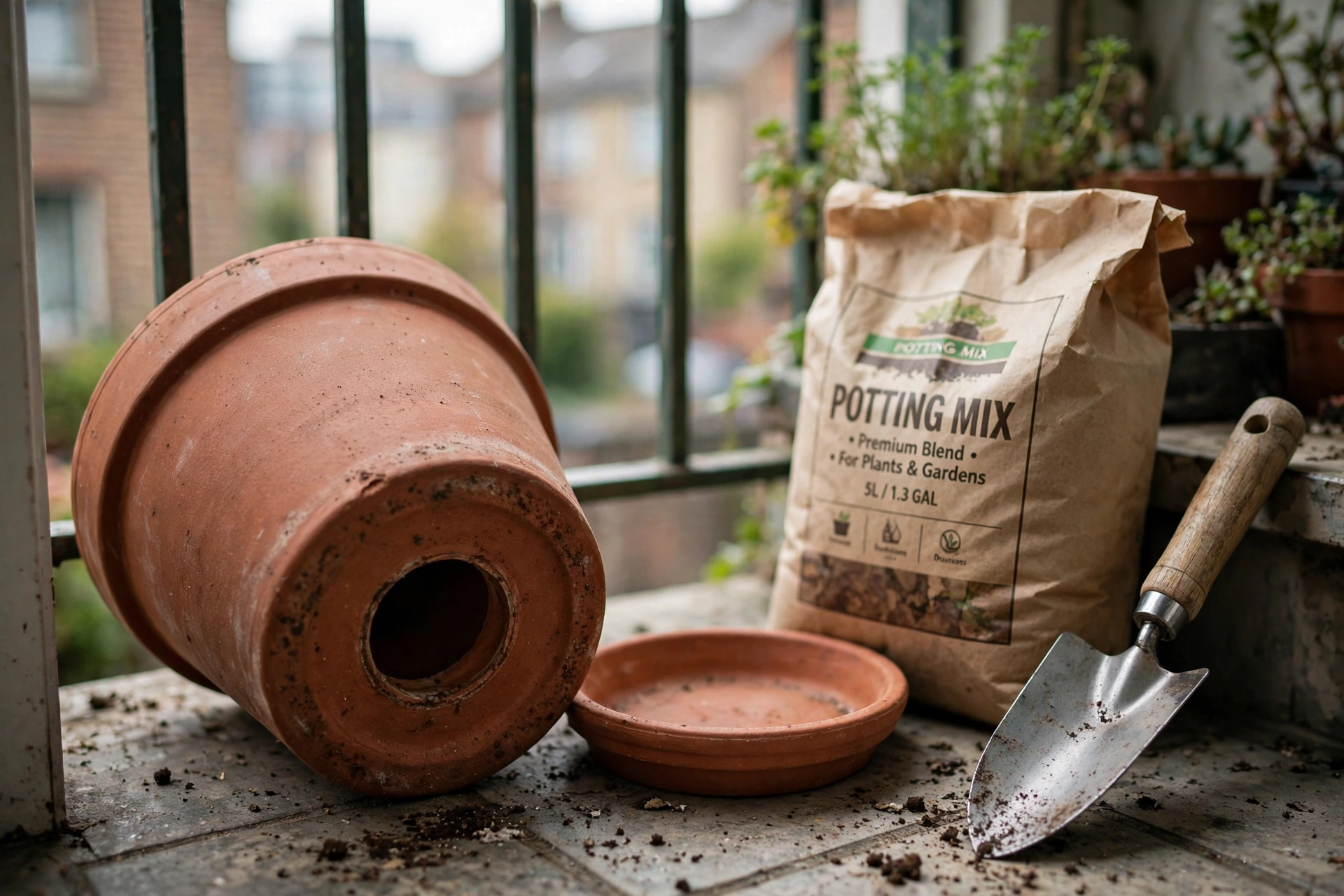
Shade changes how containers behave. A pot in full sun dries from the top and sides; a pot in shade dries slowly, and a pot under a roof gets no rain at all, so it can dry out fast if wind reaches it. Every container needs a working drainage hole — without one, roots sit in water and the plant declines. If a decorative outer pot has no drainage, use a removable nursery pot inside it and empty collected water after watering. Do not add gravel to the bottom; it does not improve drainage and it steals root room. Use a packaged container mix, not dense garden soil, which compacts in a pot. For ferns, impatiens, and caladiums, a moisture-holding mix helps; for snake plants and cast iron plants, add extra perlite so it dries faster. Check depth and volume as well as width.
If you are new to pots, read our container gardening for beginners guide to plan your first three pots.
Watering shade containers without drowning them
The most common mistake on a north-facing balcony is overwatering. Shade slows evaporation and the building blocks wind, so a sheltered pot can stay wet for days. The only reliable routine is inspection: push a finger an inch or two into the mix before watering. If it feels moist, wait. If dry, water slowly until a little leaves the drainage hole, then empty the saucer. In winter, needs drop sharply: a pot watered twice a week in July may need it once every two weeks in January.
Our guide to watering container plants explains moisture and drainage in more detail.
Winter care and what to bring indoors
November is the right time to plan for winter, because most tender plants on this list cannot survive frost. Hardy plants — hostas, Japanese painted ferns, coral bells, and hardy fuchsias — can generally stay outside in their pots in much of the United States. Move them to the most sheltered corner. Tender plants — coleus, caladiums, impatiens, begonias, tender fuchsias, pothos, snake plants, peace lilies, torenia, and Boston ferns — need to come indoors before frost, or be treated as annuals. Caladium tubers can be lifted, dried, and stored indoors, then replanted after the last frost.
Common mistakes on north-facing balconies
Buying sun-loving plants and hoping. Basil, tomatoes, lavender, and most vegetables need direct sun; on a north-facing balcony they grow leggy and pale, then stop. Try parsley or mint in the brightest spot instead. Watering on a fixed schedule. Shade pots dry slowly and unevenly — check the mix and water only the pots that need it. Using containers without drainage. A pot with no drainage hole is a slow way to kill a shade plant.
Frequently asked questions
Can anything flower on a north-facing balcony? Yes — impatiens, wax begonias, fuchsias, torenia, and peace lilies all flower in shade, though less heavily than sun-lovers in full sun. How much sun does a north-facing balcony get? Usually less than three hours of direct sun a day, often none in winter; bright indirect light is what the plants in this guide use. Do shade plants need less water? Not necessarily — a pot under a roof gets no rain, while a sheltered pot stays wet for days. Check the mix.
Conclusion
A north-facing balcony is not a problem to solve — it is a set of conditions to match. Start with three or four plants from this list, learn how they behave on your balcony through one season, and add more only when the first group is thriving. A small, healthy shade garden you can actually maintain is worth far more than a crowded balcony of struggling sun-lovers.