Outdoor Cushion Ideas for Small Patios: Comfort, Color and Easy Care
The best outdoor cushion ideas make an existing seat more inviting without filling it so completely that nobody can sit comfortably. On a small patio, one well-fitting seat pad and a useful back cushion may do more than a large collection of decorative pillows. Start with the chair, the person using it and the place the textiles will be stored.
This guide connects comfort, appearance and the daily routine behind both. It does not assume every outdoor-looking cushion can remain in every weather condition. Read the instructions for the actual fabric, filling and furniture. For choosing a broader palette around the textiles, use our small patio color ideas. Work through the decisions below before buying a complete matching set.
In this guide
- 1. Decide what the cushion should improve
- 2. Measure the usable seat, including any taper
- 3. Compare seat thickness and back support as one arrangement
- 4. Read the complete outdoor-use information
- 5. Choose one base color that suits existing furniture
- 6. Add one accent before introducing a pattern
- 7. Keep the table and route free of spare pillows
- 8. Match the cushion collection to a real storage routine
- 9. Separate everyday attention from a deeper clean
- 10. Plan drying time as part of the clean
- 11. Use a small cushion set to refresh existing furniture
- 12. Review the setup after a week of use
- A practical cushion shopping note
- Continue planning your small outdoor space
1. Decide what the cushion should improve
Sit in the chair before adding anything. Notice whether the seat feels too firm, whether you want support behind your back or whether the chair already feels comfortable. Name the specific improvement you want. A decorative pillow is not automatically the answer to a seat that does not suit your body or the activity.
Think about how long you normally sit outside. A short coffee break and an afternoon with a book may lead to different preferences. If several people use the chair, let them try the proposed cushion arrangement too. Comfort is something to test in person, not infer from a styled photograph.
Start with one useful layer and reassess. A seat cushion may be sufficient; a back pillow may be optional. Avoid buying several pieces to make the chair look finished before knowing what actually improves the sitting experience. A small patio benefits from textiles that support use rather than a collection that must be removed every time someone sits down.
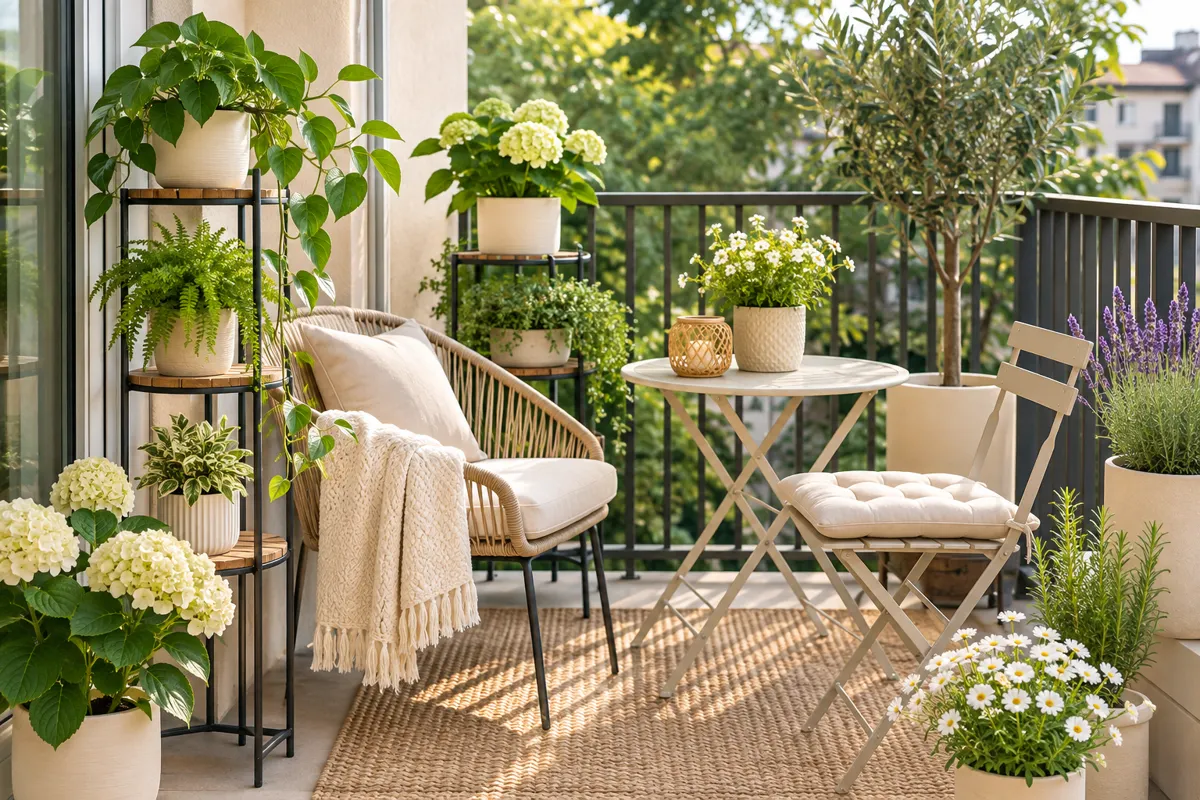
2. Measure the usable seat, including any taper
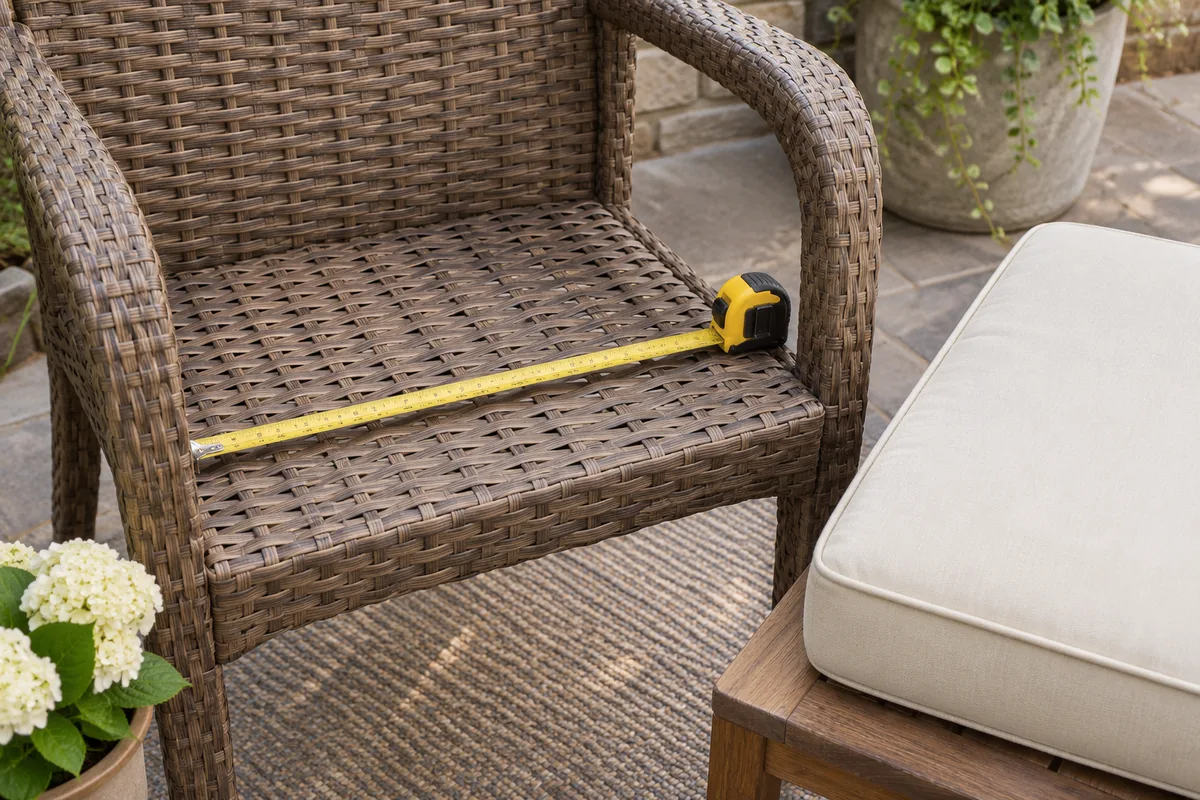
Measure the part of the chair where the cushion will actually rest. Record the width at the front and back, the usable depth and the relationship with the armrests. A tapered woven seat can be wider at the front than at the back, so one width measurement may conceal a poor fit. Compare the cushion’s full stated dimensions and shape with those measurements.
For a hypothetical example, an 18-inch-wide front and a 16-inch-wide back do not describe the same fit as a square 18-inch seat. Make a paper outline of the proposed cushion and lay it on the chair before ordering. Check for overhang, bunching and interference with the arms. These numbers illustrate the measuring method, not a recommended cushion size.
Record whether the dimensions describe the cover, the filled cushion or a manufacturer’s nominal size. Check compatible shapes and attachment methods for the actual chair. Then sit down if a sample is available. Our small patio furniture guide connects the cushion choice with seat depth, table reach and the space occupied by the chair. A correct color is only useful after the shape works.
3. Compare seat thickness and back support as one arrangement
Put the proposed seat and back cushions in place together. A thicker seat changes your sitting height, while a large back pillow reduces the depth left for your body. Test the arrangement for the activity you actually do, whether that is a short coffee break or a longer reading session. Stand and sit again rather than judging only from a photograph.
| Combination | Reason to try it | What to check |
|---|---|---|
| Thin seat pad only | A small comfort improvement without much bulk | Whether the seat still supports the intended use |
| Seat pad and modest lumbar cushion | Targeted support with limited fabric | Remaining seat depth and natural posture |
| Thick seat and full back cushion | A different sitting feel | Raised height, arm position and ability to stand |
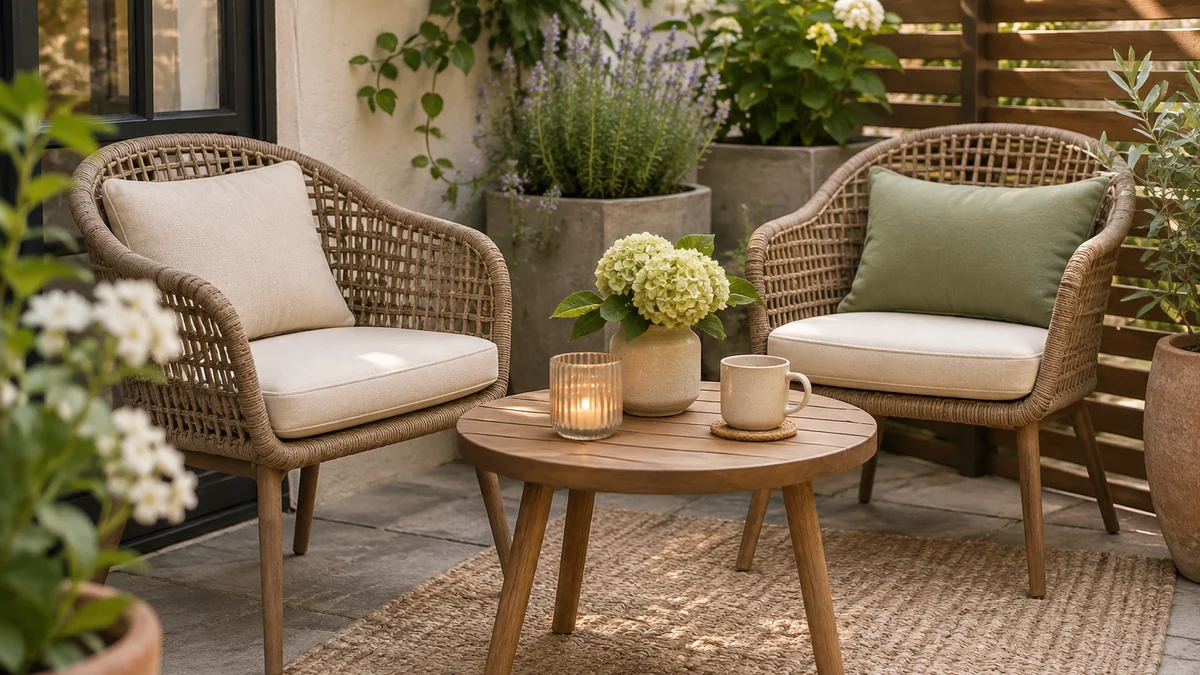
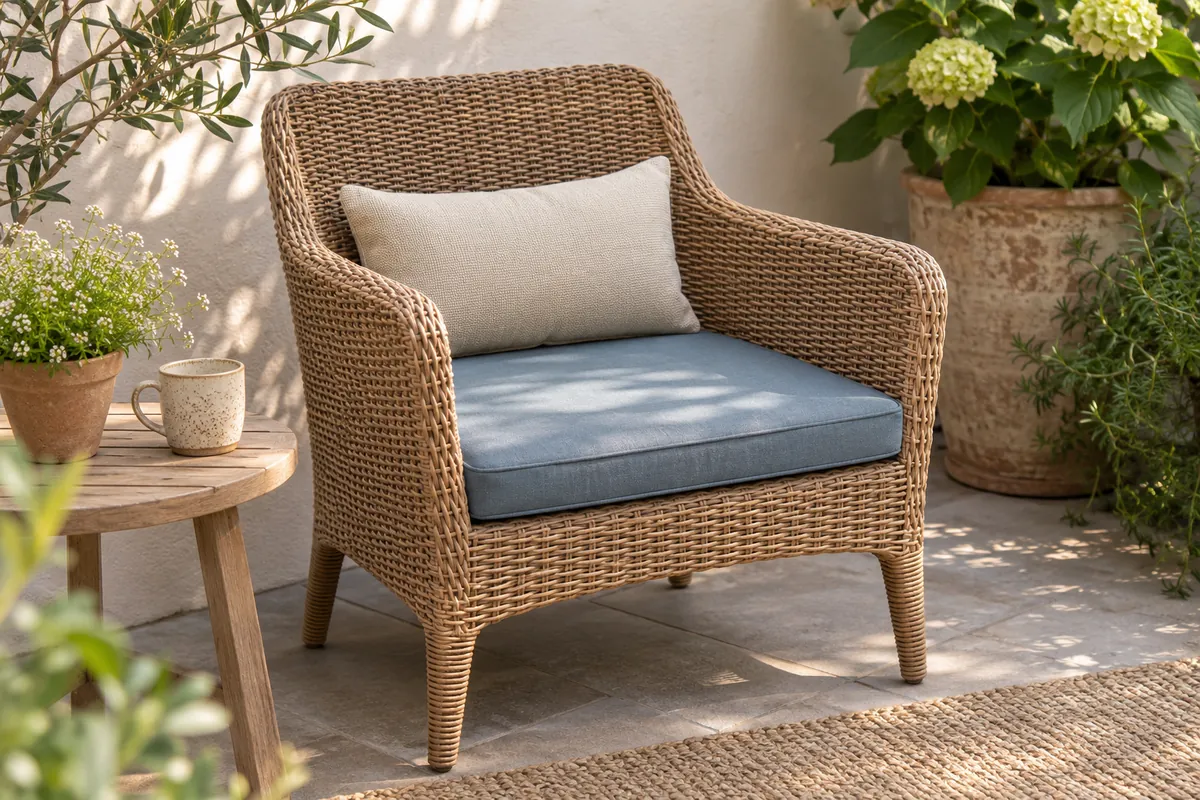
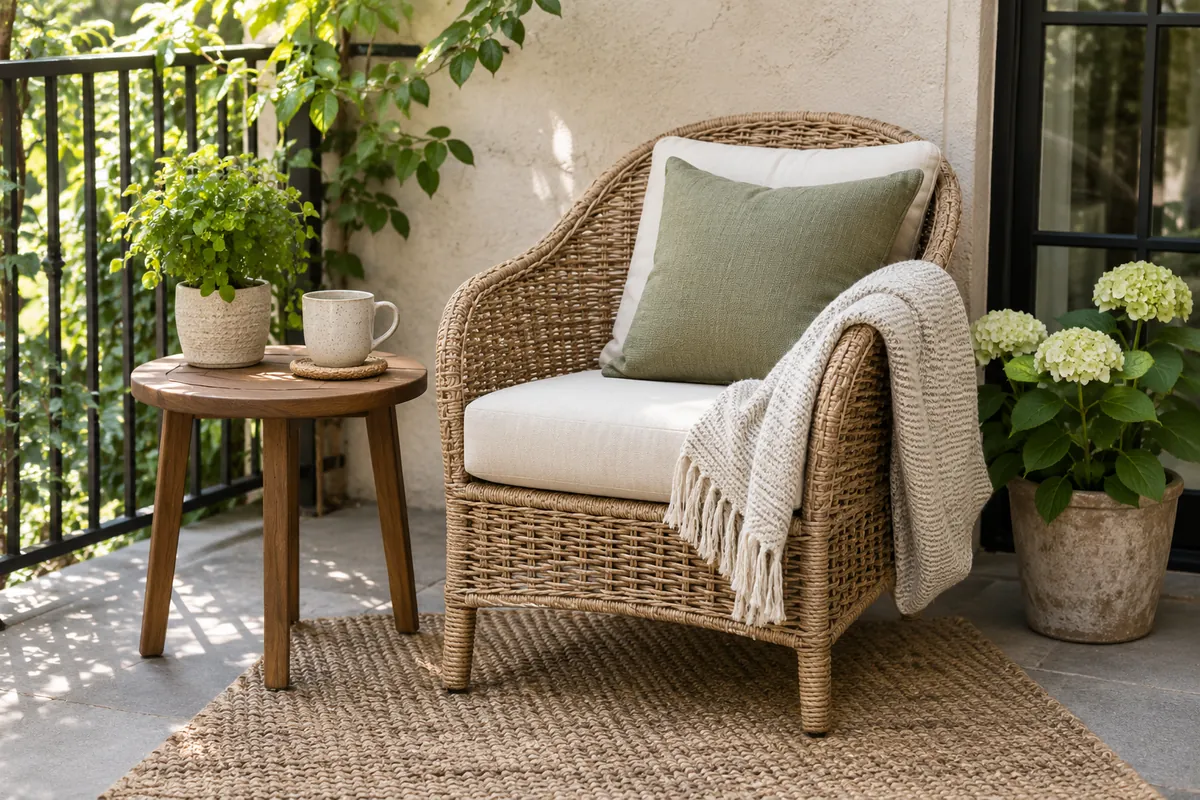
The illustration shows a restrained seat-and-lumbar combination, not a universal comfort prescription. Different users will prefer different support, so involve the people who regularly use the chair. If a pillow needs moving every time you sit, try a smaller one or remove it. One well-fitting cushion can provide both the practical improvement and the color accent without turning a compact chair into a storage place for spare pillows.
4. Read the complete outdoor-use information
Check the fabric, filling, seams, closures and overall intended use. A cover described for outdoor use does not tell you everything about the whole cushion. Read the manufacturer’s instructions for the actual product, including exposure, cleaning, drying and storage. Keep them with your purchase information.
Match those instructions to the location. A covered patio with occasional windblown rain creates a different routine from an exposed balcony. Be clear about what you can bring inside and when. Avoid treating a general phrase such as weather-resistant as a promise that no care or storage will be needed.
If instructions are unclear, ask the supplier a specific question about the product and conditions. “Can I machine-wash this complete cushion?” is more useful than “Is it easy care?” The answer may differ for the cover and filling. Choosing a product whose care you understand helps prevent an attractive purchase from becoming an object you are reluctant to clean or use.

5. Choose one base color that suits existing furniture
Look at the chair frame, wall and paving before choosing a cushion color. These larger surfaces already form the background. A cream or another quiet neutral can give a strong frame a softer setting, while an existing patterned chair may need very little additional detail.
Compare a physical sample outside when possible. Screen photographs and indoor lighting can make a color appear different from the way it sits beside the patio furniture. View the sample during the hours you normally use the seat and from the adjoining room as well.
Choose a base you enjoy with the furniture you intend to keep. Do not replace a comfortable chair simply because a particular cushion set looked attractive online. If matching shades is difficult, use a deliberate contrast in tone or texture rather than chasing an almost identical color. A considered combination can connect different pieces without making every textile look as though it came from the same package.
6. Add one accent before introducing a pattern
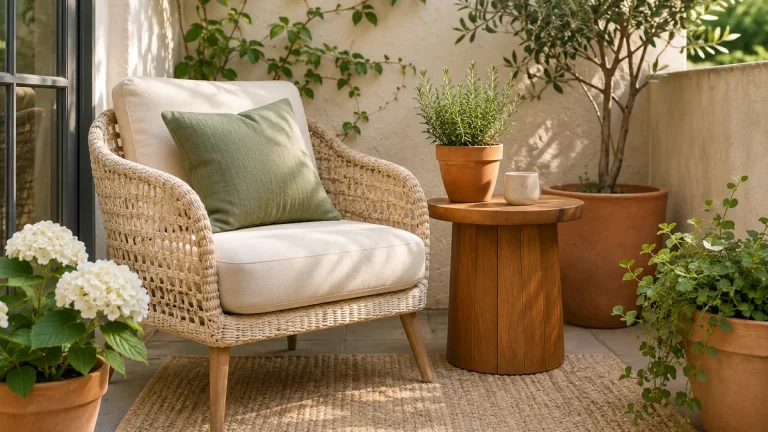
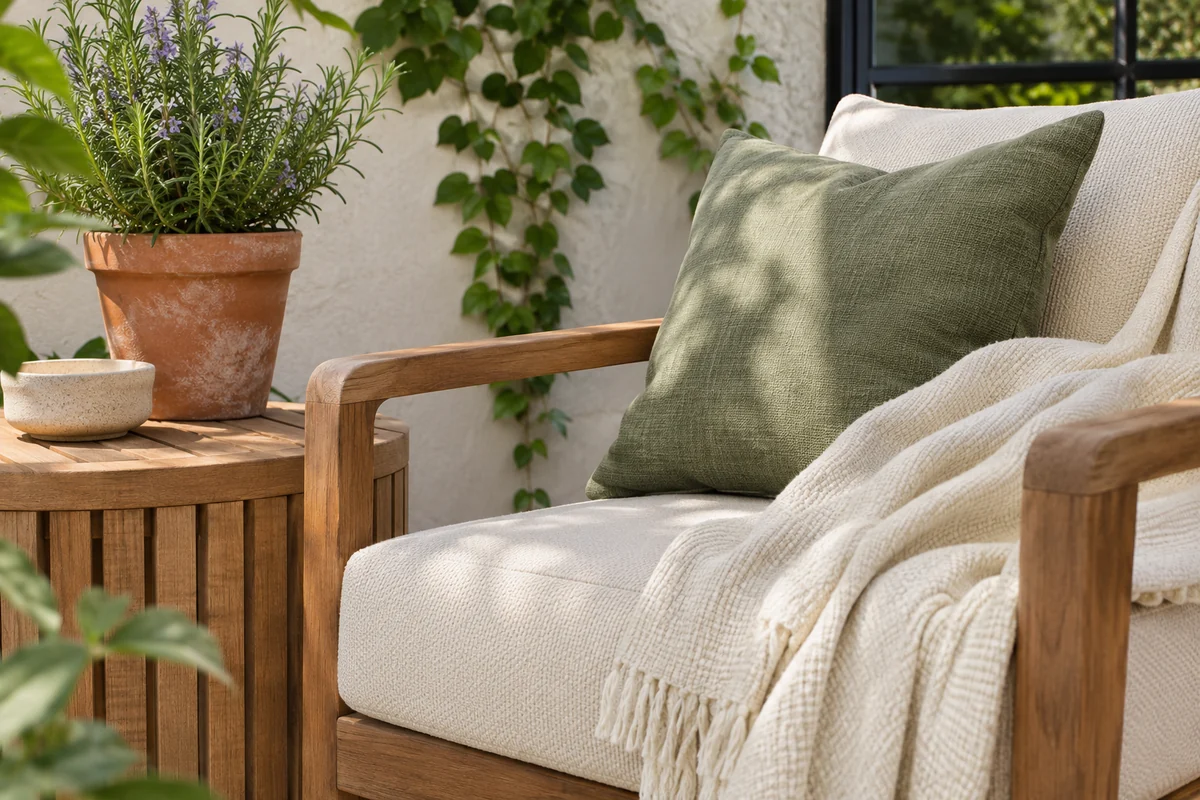
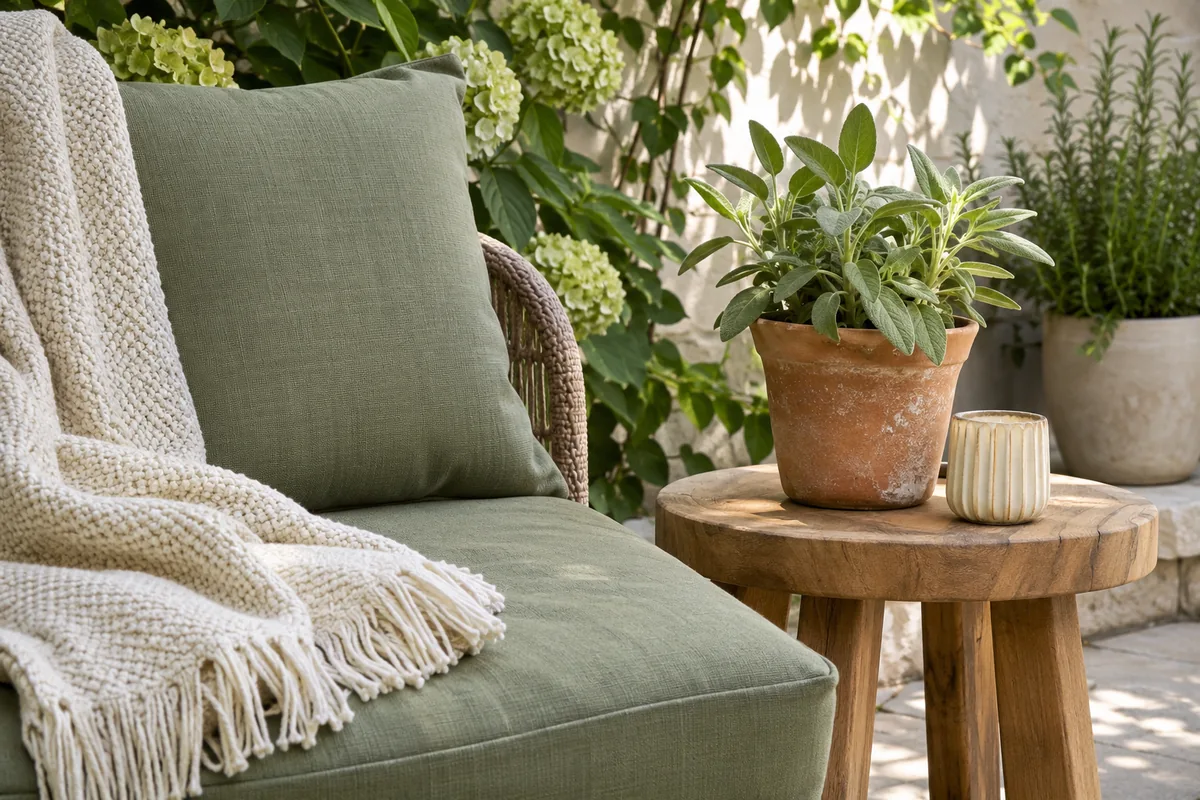
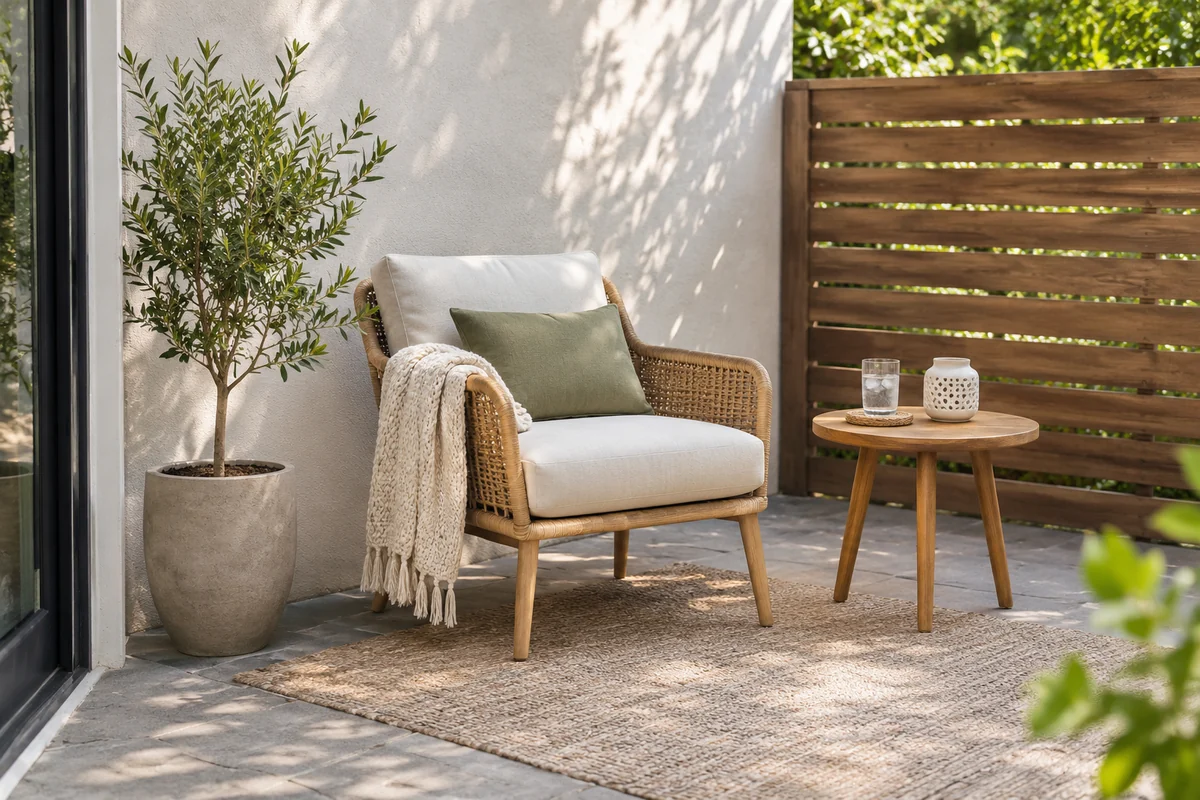
A small accent cushion can connect a seat with foliage or nearby containers. Sage is one possible choice beside wood, cream and terracotta, but it is not a requirement. Begin with a color already present in something you like, then repeat it in a limited way.
Decide whether the accent is needed for comfort, appearance or both. If it is mainly decorative, keep the quantity small enough that the chair remains ready to use. A narrow seat may have room for one useful pillow and little else. Avoid making storage more complicated for an accessory you move aside every evening.
If you want pattern, test it against the existing background. Brick, woven furniture and varied plant foliage already provide visual texture. A simple pattern can work, but several competing patterns may make a tiny corner feel busier than you intended. Photograph the plain and patterned options in the actual setting and choose the version you enjoy using as well as looking at.
7. Keep the table and route free of spare pillows
Decide where decorative cushions go when they are not on the chair. If the only answer is the table or floor, reduce the number. A side table covered with spare pillows cannot hold the cup or book that makes the seat useful, and items on the floor can interrupt the route.
Test the full setup as though someone has just arrived outside. Can they sit immediately, or must they first rearrange a collection? Keep the everyday version simple enough that using the patio does not begin with a styling task.
If you need an occasional spare cushion, give it a clear storage position rather than keeping it permanently in the seating zone. Our small patio decorating plan on a budget explains how to prioritize useful pieces before finishing details. The same principle applies to textiles: buy the items that improve ordinary use, then stop before an attractive collection begins taking over the limited working surfaces.
8. Match the cushion collection to a real storage routine
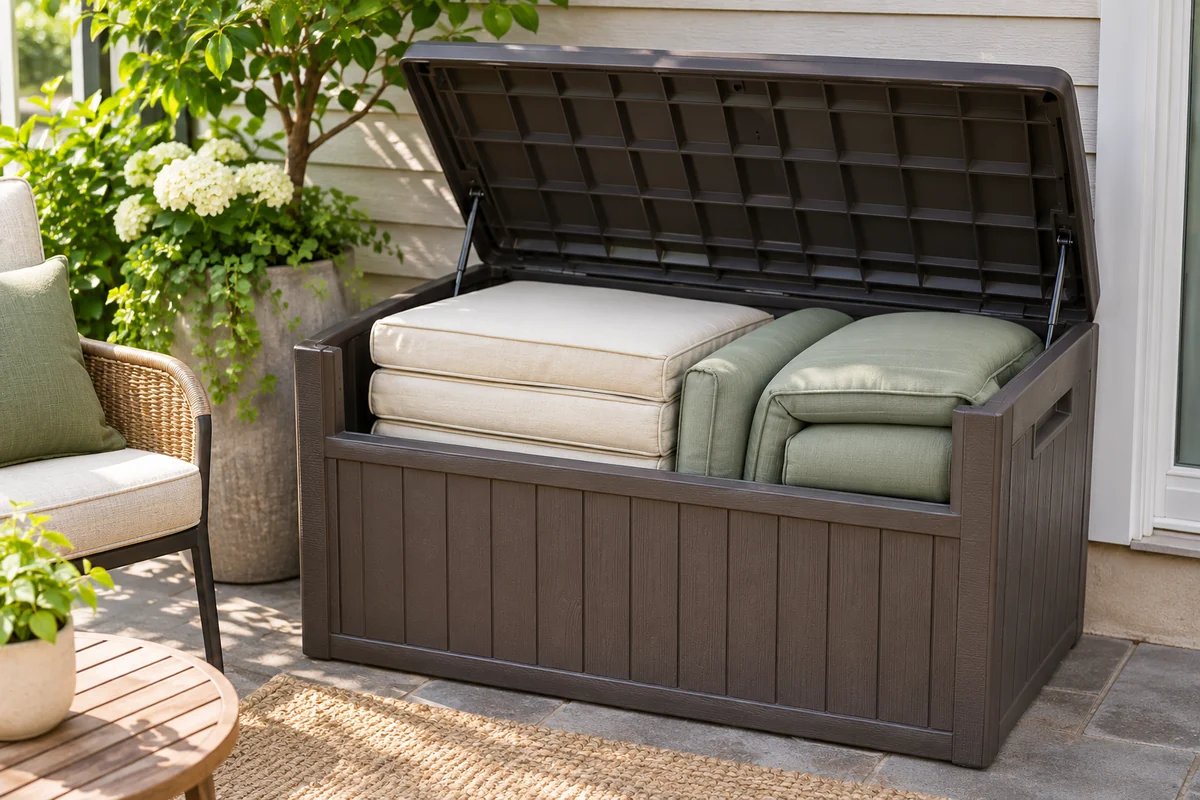
Measure the cushions as a stack before choosing their storage home. Include their natural thickness and shape rather than assuming they can be compressed into an already full box. Check the product’s care instructions and allow the cushions to dry appropriately before storage. A removable cover does not mean every filling or complete cushion can be cleaned and stored in the same way.
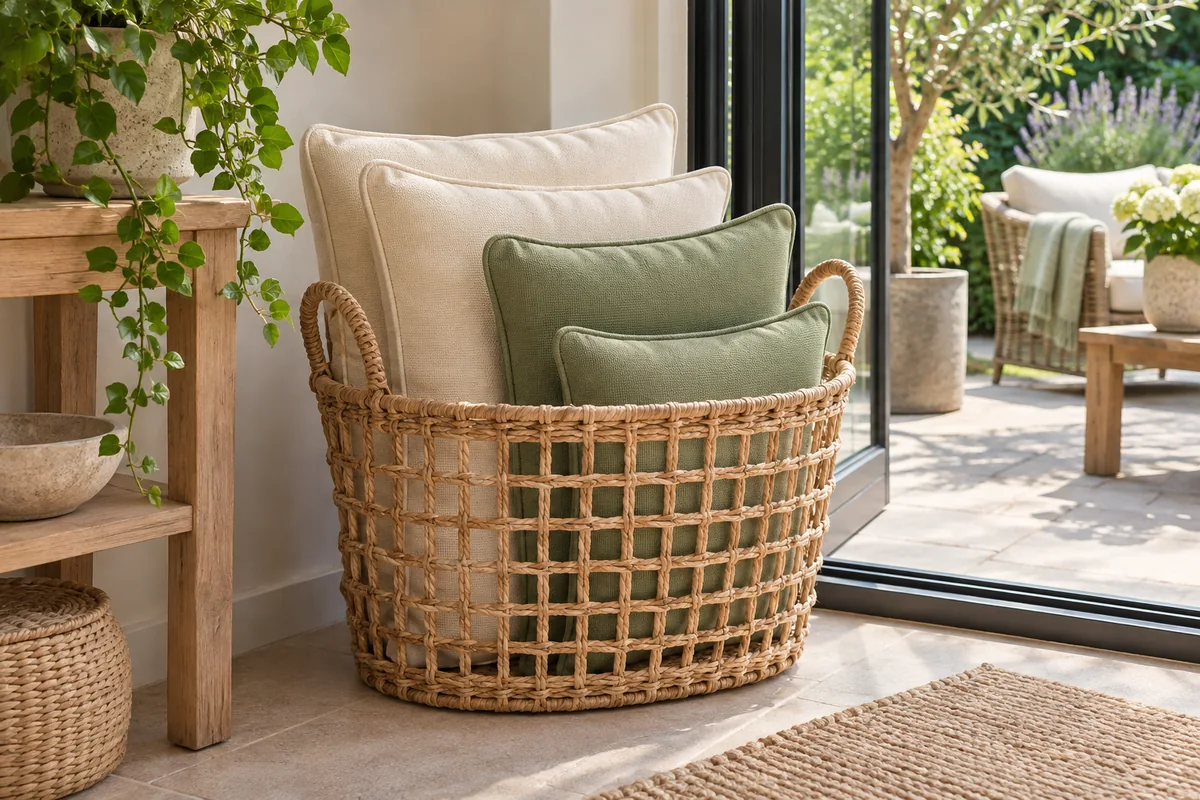
Compare a basket or cupboard near the door with an outdoor box. Indoor storage can be convenient for a small set, while a suitable box may make sense when its intended use and conditions match the contents. Measure the box’s usable interior and lid when open, not just the closed exterior.
Try the actual return route after an ordinary sitting session. If carrying several pillows indoors feels like a separate project, reduce the collection before buying more storage. Our small balcony storage ideas apply to many compact patios too. A cushion set is manageable when it improves the chair, has a clear home and can be cared for without moving the entire outdoor arrangement.
9. Separate everyday attention from a deeper clean
Keep the product’s care instructions easy to find. Everyday attention might involve dealing with loose debris or a small spill according to those instructions, while a deeper clean may require a different method. Do not assume the same treatment suits every textile or that a removable cover is automatically machine washable.
For example, Sunbrella’s upholstery care guidance distinguishes cleaning methods and advises checking furniture construction before removing some covers. It also emphasizes appropriate rinsing and air drying for its fabrics. Use that guidance only for products it covers; follow the actual manufacturer for other cushions.
Avoid collecting generic cleaning recipes without checking compatibility. A method suitable for one branded fabric may affect another cover, filling or finish differently. Keep a simple note of the method you used successfully under the instructions, and do not mix cleaning products. A clear care reference is more useful than improvising from several unrelated tips when a stain appears.
10. Plan drying time as part of the clean
Before cleaning, identify where the cushion can dry according to its instructions. Consider the whole product, including the filling, rather than judging readiness from the outer surface alone. Do not rush it back into storage simply to make the patio look tidy.
Choose a cleaning time that fits the available drying space and the way you will use the seat. If the chair is used every evening, plan ahead instead of beginning a deeper clean just before you want to sit outside. Keep any spare textile stored properly while the main cushion is being cared for.
Check the surrounding furniture as well. Follow its care requirements if the cleaning process could expose it to moisture or products. Keep runoff controlled and away from neighbors on a balcony. Thinking through preparation, cleaning, drying and storage as one sequence can make the task feel simpler than treating the final drying stage as an inconvenient surprise.
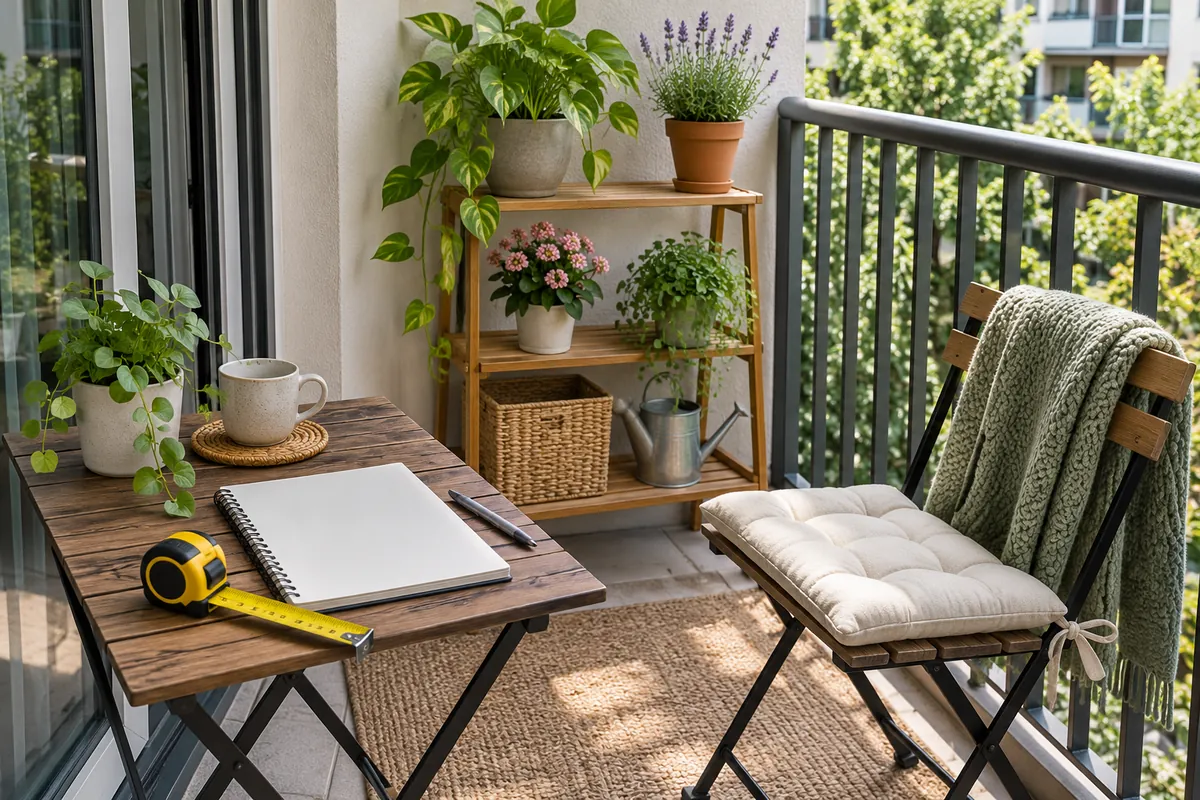
11. Use a small cushion set to refresh existing furniture
If the chair remains suitable and comfortable, a well-chosen textile change may be enough for a visual refresh. Start by cleaning and rearranging the existing pieces appropriately. Then decide whether a new cushion solves a genuine comfort or appearance issue rather than simply adding another color to an already busy corner.
Keep a before-and-after photograph from the doorway. Notice whether the new textile connects with the room inside and the plants outside. A modest repeat of a familiar color can make the transition feel considered without buying matching accessories for every surface.
For a narrow balcony, our balcony layout guide helps you protect the usable footprint as you add soft details. Keep the seat dimensions, table reach and storage routine as the fixed requirements. Color and pattern can change within those limits. This approach makes a refresh easier to repeat later because the practical arrangement does not depend on one complicated collection of accessories.
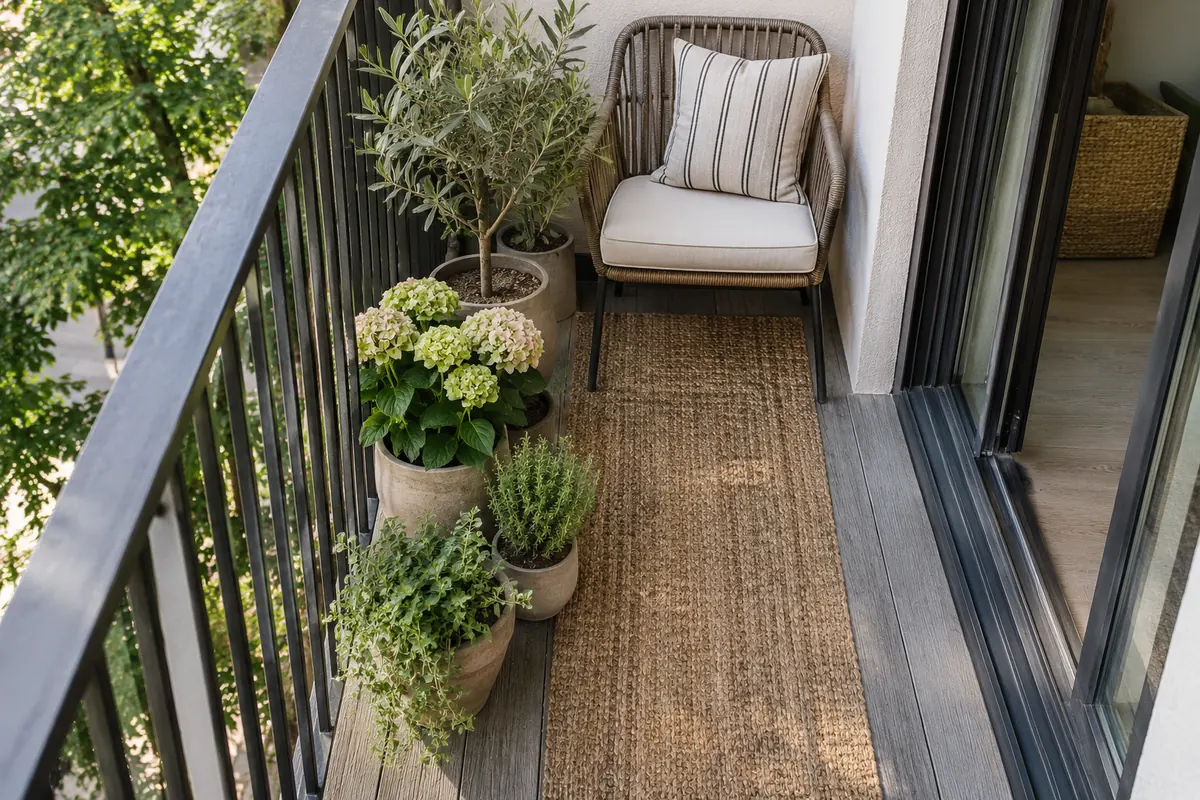
12. Review the setup after a week of use
Look at what actually happens to the cushions. Which one stays on the chair? Which one is always moved? Does bringing them inside feel easy, or do they accumulate near the door? Use those observations to edit the arrangement rather than treating the first styled version as permanent.
Change one thing at a time. Remove a decorative pillow, adjust the storage position or test a better-fitting seat pad. Check comfort again with the table in place. If two people use the patio, ask both to compare the revised setup.
Keep the simplest version that supports the way you sit outside. You can enjoy a coordinated palette without filling every chair with several pillows. You can also choose a stronger accent if it makes you happy beside the existing furniture. The finished result is a seat ready for a person, textiles you understand how to care for and a storage habit that works after the photograph is taken.
A practical cushion shopping note
Record the chair’s usable seat shape and dimensions, the support you want, the proposed cushion thickness, the complete care instructions and the storage location. Add one reference photograph of the actual patio colors. Compare options against that note rather than choosing a bundle because every piece looks coordinated together in the shop.
Can an outdoor cushion stay outside all year?
Follow the actual product instructions and consider the location’s conditions. An outdoor label does not provide one universal answer for every cover, filling and climate.
Should I buy a spare set immediately?
Only if you have a real use and suitable storage. Start with the cushions you need for normal seating, learn the care routine and decide about extras after using the setup.
Is a removable cover always easier?
It can be convenient when the product instructions support removal and cleaning, but construction varies. Check how the cover comes off, how it should be cleaned and whether you can refit it comfortably before treating that feature as a benefit.
Continue planning your small outdoor space
For a related part of your setup, explore small patio furniture ideas. You can also use our diy balcony plant corner guide to connect the next decision with the space and routine you already have.
Save this guide for later
Save one of these Pinterest-style designs for your next planning session. All article images are design illustrations.